
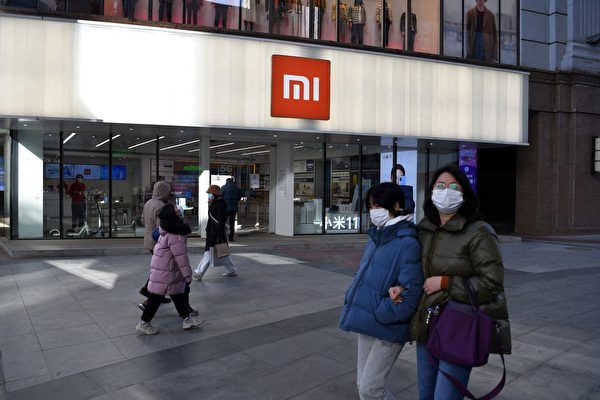
With the frequent fluctuations in the cost of storage chips, the Chinese smartphone market in 2026 may be facing multiple price increases within the year. Industry insiders have indicated that brands such as Xiaomi and Honor are planning to raise prices in early March, with some increases reaching up to 25%.
According to a report from the “Science and Technology Innovation Board Daily,” several industry sources have confirmed that the procurement cost of storage chips for smartphones has risen by over 80% compared to the same period last year, with no signs of slowing down. As a result of this cost pressure, channel and ODM manufacturers have revealed that top smartphone brands like OPPO, OnePlus, vivo, Xiaomi, iQOO, and Honor are set to initiate a new round of product price adjustments in early March. This is poised to be the largest and most significant price adjustment in the smartphone industry in nearly five years.
The latest information from the supply chain indicates that following a rebound in the latter half of 2024, prices of mobile memory and storage chips have continued to rise for several quarters, with the trend further expanding at the beginning of 2026.
Market research firm Counterpoint Research predicts that the average selling price of new smartphones in the Chinese market after March will increase by 15% to 25% compared to models from 2025.
In a report from the “Economic Observer,” an industry insider disclosed, “This round of price increases is not a choice made by individual brands, but rather an inevitable trend for the entire industry.” Mainstream smartphone brands in the country have already finalized their price adjustment plans, with some brands having issued pricing notifications to offline distributors and online channels.
The price hikes for new products released after March are expected to be significantly higher, with the minimum increase starting at 1000 yuan (Chinese Renminbi), and the high-end flagship models potentially seeing increases of 2000 to 3000 yuan.
In the past, price increases in the mobile industry have usually been one-time adjustments or targeted only at certain high-end models. However, in 2026, both newly released and existing models may undergo multiple price adjustments.
Counterpoint Research forecasts that the price increase for smartphones in the Chinese market in 2026 will exceed the global average of 6.9%.
Data from IDC (International Data Corporation) also indicates that price hikes for flagship smartphones in the Chinese market in 2026 may surpass 30%, with models of the same configuration being 300-1000 yuan more expensive than in 2025. The price difference for versions with large storage capacities could even reach 2000 yuan, and prices for new products released after March are expected to see further increases based on this.
With new products slated to be unveiled after March and impacted by the frequent fluctuations in memory costs, the Chinese smartphone market in 2026 may be heading towards a situation where prices are increased multiple times within a year – a first in history. This could result in continued rises in consumer purchasing costs.
Since October 2025, new devices launched by manufacturers like Xiaomi, OPPO, vivo, and Honor have seen price increases ranging from 100 to 600 yuan compared to their predecessors. For instance, the Redmi K90 series saw prices rise by 100-300 yuan from the previous generation. Even during the December 2025 “Double Twelve” sales event, some models witnessed price increases instead of discounts.
This trend of price hikes has continued into 2026. For example, the Honor Power2 (12GB+256GB version) released on January 5, 2026, saw a price increase of 500 yuan compared to its predecessor, while models such as the vivo S50 series and Xiaomi 17 Ultra were also priced at 200-500 yuan higher.
Industry experts and analysts point out that the current round of price increases in the smartphone market is driven by the unavoidable costs of memory and the drastic fluctuations in prices. The sharp rise in prices of upstream components like memory has led to continued cost escalation, serving as a key factor behind the current price hikes.
Analysts believe that the first across-the-board price increase in the Chinese smartphone market in 2026 is not a proactive measure from the brands but a necessary response to the significant increase in costs throughout the supply chain.
Furthermore, factors such as extended promotional cycles on platforms and fluctuations in market supply and demand have also influenced the volatility in smartphone prices.