
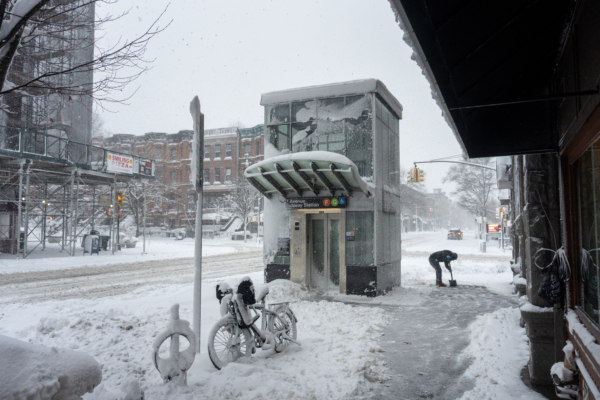
After the historic snowstorm, New York City public schools resumed in-person classes on Tuesday (24th), but the difficult commute and transportation chaos led to frequent reports of issues on the first day back to school. According to data released by the city government, the overall attendance rate in public schools was only about 63%, much lower than normal levels.
Areas outside the city center were particularly hard hit. Staten Island saw a snowfall of up to 30 inches, with many sidewalks and crosswalks filled with snow, making it difficult for school buses to navigate through the snow and slush. Some buses did not arrive on time, and there were even cases where special education schools were unable to safely pick up or drop off wheelchair-bound students due to snow accumulation on the roads.
Brooklyn and Queens also experienced high levels of absenteeism among teachers and students in some schools. Due to a shortage of teaching staff, some schools had to combine classes or have students study independently in the auditorium. The teachers’ union pointed out that more than half of the students were absent at certain high schools, and hundreds of staff members did not show up, affecting the overall quality of education.
Transportation issues exacerbated the chaos. The C Line subway was suspended, leading to delays on other routes. Parents reported that school bus drivers were unable to report to work or that bus yards had not been cleared, impacting transportation arrangements. Some school kitchen staff also had difficulty getting to school, affecting meal services.
Mayor Mamdani had previously announced that Monday would be a traditional “snow day” without remote learning, emphasizing the need to resume in-person classes under safe conditions. He stated that aside from academic learning, schools also provide services such as hot meals and social support, hence the decision to resume classes after road conditions improved.
However, some elected officials and parents believed that the decision was rushed, especially in areas heavily affected by snow like Staten Island, East Queens, and South Brooklyn, where snow removal was not yet complete, and transportation had not fully recovered. A state legislator suggested considering zoning-based decisions on school closures in the future, rather than a citywide blanket policy.
The president of the teachers’ union also stated that teachers who chose not to come to school due to safety concerns would not face disciplinary action.
The chaotic return to school after the snowstorm highlights the dilemma faced by New York City in balancing in-person and remote learning during extreme weather conditions.