
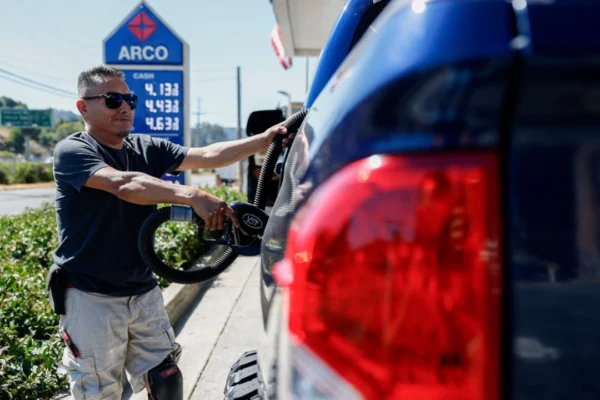
If you are in California and have visited a gas station or followed the news, you would know that California is currently facing an energy crisis. This crisis did not happen overnight but is a direct result of decades of environmental regulations in California that have stifled the state’s oil production and refining. Since the 1980s, California has shut down over 30 refineries, with more closures happening recently, reducing the number of operational refineries from 40 in 1982 to just six or seven by mid-February 2026.
Now, California’s refining capacity has dropped from 2.5 million barrels per day in 1982 to around 1.3 million barrels per day, a 48% decrease. During the same period, oil production from California wells has decreased from over 1 million barrels per day to slightly over 300,000 barrels per day, a 70% drop. Meanwhile, California’s population has grown from about 24 million to around 40 million, a 62.7% increase.
This means that per capita, California’s refining capacity has dropped by 68% and oil production by about 80%. This has left California with a total processing capacity of around 1 to 1.3 million barrels per day, while the daily demand for oil is around 1.6 million barrels. Gasoline production has decreased by 6.2 to 9.3 million gallons per day, leading to long-term shortages, rising oil prices that are $1 to $2 higher than the national average, with warnings of prices potentially rising to $8 per gallon or even higher.
The high premiums Californians pay for gasoline can be attributed to three main factors. Firstly, there is a widespread animosity towards the oil and gas industry, reflected in unreasonable and unscientific environmental standards that have driven all but a few powerful oil and gas companies out of California.
To compensate for the loss of production within the state, California not only imports crude oil from other countries but also pays other countries to produce custom gasoline and diesel specifically for California. When these countries produce the gasoline and diesel needed by California, they largely rely on energy supply from coal-fired power plants.
Regarding the mandates from the California Air Resources Board (CARB), evidence shows that the special gasoline designed for California to reduce pollution also reduces vehicle fuel efficiency by 1% to 3% per gallon. This means drivers need to consume 1% to 3% more gasoline to travel the same distance, leading to over 268 million gallons of increased gasoline consumption per year and emitting over 2 million tons of carbon dioxide into the atmosphere. During the same period (1980 to 2025), despite the rapid population and vehicle growth in Dallas, Texas, surpassing that of Los Angeles, the reduction in nitrogen oxides (NOx) and aromatic pollution was on par with LA at around 75%, without the need for CARB’s specially formulated gasoline.
CARB’s mandates have forced California drivers into a “fuel island,” isolating them from the fiercely competitive national fuel supply system. California prioritizes a “special” boutique blend fuel over the stricter and cheaper Federal Tier 3 gasoline standards, foregoing economies of scale in the national market, causing California drivers to pay a hefty premium for fuel that has lower energy content and higher greenhouse gas emissions per gallon.
Lastly, California has the highest gasoline taxes in the U.S., averaging around $1.27 per gallon, compared to an average of $0.40 to $0.50 per gallon in the other 49 states. Here are the details of California’s major gasoline taxes (as of 2026):
• State excise tax – 61.2 cents per gallon (July 2025 to June 2026 rates, second-highest nationally after Illinois at 66.4 cents);
• Cap-and-trade program costs – 23 cents in 2024 (the cost fluctuates annually, with only California and Washington participating in the cap-and-trade program);
• State and local sales taxes – an average of 41 cents per gallon weighted by population (applied to the total retail price, including excise taxes, using average gasoline prices and Tax Foundation’s average state and local sales tax rate of 8.99%).
In comparison, the average gasoline consumption tax in the U.S. is approximately 33.5 cents per gallon, with total taxes typically ranging from 40 to 50 cents per gallon including similar fees and sales taxes. In conclusion, California residents pay 77 to 87 cents more per gallon in state taxes compared to the national average, primarily due to higher consumption tax rates, tax shifts from carbon trading mechanisms, and additional environmental costs. These factors consistently keep California gasoline prices 1 to 1.67 dollars higher than the national average.
Although the analysis mainly focuses on regular gasoline, the basic reasons also apply to diesel in terms of costs and supply situations.
All these factors combined have resulted in California’s gasoline prices being excessively high, while also putting the fragile natural gas and energy infrastructure on the brink of collapse.