
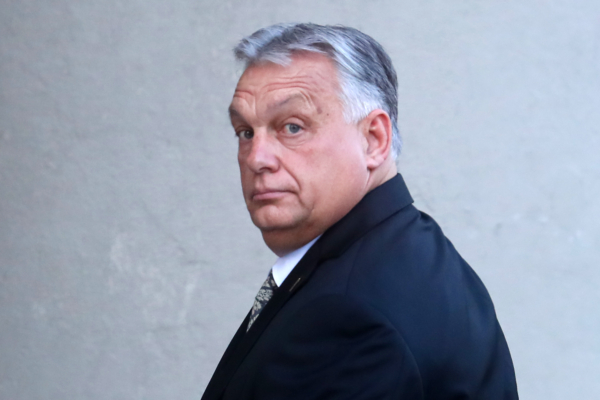
The European Union’s High Representative for Foreign Affairs and Security Policy, Kaja Kallas, stated on Monday (February 23) that the EU failed to pass a new round of sanctions against Russia, citing unexpected opposition from Hungary. Kallas admitted, “This is a setback, and it is not the message we wanted to convey today.”
At the meeting, EU foreign ministers had originally planned to impose the 20th round of sanctions on Russia’s “shadow fleet” and energy revenues on the fourth anniversary of the Russia-Ukraine war, with the aim of reducing Russia’s economic resources and providing a substantial new loan to Ukraine.
The EU has provided Ukraine with a total of 194.9 billion euros (approximately $229.8 billion) in financial assistance, while continuously tightening Russia’s crucial energy exports.
However, Hungary, seen as the most pro-Russia, pledged to block the new sanctions and a loan of up to 90 billion euros (about $106 billion). This funding is intended to assist Ukraine in addressing its military and economic needs over the next two years.
Hungary had previously agreed to this loan to Ukraine. Kallas criticized Hungary’s flip-flopping behavior, stating that it violated EU treaties.
Following the Russia-Ukraine war, many European countries have significantly reduced or completely halted imports of Russian energy, but Hungary and Slovakia continue to import oil and gas from Russia, enjoying temporary exemptions from the EU’s “embargo on Russian oil policy.”
However, since January 27, the ‘Friendship’ (Druzhba) pipeline transporting oil from Russia through Ukrainian territory to Central Europe was damaged, leading to disruptions in crude oil supplies to Hungary and Slovakia. Ukraine’s Security Service (SBU) claimed that this was a result of Russian drone attacks.
Hungary is not satisfied with this assertion and has vowed to continue opposing the new round of sanctions against Russia until Russian oil supplies are restored.
Furthermore, Hungarian Prime Minister Viktor Orbán made an unsubstantiated accusation, claiming that Ukraine deliberately withheld Russian oil in an attempt to raise energy prices in Hungary before the April elections and accused Kyiv of trying to overthrow his government.
He referred to the oil supply disruption as a “Ukrainian oil blockade” orchestrated by Ukrainian President Zelensky.
Hungary’s Minister of Foreign Affairs and Trade Péter Szijjártó told reporters before the meeting: “No one has the right to threaten our energy security.” He added that the opposition would be withdrawn once the oil transport was reinstated.
On the other hand, Slovak Prime Minister Robert Fico has requested the country’s electricity grid operator to stop emergency power supply to Ukraine on February 23 unless the ‘Friendship’ pipeline resumes oil transportation.
According to data from the Kiev-based consulting firm ExPro, 68% of Ukraine’s electricity imports this month come from Hungary and Slovakia. It is not clear if this data includes emergency electricity supplies.
Slovakia’s Ministry of Economy stated on February 23 that Ukraine informed the Slovak oil pipeline operator Transpetrol that the date for resuming oil transportation through the ‘Friendship’ pipeline has been postponed to February 25 but provided no reason for the delay.
Observers believe Orbán’s actions might be related to the critical April elections. As the EU’s longest-serving leader, Orbán is facing his biggest political battle since taking office in 2010.
Orbán alleges that the leading opposition party in most polls, Tisza, is colluding with the EU and Ukraine to establish a “pro-Ukraine government allied with Brussels and Kyiv”.
Polish Foreign Minister Radosław Sikorski believes that behind Hungary’s veto threat lies a fierce political move by Orbán to retain power.
Sikorski stated in Brussels, “I had hoped that Hungary would demonstrate more unity towards Ukraine. The ruling party has successfully cultivated an atmosphere of ‘hostility towards an invaded victim’ and is now trying to capitalize on it in the elections. This is truly shocking.”
Polish Prime Minister Donald Tusk criticized Orbán’s actions and accused him of “undermining aid to Ukraine.” Tusk told reporters, “I’m certain that other EU leaders will do their utmost to render ineffective the methods used by the Hungarian Prime Minister.”
Some European leaders believe that the most effective way to compel Russia to agree to peace in Ukraine is to raise the cost for Moscow to continue the war.
German Chancellor Friedrich Merz, speaking at a pro-Ukraine event in Berlin on February 23, stated, “The war will only end when Russia realizes that continuing the conflict is senseless, that more territory gains are out of reach, and that the price for this mad endeavor is too high. We must cut Moscow’s financial support for the war.”
Finnish President Alexander Stubb urged European allies to increase the war costs for Russian President Putin. He stated, “Putin is leading a failed military campaign alongside a collapsing economy. He is not only unable to win this war but also incapable of achieving peace.”