
The Japanese government is set to introduce a new immigration reform bill to a special session of parliament, requiring airlines to refuse boarding to passengers without valid authorization starting from the 2028 fiscal year. The bill also includes a significant increase in the maximum fees for extending residence permits.
According to the Nikkei Asian Review, the new pre-boarding screening regulations will apply to travelers from countries and regions currently eligible for visa-free and other short-stay visas. Before traveling to Japan, passengers must declare their occupation, travel destination, and accommodation online. The Japanese Immigration Services Agency (ISA) will verify the information and collect processing fees.
The new regulations aim to prevent illegal overstays and deter criminals from entering the country. The system is modeled after the United States Electronic System for Travel Authorization (ESTA). Airlines, shipping companies, and other relevant businesses are required to reject individuals who have not obtained prior authorization.
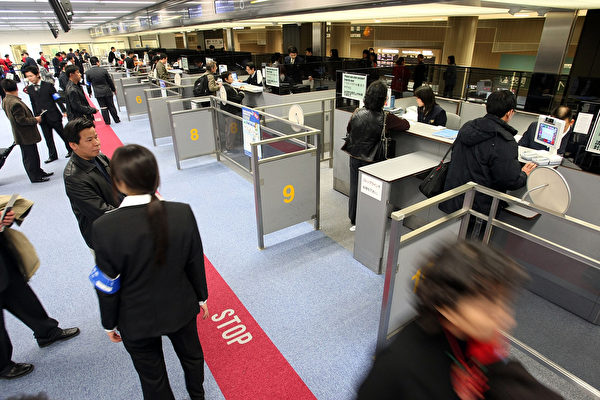
When passengers check in at the airport, their personal information, including their name, will be submitted to the immigration authorities for identity verification before issuing tickets and other documents. Upon arrival in Japan, passengers will be required to register their photo and fingerprints at the immigration checkpoint, undergo verification, and then pass through an automated facial recognition system. With the increasing number of tourists visiting Japan causing long immigration queues, the new system is expected to shorten waiting times.
The new bill also includes raising the upper limit for renewal fees for residence permits to 100,000 Japanese yen (approximately 645 US dollars) and for permanent residency permits to 300,000 Japanese yen. The specific amounts will be determined by government regulations. These fees, effective at the end of the 2026 fiscal year, will be used for the maintenance costs of the security system and personnel expenses. Currently, the fee for personally renewing a residence permit is 6,000 Japanese yen (about 39 US dollars).
Other revisions in the bill include provisions for partial fee waivers for applicants facing financial difficulties.