
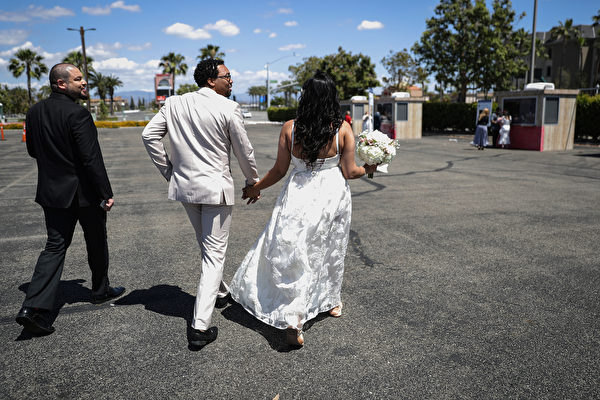
When a foreigner is facing deportation proceedings and chooses to marry at this time, this marriage will automatically be viewed as “high risk.”
The law assumes that such marriages are formed to evade deportation or obtain a green card.
According to Section 204(g) of the Immigration and Nationality Act, INA, foreigners who marry during deportation proceedings must depart the country for two years before applying for immigration again; otherwise, the immigration authorities will presume that the marriage is for immigration purposes.
In other words, even if the marriage is genuine, it will be suspected of having “impure motives” as long as the status was unstable at the time of marriage.
The purpose of this law is to prevent fraudulent practices of “marriage of convenience.”
In the past, some foreigners hurriedly married U.S. citizens to halt deportation proceedings.
Therefore, the law takes a “guilty until proven innocent” stance.
However, this also puts true love through a challenging test.
Despite the strict requirements, the law still leaves a door open for genuine marriages.
A foreign spouse can apply for a waiver to demonstrate that the marriage is not for immigration purposes.
But to pass the review, “clear and convincing evidence” must be provided to prove the authenticity of the marriage. This is the highest standard of evidence in all marriage immigration cases.
Compared to a regular marriage interview, officials will require more extensive and persuasive documentation, such as:
– Timeline and evidence of the couple’s dating and love (letters, photos, message records);
– Records of interactions between both families (holiday gatherings, communication, visits);
– Joint accounts, shared property, shared insurance;
– Affidavits from friends or relatives to prove the long-term stability of the relationship;
– If living separately, reasons must be explained and contact proof provided.
These documents must convince officials that the couple would choose to marry even without immigration benefits.
Why are these cases difficult?
The issue lies not in love but in time.
When a person is facing deportation, immigration officials naturally suspect whether the marriage is to “stay.”
Thus, even if the spouses genuinely love each other, they must face strict scrutiny and long wait times.
Some people think that getting married will immediately halt deportation, but that is not the case.
If a waiver is not applied for and approved beforehand, marriage will not automatically stop the deportation process.
On the contrary, if deemed a fraudulent marriage, not only will the immigration application be denied, but the individual may also face a permanent entry ban.
Due to the dual difficulty of legal and procedural aspects in these cases, it is recommended to seek assistance from a professional lawyer or licensed immigration consultant to prepare. They can help organize timelines, gather evidence, write explanations, and guide on how to honestly respond during interviews. Especially in the case of “marrying during deportation,” evidence must not only be “real” but also “strong” – able to withstand legal scrutiny at all levels.
(Disclaimer: This article is for general immigration system and practical observations and does not constitute legal advice or specific legal recommendations for any cases. The actual case result depends on individual facts and applicable laws. For personal cases, consult a qualified immigration lawyer.)