
Recently, diplomatic tensions between the Chinese Communist Party (CCP) and the Philippines have continued to escalate. The Chinese embassy in the Philippines recently issued a threat, warning that this could result in the Philippines “paying the price of millions of job opportunities.” In response, the Philippines stated that such rhetoric could be seen as “coercion” and expressed “strong opposition.”
In recent years, the Philippines and CCP have had multiple maritime confrontations in the controversial South China Sea region. Some senators in the Philippines have called for the recall of the Chinese ambassador. In response, on February 13, a spokesperson for the Chinese embassy in the Philippines warned that any serious damage to bilateral relations would lead to “the loss of millions of job positions.”
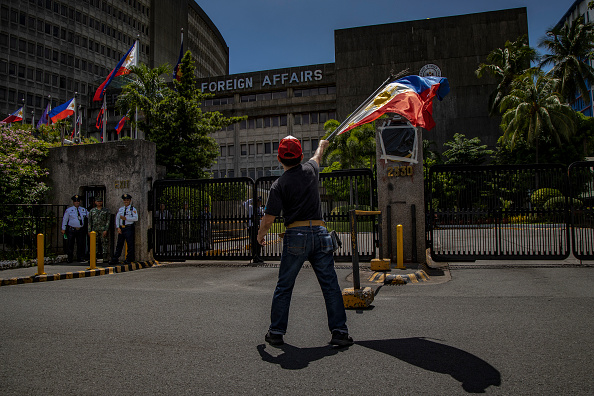
The Philippine Department of Foreign Affairs, in a statement released on Monday, February 16, stated: “We strongly oppose the tone of the (CCP) embassy, which seems to imply that cooperation could be used as a means of pressure or retaliation.”
The statement further said: “In the current atmosphere, such expressions carry the risk of being perceived as threats and undermine constructive bilateral dialogue.” The statement urged Chinese diplomats to adopt a “responsible and moderate tone” in public discourse.
The Chinese embassy called on the Philippine Department of Foreign Affairs to “restrain” certain individuals critical of the CCP, but did not name anyone specifically.
The latest dispute between the Philippines and CCP stemmed from a Facebook post by Jay Tarriela, a spokesperson for the Philippine Coast Guard, on January 14, including a photo of himself giving a speech with a background of a Xi Jinping cartoon image with the slogan “Why does China (CCP) continue to bully?”
On January 16, the Chinese Embassy in Manila issued a statement calling it “slander and defamation” and demanded that the official take “responsibility,” prompting strong condemnation from the Philippine Senate.
On February 9, the Senate passed a resolution labeling the intervention by the Chinese embassy as “improper” and declaring that the official was performing his duties, strongly condemning recent rude statements by the Chinese embassy targeting several members of parliament and government officials. Some senators further called for the expulsion of officials from the Chinese embassy or the recall of the Chinese ambassador.
Regarding the CCP’s threats, the Stratbase Institute in Manila rebuffed the CCP’s warning about unemployment, calling it “exaggerated and unsupported by evidence.”
The think tank pointed out that official data from the Central Bank of the Philippines showed that from January to November 2025, foreign direct investment inflows from China were at $3.1 million, a decrease of over 50% compared to the previous year. In 2024, China accounted for only 0.55% of total net investment inflows into the Philippines.
Although China has been the Philippines’ largest source of imports since 2013, the United States remains its largest export market, highlighting the asymmetry in trade relations.
The Philippines’ manufacturing and retail sectors heavily rely on Chinese components, raw materials, and agricultural products (such as bananas and pineapples) have a high dependency on the Chinese market. If relations deteriorate, supply chain costs will immediately rise, and agricultural exports will be severely impacted.
At the same time, China is the second-largest source of tourists for the Philippines, with over 1.8 million visitors annually contributing around 20% of tourism income.
However, the Philippine economy is diverse, with the United States being the largest source of foreign investment, Japan as the largest official aid provider, and South Korea and the European Union as important trade partners, hence it will not collapse due to deteriorating relations with the CCP.