
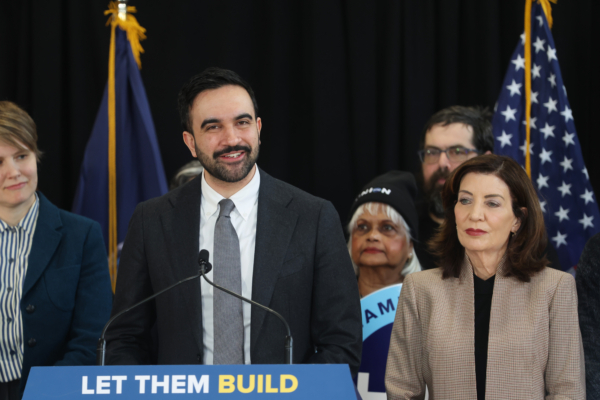
New York City Mayor Mamdani, who took office earlier this year, faced a major challenge of budget deficit but has now received financial support from the state government. Governor Hochu announced on the 16th that the New York State government will allocate an additional $1.5 billion over the next two years to assist New York City in overcoming its current financial difficulties.
The announcement of this aid plan coincides with Mayor Mamdani’s scheduled release of his preliminary budget for the new fiscal year on February 17th. In January, Mamdani held a press conference warning that New York City was facing a “severe financial crisis,” with an estimated budget deficit of $12 billion over the next two years, higher than previous estimates. However, on the 11th of this month, Mamdani revised the figures during a hearing in the state legislature, adjusting the deficit to around $7 billion, citing better-than-expected performance in Wall Street’s latest bonus income. He also mentioned utilizing reserve funds and advocating for cuts in institutional expenses. Nevertheless, the budget deficit still poses a huge challenge to the city’s financial stability.
Governor Hochu’s move to reduce $1.5 billion from New York City’s $7 billion budget deficit, as stated in the announcement, has been met with a statement from Mamdani’s spokesperson, Joe Calvello, affirming that it will not affect the mayor’s commitment to taxing the wealthy.
During his campaign last year, Mamdani advocated for a 2% income tax increase on individuals earning more than $1 million annually. Mamdani stated that this measure alone could cover nearly half of the budget deficit and argued that the wealthiest individuals and most profitable businesses should bear more responsibilities.
According to Hochu’s announcement, this aid will be divided into two parts – $1 billion allocated for the 2026 fiscal year and an additional $500 million for the 2027 fiscal year, totaling $1.5 billion. The funding will support youth programs, public health, and other areas pending negotiation. Governor Hochu emphasized that this investment is aimed at protecting essential public services and will help stabilize New York City’s financial foundation, guiding the city government back on track.
Nathan Gusdorf, the Executive Director of the Fiscal Policy Institute, previously pointed out that the current financial pressure in New York City stems mainly from newly promised policies by the city government lacking sufficient financial resources, and underestimating related costs during the Adams administration.