
At the Munich Security Conference, Chinese Foreign Minister Wang Yi made condescending remarks towards Japan, sparking a backlash from the Japanese government. In a statement released by the Japanese Ministry of Foreign Affairs on Sunday, they condemned Wang Yi’s comments as “inconsistent with facts and baseless.” The Ministry of Foreign Affairs also criticized China without naming it specifically for its continuous efforts to change the status quo through force or coercion. The incident in Munich has further heightened the already tense diplomatic relations between China and Japan.
During the Munich Security Conference on February 14th, Wang Yi criticized Japanese Prime Minister Taro Kono for his remarks made in parliament last year regarding “Taiwan contingency.” Wang Yi stated that the Prime Minister claiming a Taiwan Strait contingency could constitute a “threat to survival” that would allow Japan to exercise its collective self-defense right is absurd. He also accused Japan of reviving militarism.
In response, Japanese Foreign Minister Toshimitsu Motegi refuted Wang Yi’s comments at the Munich Security Conference the same day, stating that they were “unsupported by facts,” and highlighting Japan’s contributions to international peace and stability.
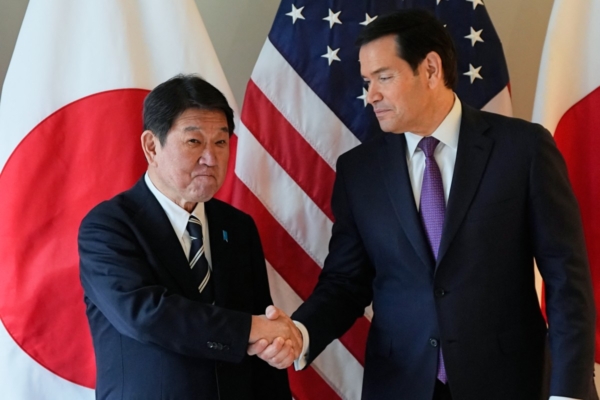
While Motegi did not meet with Wang Yi that day, he did have a meeting with US Secretary of State Antony Blinken. According to a statement from the US State Department, the two discussed China’s recent coercive economic behaviors. Blinken emphasized the US’s steadfast commitment to Japan. They both agreed on the necessity to modernize bilateral economic and security cooperation to address non-market economic practices and coercive diplomacy, ensuring both countries do not fall into strategic dependency traps.
In response to Wang Yi’s disrespectful remarks towards Japan, the Japanese Ministry of Foreign Affairs issued a statement on social media platform X on February 15, restating Japan’s position.
The Ministry stated that Chinese officials at the Munich Security Conference made “inappropriate comments regarding the Japanese government’s security policy.” In response, Japanese Foreign Minister Motegi made his position clear at another session of the Munich Security Conference and subsequently issued a “strong diplomatic protest” to China through diplomatic channels.
“Given that China’s assertions are inconsistent with facts and baseless, the Japanese government reiterates its position here,” said the Ministry of Foreign Affairs. The Ministry also criticized communist China in the statement without naming it, stating that “some countries in the international community have been rapidly enhancing military capabilities in an opaque manner and continuously attempting to unilaterally change the status quo through force or coercion. Japan opposes such practices and distances itself from them.”
The Ministry of Foreign Affairs also refuted Wang Yi’s accusation of Japan “reviving militarism.”
“Japan’s continued contributions to international peace and stability are broadly recognized. Japan’s efforts to strengthen defense capabilities are aimed at addressing an increasingly severe security environment and are not directed at any specific third country,” the Ministry of Foreign Affairs stated. “We hope that the Taiwan issue can be peacefully resolved through dialogue, and this position remains unchanged. Due to some unresolved issues and challenges, communication between Japan and China is all the more crucial. The Japanese government is always willing to engage in dialogue with China and plans to respond in a calm and appropriate manner going forward.”