
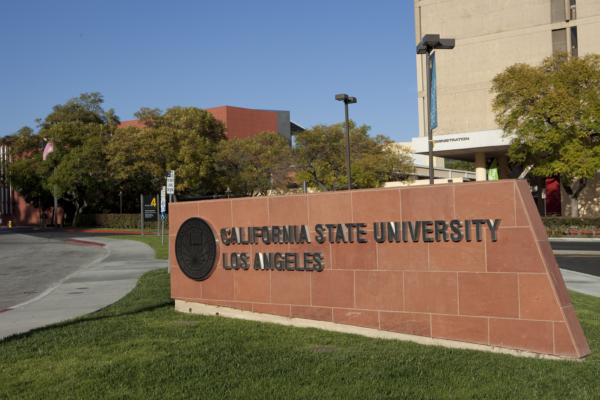
A professor of economics at California State University, Long Beach (Cal State Long Beach) believes that cancelling standardized tests such as the SAT in the name of DEI (Diversity, Equity, and Inclusion) actually harms the students who claim to need help.
Professor Andrea Mays found that many students have gone through their high school years during the COVID-19 pandemic, learning through online platforms, without adequate preparation for basic coursework when they enter campus.
In an interview with Fox News, she stated that the decision by the University of California system to eliminate the SAT as an admission requirement has led to students being unprepared for college, resulting in higher dropout rates. She mentioned that the dropout rate is “astonishingly” high, with other department heads informing her that the situation is prevalent, especially in mathematics courses, reaching up to 25%.
She explained, “They struggle with learning, feel embarrassed, frustrated, saying ‘I’ve never learned this stuff before, I don’t know how to calculate percentage changes,’ and many students are too embarrassed to ask questions and end up dropping out of the course.”
In a recent article published in the Orange County Register, she emphasized that “California State University must reinstate the SAT exam, or else we are harming our own students.”
The California State University system, on the other hand, did not agree with this notion, stating they aim for inclusivity.
In 2022, the acting chancellor of the California State University system, Steve Relyea, expressed that the purpose of eliminating the SAT and ACT exams was to “create a fair competitive environment” and provide “wider admission opportunities.”
After a one-year study conducted by the system’s admissions advisory committee, they concluded that standardized tests like the SAT had “virtually no additional value” in predicting students’ academic success compared to high school GPA.
As a result, the system officially shifted to a “multi-factor admissions criteria,” focusing on specific high school GPA, extracurricular activities, and socioeconomic factors.
For years, major educational advocacy groups in the United States, including the largest teachers’ union, have strongly opposed standardized tests like the SAT.
Ms. Mays stated, “I absolutely support inclusivity, our campus is highly inclusive, but doing this (cancelling the SAT) is not being inclusive, it’s deceiving because they (referring to students) are completely unaware.”
She stressed, “Opportunities gained without preparation are not opportunities, they are losses; turning a blind eye to unpreparedness is not fair.
She further added, “If the California State University genuinely wants students to succeed, afford tuition, and achieve equity, they must be willing to accurately assess students’ readiness and take action based on the assessment results.”
Regarding how to address the issues she has observed, Ms. Mays admitted, “I am not an expert on the recent reforms in the SAT, others have studied whether adjusting the questions could allow certain groups performing poorly in certain types of questions to excel in others.”
She continued, “There is room for discussion on which standards to adopt, whether ACT, SAT, or other methods, the issue lies in the differentiation of high schools (variance in teaching quality, course difficulty, resources, faculty, student backgrounds).”
“Not all high schools are excellent, even though they claim to be… So, allowing these students to directly enter four-year universities from high school is a loss for them. They come here thinking they are outstanding, only to realize they rank at the bottom in math and English abilities distribution.”
She mentioned the community college system as a potential alternative for high school graduates.
She told Fox News, “The robust and efficient community college system in California serves as a readily available ‘alternative’ for high school graduates.”
She said, “By attending the community college system, taking the basic level English class, you can write sentences, paragraphs, and even make arguments; take a foundational math class, learn some basic math knowledge you may have missed in high school, and the credits from these courses can transfer to a four-year university.”
She reiterated, “There is no reason not to use the SAT exam as a screening criterion to let students know if they are prepared for university-level learning.”
(Reference: This article referenced Fox News reporting)