
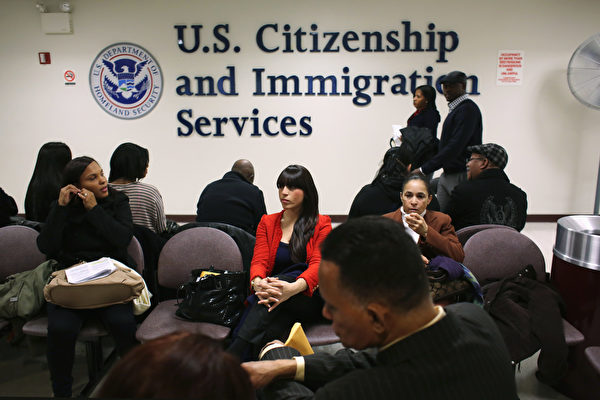
In the United States, one of the most nerve-wracking aspects of marriage immigration scrutiny is the “Stokes Interview.”
It’s not a romantic conversation but rather a legal form of a “couples lie detector test.”
When immigration officials suspect the authenticity of a marriage, both partners are separated and asked the same questions. Their answers are then compared one by one to determine if the marriage is genuine.
The name “Stokes Interview” comes from a classic 1975 case in New York – Stokes v. INS.
In this case, a couple was suspected of a sham marriage during an immigration interview and was denied a green card. The court ruled that when immigration authorities suspect marriage fraud, they must give the parties a “fair second interview,” which is what we now refer to as the “Stokes Interview.”
Since then, immigration offices across the United States have followed this standard when suspicions of marriage fraud arise.
In essence, the Stokes Interview is an “advanced examination,” not intended to harass but to confirm the authenticity of the marriage.
During this process, the spouses are placed in separate rooms and asked the same questions. All responses are recorded, documented, and later compared by officials.
Questions can range from significant to mundane, covering everything from how they met to daily life details. Officials may ask:
– How did you first meet? Where was your first meeting?
– Who made the first move? How many guests were at the wedding?
– What color are the curtains in the bedroom?
– What is the most common breakfast for your partner?
– Who cooked dinner yesterday? What did you eat?
These questions may seem trivial, but they are clues officials use to gauge authenticity.
If the answers from both parties align, it signifies intertwined lives; however, contradictory responses or a lack of knowledge about each other’s daily routines may trigger further investigation.
Yet, the Stokes Interview is not a “zero-tolerance” test. Minor differences between spouses are normal due to variations in memory, expression, and perspectives.
For example, one may say, “We first met at a friend’s house,” while the other may say, “It was at a party” – these answers are not necessarily contradictory.
Immigration officers evaluate the naturalness of the tone, reasonableness of responses, and connection between the couple.
What raises concerns are clear discrepancies, such as one saying, “We live in San Francisco,” while the other states, “We reside in Los Angeles.”
Firstly, it is crucial to have a thorough understanding of your application data. If the wedding date, addresses, or workplace details are mentioned, consistency is key.
Secondly, recalling daily life specifics like home decor, holiday traditions, and interactions with family and friends is essential. These seemingly trivial questions best reflect real-life scenarios.
Furthermore, it is vital to remain calm and answer truthfully. Fabricating or memorizing responses is frowned upon by officials. If details are forgotten, honestly stating “I can’t recall” is preferable to bluffing.
Some couples may feel anxious before the interview, fearing being suspected for incorrect answers. However, the Stokes Interview is not a trap but an opportunity for genuine couples to “prove themselves.”
As long as the marriage is genuine, with daily interactions and shared life, there is no need to fear.
The key to the Stokes Interview lies not in “matching answers” but in “honest consistency.” Officials can discern authenticity from tone, eye contact, and even detailed responses.
If there are genuine misunderstandings or memory lapses, providing reasonable explanations still leaves room for case approval.
For truthful couples, the Stokes Interview is a chance to “retell your story,” while for fraudulent marriages, it’s a mirror of truth.
Marriage is not just paperwork; it’s life.
And in the immigration interrogation room, if love is real, it can withstand questioning.
(Note: This article is a general summary of immigration procedures and practical observations and does not constitute legal advice or specific legal recommendations for any particular case. Actual case results depend on individual circumstances and applicable law, and for personal cases, consultation with a qualified immigration lawyer is recommended.)