
On Friday, February 13, the US government released a new list of Chinese companies assisting the People’s Liberation Army of China, known as the 1260H list. Prominent Chinese giants such as Alibaba and Baidu have once again made it onto the list. This move is expected to increase pressure on Beijing before the upcoming meeting between US and Chinese leaders in April.
The 1260H list was first published in 2021 and currently includes over 130 Chinese entities accused of cooperating with the Chinese military, ranging from airlines, construction firms, shipping companies, computer hardware manufacturers to telecommunication companies.
Alibaba and Baidu have now entered the list for the second time. The list is updated annually as part of broader efforts to prevent the use of American technology to aid the military development of the Chinese Communist Party.
While being listed on the 1260H list does not immediately lead to a ban by the US, inclusion poses significant reputational risks for the companies and serves as a stern warning of business risks issued by the US military to American entities and companies. Additionally, it could increase pressure from the US Treasury Department to impose sanctions on these companies.
Under a new law, the US Department of Defense will prohibit contracting and procurement with companies on the list in the coming years.
According to a report by Reuters, other Chinese companies added to the list on Friday include automaker BYD, biotechnology firm WuXi AppTec, and artificial intelligence robotics company RoboSense Technology Co. Ltd., while the chip storage manufacturer Changjiang Storage was removed from the list.
Bloomberg reported that the additional list also included wireless router manufacturer TP-Link.
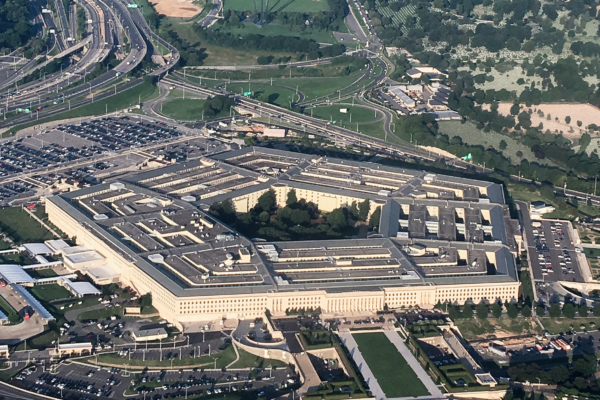
At the time of writing, the latest 1260H list document published in the Federal Register by the Pentagon showed that it had been removed, with no clear reason provided.
When asked why the list was withdrawn, the Pentagon responded to Bloomberg, “We have no comment at this time.”
Currently, some Chinese companies listed on the 1260H list have either filed lawsuits against the US regarding the matter or are cooperating with the US government to provide more information in seeking removal from the list.
An Alibaba spokesperson stated that they see no reason for being on the list and threatened legal action. “Alibaba is neither a Chinese military enterprise nor involved in any military-civil fusion strategy.”
In after-hours trading on Friday, Alibaba’s US depositary shares fell by 5% at one point. Being on the list could pose a serious challenge for Alibaba, a company actively competing in the global artificial intelligence field. Additionally, Baidu’s stock fell by 4.5%.
The list also includes major Chinese enterprises such as Tencent Holdings, one of China’s largest tech companies, and CATL, a leading battery manufacturer in the electric vehicle industry.
Tencent stated that their business wouldn’t be impacted by the list and that they would commence a reexamination process to correct any mistakes in their inclusion. CATL mentioned that the company “is not engaged in any military-related activities.”
Apart from Changjiang Storage, some companies from the 2025 list have been removed, including China COSCO Shipping Financial Co Ltd and HiSilicon Technologies.
A report from Hogan and Lovells law firm highlighted that being included in the 1260H list would result in “numerous direct and indirect impacts” for companies, including restrictions on US defense contracts, potential listing on other restricted parties lists, damage to reputation, and increased compliance costs.