
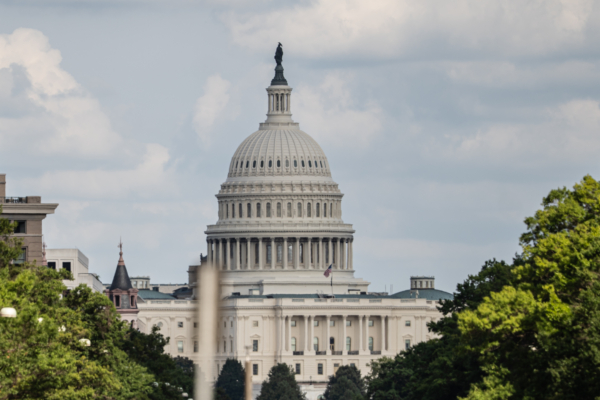
The U.S. Senate on Thursday (February 12) rejected the appropriation bill that was supposed to provide funding for the Department of Homeland Security (DHS) in the fiscal year of 2026, with a vote of 52 to 47. Despite the increased possibility of a DHS shutdown, the actual impact may be limited.
The Senate website announced on the afternoon of February 12 the result of the vote on H.R.7147 as “Rejected.” As of the time of publication, the specific voting breakdown has not been disclosed, but there were 52 votes against and 47 in favor, falling short of the 60-vote threshold required to advance the bill. The Democrats insist on reforming the DHS, making negotiations on this bill difficult between the Democrats and Republicans.
Senate Democratic Leader Chuck Schumer stated on the day before the vote (February 11) that the Democrats would not support a continuing resolution to maintain the operations of Immigration and Customs Enforcement (ICE) under the current funding. The rejection of the bill could increase the possibility of a shutdown for the Department of Homeland Security and its affiliated agencies starting from Saturday (February 14), but the actual impact may be limited.
Prior to the government shutdown on October 1, 2025, the emergency plan formulated by the DHS showed that out of 272,000 employees, 258,000 are considered “essential personnel” who are exempted or eligible to work normally during a shutdown.
Additionally, the emergency plan also indicates that if the government shutdown lasts for more than 5 days, around 2,000 more employees will be designated as “essential personnel.” “Essential personnel” include the U.S. Coast Guard, U.S. Secret Service, law enforcement agencies, border processing and inspection, anti-terrorism efforts, and energy preparedness and response departments – all crucial to the government and national security.
Specifically, the H.R.7147 bill not only provides funding for departments and functions within the DHS but also allocates funds for security, law enforcement, and investigative units. The specific security enforcement agencies included are the U.S. Customs and Border Protection, U.S. Immigration and Customs Enforcement, Transportation Security Administration, U.S. Coast Guard, and U.S. Secret Service.
Furthermore, the bill also allocates funds for the Cybersecurity and Infrastructure Security Agency and the Federal Emergency Management Agency; funding for research, development, training, and services like the U.S. Citizenship and Immigration Services, Federal Law Enforcement Training Centers, and Science and Technology Directorate.