
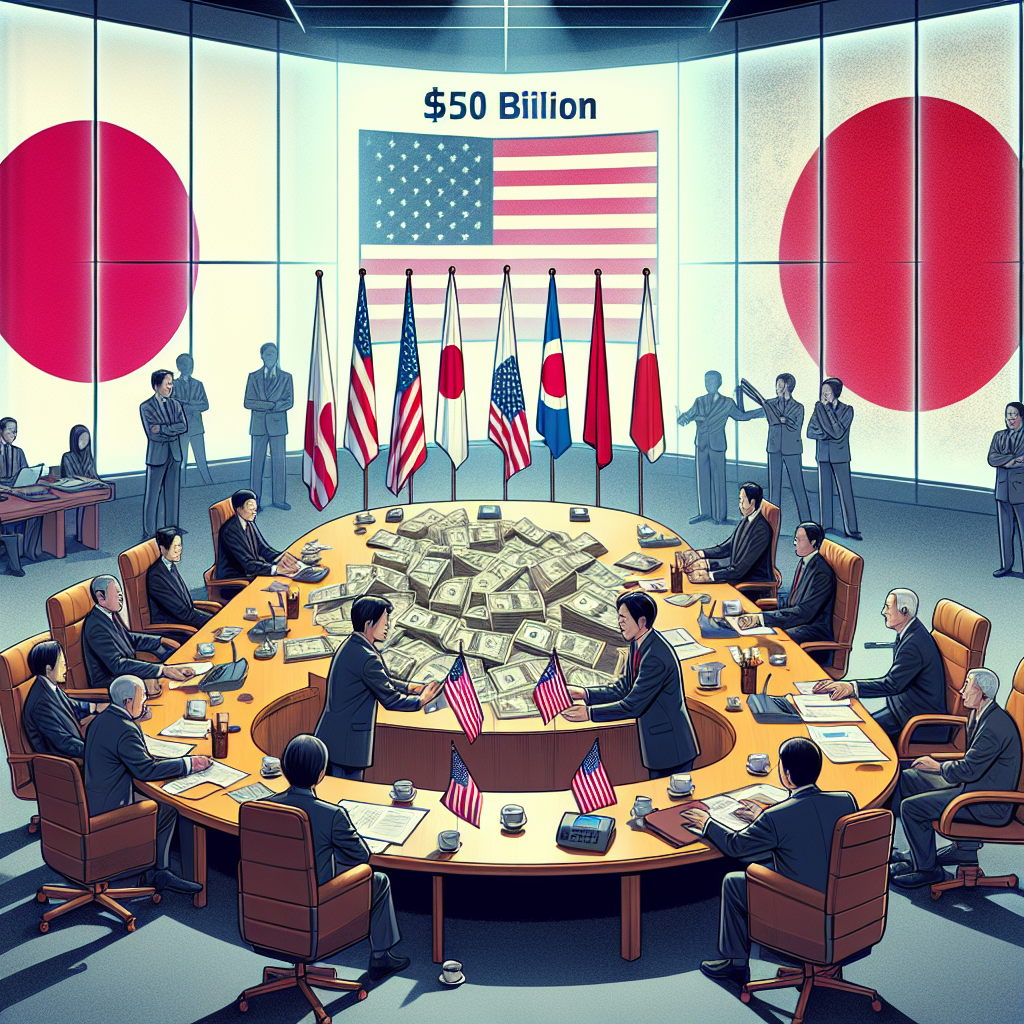
The Japanese government stated on Thursday (February 12) that although the United States and Japan have agreed to expedite the negotiation process for the initial projects of the $550 billion investment plan, there are still significant disagreements in terms of specific project arrangements and evaluation criteria, and the final plan has not been finalized.
Japanese Minister of Economic Revitalization and Trade Negotiation Representative Akazawa Ryo, speaking to the media in Washington that day, said that Japan and the United States have agreed to enhance coordination and accelerate negotiations on the initial projects, but further coordination is needed on several key issues.
The $550 billion investment plan is a complementary arrangement reached by the US and Japan to reduce tariff pressures on Japanese export products. Recently, the US has urged Japan to speed up the implementation of investments to demonstrate sincerity in the agreement.
According to Bloomberg, Akazawa Ryo held an approximately 85-minute meeting with US Secretary of Commerce Howard Lutnick to discuss the determination of the initial investment projects. However, no specific details of the projects were disclosed after the meeting.
Akazawa stated that despite the tremendous efforts put in by both working teams, there is still a “considerable gap” on core issues such as “which projects should receive funding priority.” He admitted that it is currently uncertain when the initial projects will be finalized or announced, and the timing of the next round of ministerial-level negotiations is also undecided.
When asked about the negotiation difficulties, Akazawa pointed out that each project requires evaluation of multiple financial indicators, including expected rates of return, involving various tools such as equity investment, loans, and loan guarantees. The evaluation process is complex and cautious, making the negotiations “extremely challenging.”
According to the existing framework, Japan’s investment funds will be provided through government-related agencies such as the Japan Bank for International Cooperation (JBIC) and Nippon Export and Investment Insurance (NEXI), in the form of equity, loans, and guarantees.
Akazawa mentioned that the negotiations also take into account Japanese Prime Minister Sanae Takai’s plan to visit the United States in March, hoping to make substantive progress before the visit to ensure that the trip is “fruitful.”
Previous reports have indicated that energy and semiconductor sectors are seen as potential key areas, but further negotiations are required on the allocation of funds, mechanisms for returns, and risk-sharing.
The US has recently been exerting pressure on other allies as well. President Donald Trump has warned that if South Korea fails to advance a similar agreement, they may face an increased risk of tariffs, showing that Washington is using tariffs as a negotiating leverage to push for ally investment commitments to materialize.