
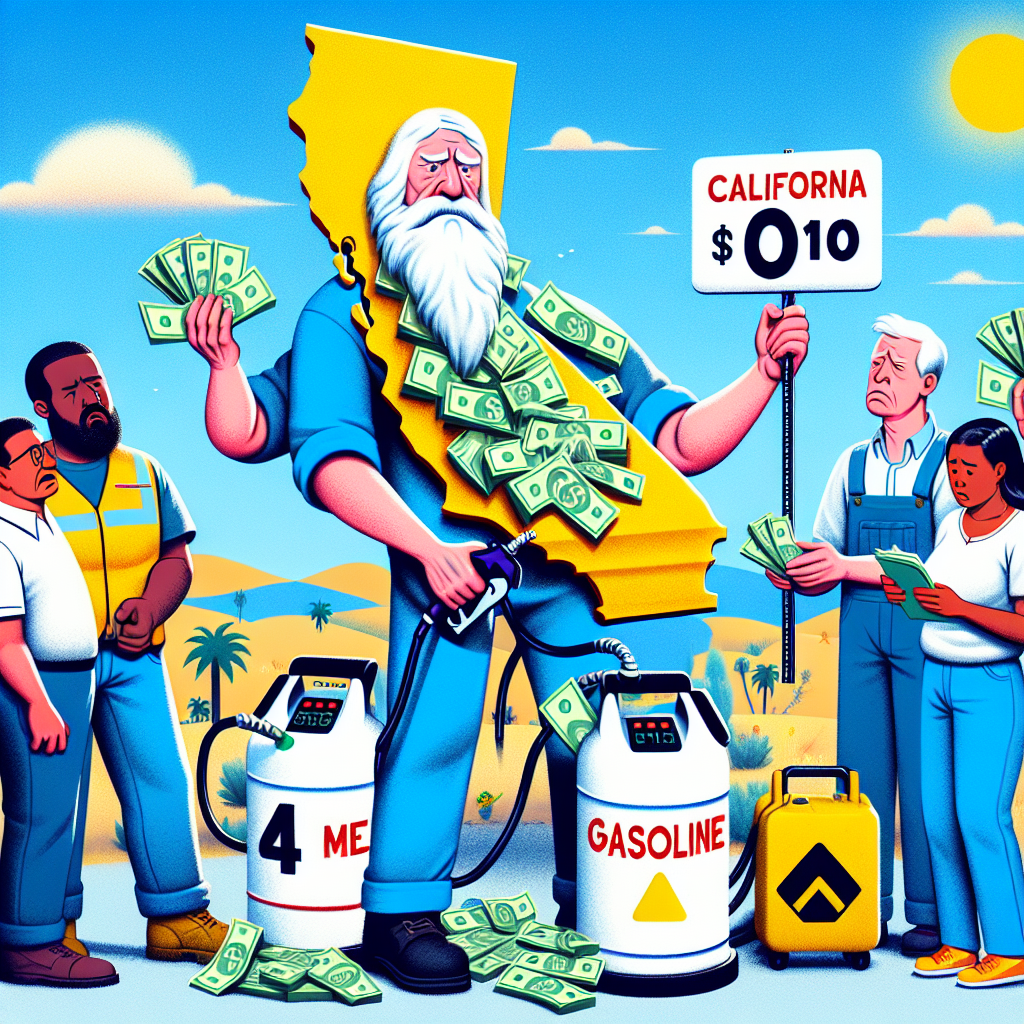
California’s persistently high gasoline prices have been a source of complaints from the public for many years. This week, California once again led the nation in terms of both gasoline prices and price increases. At a time when Californians had little hope for officials to address the issue of high fuel prices, President Trump recently stated that he will try to lower gasoline prices in California.
In late January, Trump mentioned the difficult-to-bear high fuel prices affecting Californians in an interview with the Los Angeles Times. He stated that he would consider restricting California’s fuel tax, with a plan to reduce fuel costs for California drivers by 40%.
“Gas prices in California could drop to $2.50 per gallon,” Trump said, pointing out that the United States is currently producing more oil than ever before. While other states are taking advantage of this, California, on the contrary, “raises prices and increases taxes whenever fuel prices fall across the country.”
In recent times, gasoline prices in California have been rising almost daily. According to the American Automobile Association (AAA) fuel price map, on Wednesday afternoon, regular gasoline prices were $4.52 per gallon, an increase of 2.4 cents from the previous day, 14 cents from the previous week, and about 30 cents from a month ago. Data from GasBuddy also shows that California had the highest increase in gasoline prices in the country this week.
In California’s largest metropolitan area of Los Angeles, regular gasoline was priced at $4.554, up 10.6 cents from the previous week and 18.7 cents from a month ago. According to GasBuddy’s price records, today’s gasoline prices are the highest in over two months.
Comparing gasoline prices nationwide, regular gasoline prices in the U.S. were $2.937 this week, with only California, Hawaii ($4.396), and Washington ($4.068) exceeding $4.00. There are six states with gasoline prices between $3 and $4, while the rest are below $3.
Hawaii is entirely dependent on imported gasoline, with oil having to be transported long distances by sea, incurring substantial costs to bring petroleum to the islands. In the face of California’s strong pricing, Hawaii now only ranks second in high fuel prices.
Californians have undoubtedly been voicing the loudest complaints about fuel prices across the nation. Residents have recently shared photos of regular gasoline prices reaching $5.49 in certain areas. Some say, “Gas prices in Southern California are outrageously high! I wish I lived in a state with lower prices.” Others remark, “I see gas prices going up, more than 20 cents higher than last week!”
Republican State Senator Suzette Martinez Valladares expressed to Fox Business Channel this week that she believes California is truly on the brink of collapse. She stated, “Refineries are decreasing, and my constituents are paying more for fuel every day.”
Regarding the factors driving the trend of rising gasoline prices in California, the California Energy Commission (CEC) has explained that the state’s fuel system is relatively independent, requiring special air pollution-reducing blends of gasoline, along with various factors such as environmental protection and tax policies, contributing to high fuel prices.
According to the CEC, currently 75% of the crude oil processed by California refineries comes from outside the state, with the vast majority imported from overseas and a small amount from states like Alaska. Only 25% is domestically produced.
The increase in gasoline prices in California is directly related to the continuous decline in the state’s oil production. California was once a major oil-producing state in the U.S., but now its oil production only accounts for 2.5%-2.7% of the total national output, meeting just 23.7% of in-state demand. In 1985, California’s oil production reached as high as 398,000 barrels, but by 2023, it only produced 123,900 barrels, a decrease of 67.8%.
Michael Mische, a professor at the Marshall School of Business at the University of Southern California, warned in a study last year that the closure of California’s two major refineries could create a daily gasoline shortfall of 6.6 to 13.1 million gallons, potentially leading to a 75% increase in gasoline prices in 2026.
Experts believe that the closure or departure of refineries from California is related to stringent environmental regulations and excessive taxation. Mische also pointed out that California’s high gasoline prices and gasoline shortages are largely self-inflicted. He cited a set of figures: “In the past 30 years, California gasoline consumption taxes have increased by 253%, the state has added 38% more vehicles, the population has increased by 24%, the number of refineries has decreased by 56%, and in-state crude oil production has dropped by 63%.”
In his research report, Mische proposed 10 measures to address the issue of high fuel prices, with more than 8 related to loosening state policies on environmental protection, taxation, and more.