
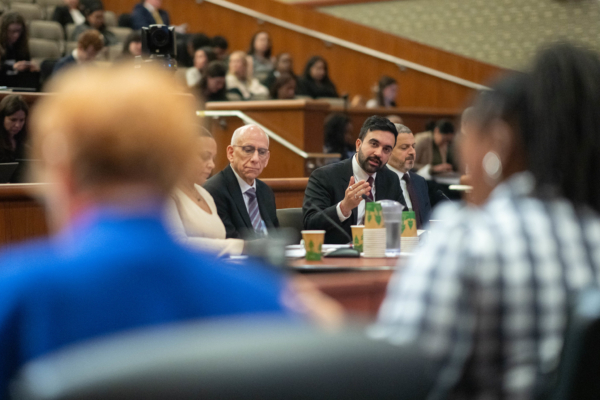
New York City Mayor Mamdani attended the annual joint legislative budget hearing in Albany on Wednesday, February 11th, to seek budgetary support from state lawmakers. He stated that while the financial situation of New York City is not as dire as previously assessed, it still requires more funding from the state government and authorization for the city to tax high-income earners to fill the budget gap.
This visit by Mamdani comes at a time when the city is preparing its budget for the fiscal year 2027. According to regulations, he must submit a balanced budget proposal by February 17th, and the city is already facing a significant financial gap before incorporating its new policy expenditures.
In January of this year, Mamdani held a press conference warning that New York City is facing a “serious financial crisis,” with a projected budget deficit of $12 billion over the next two years, higher than previously expected. However, he revised the figures during Wednesday’s hearing, adjusting the deficit to around $7 billion, citing the better-than-expected performance of the latest bonus income from Wall Street’s finance industry.
Several major financial institutions, including JPMorgan Chase, Goldman Sachs Group, and Bank of America, have recently increased the bonus pools for bankers and traders by at least ten percent. Since bonuses are taxed at a high rate, this growth is expected to provide a significant boost to tax revenue for New York City.
Mamdani stated that through more aggressive cost-cutting strategies, updated tax and bonus estimates, and utilizing reserves for the current year, the city has reduced the original $12 billion deficit to $7 billion without impacting municipal services. However, he did not specify how much of the reserves were used to achieve the approximately $5 billion financial improvement.
When discussing the causes, Mamdani once again attributed part of the responsibility to former Mayor Adams and former Governor Kumer. This assertion has sparked criticism among some business circles but has also garnered support from some policy research institutions.
Nathan Gusdorf, the Executive Director of the Fiscal Policy Institute, previously pointed out that the current financial pressure mainly stems from new policy commitments by the city government lacking sufficient funding sources and long-term underestimation of related costs during the Adams administration.
Mamdani’s latest estimated $7 billion deficit is closer to the assessments of most institutions. The New York City Independent Budget Office (IBO) estimates the gap to be around $6.5 billion, while the more cautious Citizens Budget Commission (CBC) predicts a deficit range between $6.1 billion and $8.5 billion. CBC Chairman Andrew Rein stated that the city’s revised numbers are more realistic, but the key lies in proposing viable solutions.
During his lobbying efforts in the state legislature, Mamdani made two core demands. Firstly, he called for the state government to provide “fair returns” to New York City in the allocation of funds. He pointed out that the city contributes approximately 54.5% of tax revenue to the state government but only receives 40.5% in return. However, the Empire Center for Public Policy noted that the 54.5% figure includes a significant amount of income tax from non-residents who commute to work in the city, and adjusting for this, a more representative ratio is around 46.7%. Nonetheless, there still exists a disparity in resources between the two entities.
The second demand is to impose a two percent income tax on taxpayers earning over $1 million annually. Mamdani argued that this measure alone could cover nearly half of the budget deficit and advocated for the wealthiest individuals and most profitable businesses to take on more responsibility.
While briefly mentioning the possibility of raising corporate tax rates during the hearing, Mamdani did not elaborate much. Governor Hochu has stated plans to extend the 7.25% corporate franchise tax rate applicable to businesses with annual revenue exceeding $5 million for another three years, while Mamdani had previously proposed raising this tax rate to 11.5%. According to data from the Citizens Budget Commission, New York City businesses currently face a top marginal corporate tax rate of 17.44%.
Mamdani’s focus during the hearing was on taxing the wealthy to increase revenue rather than specific expenditure cuts. The city government only indicated that it expects to save around $1 billion through the newly established “Bottle Savings Czar” in various municipal agencies to identify efficiencies and waste, but the details have not been disclosed yet.