
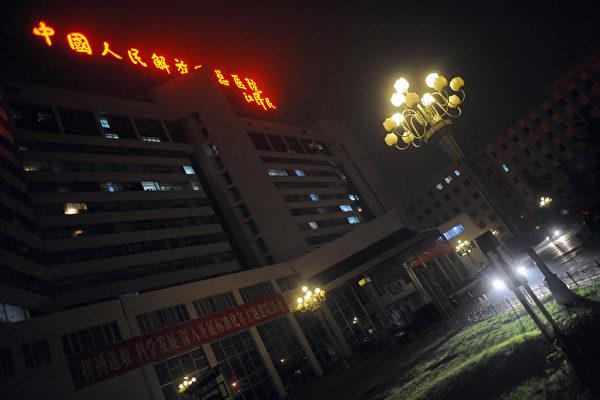
In the 1990s, Henan Province in China experienced a humanitarian disaster known as the “blood disaster” due to the rampant spread of AIDS caused by the large-scale “blood plasma economy” there. Over the years, the “blood plasma economy” has continued to secretly develop in China, with a significant number of unemployed individuals in Beijing forced to resort to selling blood to make ends meet. The 301 Hospital in the capital city, which is a high-level health facility of the Chinese Communist Party, also serves as an illegal hub for the “blood plasma economy,” drawing attention to shady practices behind the scenes.
The Tongzhou Majuqiao casual labor market is one of the largest labor markets in Beijing, where people from all walks of life gather in search of livelihood. In late January of this year, mainland Chinese media personality Li Banjiang published an article about his research in the Majuqiao casual labor market, mentioning that among those wandering around the market are people who cannot find work and are desperate, shouting “selling blood, selling blood.”
According to the article, a man from Hebei province said that most people here are laid off by factories when they reach a certain age, so they come here to find casual work, but if they can’t find any, they have to resort to selling personal information or even selling blood to make a living.
Chen Hong (pseudonym) who is trying to make a living in Beijing recently told Epoch Times that there are many people who are unemployed and have nothing to eat. Since 2023 or 2024, there have been many vagrants in Beijing West Station who rely on selling blood for a living, “because they can’t even find basic daily-paid jobs, they have no money and no food to eat. If you go sell blood, there is food for you there. Some people sell blood once every half a month.”
He said that in the early days, selling blood only fetched 200 yuan (RMB, the same below), but later it increased to 600 or 800 yuan.
On February 10, a middleman named Yang Dong (pseudonym) in Beijing who introduces people to sell blood told Epoch Times that prices vary depending on blood type, with type A and O blood fetching 800 yuan, and AB and B types fetching 700 yuan, mainly because there is a shortage of type A and O due to more patients needing them. He mentioned a well-known military hospital where he was working that day: “Today I am at the 301 Hospital, this hospital is where people with major illnesses come.”
The 301 Hospital has always been a health facility for high-level Chinese Communist Party officials, responsible for treating diseases across all military regions and branches, as well as local patients.
China banned paid blood donation nearly 30 years ago, and the subsequent blood selling business has been conducted under the guise of “donating blood.” Those acting as middlemen in blood selling and profiting from it are known as “blood heads.”
Yang Dong, one of the “blood heads,” revealed that selling blood is nondiscriminatory, actually conducted under the guise of blood donation. First, there must be testing and registration, “you just go to the hospital like normal for blood donation process, and you receive money for it, claiming it’s a nutritional fee. Everyone knows what it actually is.”
He explained that students and employees of state-owned enterprises are more common in regular blood donation. State-owned enterprise employees can usually take time off for blood donation. There are also those in urgent need of money, currently there are many people who come to “donate blood” out of desperation, including many migrant workers.
Regarding prices, “if you donate blood before Thursday, you can get between 750 to 850 yuan.” He also mentioned that many people in urgent need of money hear about getting 1000 yuan for donating blood, and end up going, but afterwards they may only receive 500 yuan or even no money at all, and many have experienced such situations.
Additionally, blood platelets can be donated once every 15 days, fetching around 400 yuan per donation.
There are some unwritten rules as well, as Yang Dong explained, after donating blood, one can refer more people, and receive an extra 50 to 100 yuan per person; after donation, you may have to wait about 10 minutes before receiving the money.
In fact, this phenomenon of selling blood is likely nationwide.
A 39-year-old man from Guangdong who sells blood named Ping Sheng told Epoch Times that before the COVID-19 pandemic, in October 2019, his company had all preparations for expansion ready, investing over eight million yuan, but due to the pandemic and financial constraints, he now owes over three million yuan in debt and is facing estrangement from his family. Furthermore, he has kidney stones, and cannot afford the three thousand yuan for treatment, so he is forced to sell blood.
“I earned two thousand yuan after a few blood donations, but now I can’t sell anymore, they won’t draw blood anymore, saying if I do, I will die. I have also attempted suicide twice and failed,” he said.
Ping Sheng mentioned that selling blood is usually done discreetly, but the pay is very low, at most 400 yuan for 400 milliliters of blood. Once, someone needed blood urgently for surgery and offered 1500 yuan.
“Hospitals cannot say it is selling blood because blood selling is illegal, they say it is blood donation; they examine you for eligibility and then draw the blood. Some don’t offer any compensation, at most they provide some nutritional supplements. I prefer to sell to those with subsidies,” he added.
Ping Sheng admitted that getting blood drawn like this is highly detrimental to health, “sometimes when I squat down and stand up, I see stars.”
A senior commentator with medical background Tang Jingyuan told Epoch Times that the blood-selling described here is different from legitimate blood donation in medical terms. Legitimate blood donation has strict regulations including the health condition of the donor, the amount of blood taken, and the minimum interval between donations, and it does not harm one’s health. The clandestine blood selling occurring in China is illegal, as according to the Blood Donation Law, blood can only be donated altruistically, not bought and sold.
Tang Jingyuan stated that this kind of blood selling poses serious risks: firstly, the health of blood sellers is not guaranteed and they could unknowingly become a source of bloodborne infections. Additionally, in order to make money through blood selling, sellers will disregard basic blood extraction safety periods and blood volume limits, thus causing harm to their own health. Some blood sellers intentionally ingest large amounts of glucose before selling blood to dilute their blood samples, which significantly lowers the quality of the blood, among other practices.
Tang Jingyuan pointed out that illegal blood selling has long been a phenomenon in China, but while it used to operate underground, it has now become a semi-open illegal livelihood. With an increasing number of illegal blood sellers, the entire blood products industry is at risk of serious disruption.
He analyzed that this phenomenon reflects the massive unemployment crisis in China, forcing many desperate individuals to sell blood for survival. This illicit blood selling has evolved into an industry chain, indicating the current social breakdown and transitioning into a “semi-black-market” state. He commented that, “Such a social phenomenon is actually a manifestation of a regime in its twilight, with extreme wealth disparity, and a breakdown in social governance.”
In the 1990s, Henan Province in China experienced a shocking “blood plasma economy” where people became wealthy by selling blood, promoted by the then Health Department Chairman Liu Quanxi, also known as the “AIDS Minister,” who advocated “for a prosperous life, quickly sell blood plasma,” sparking a craze among rural residents in Henan to sell blood. During the tenure of Li Changchun, who governed Henan from 1992 to 1998, a massive blood selling workforce of over one to two million people emerged, with blood collection stations sprouting up everywhere without conducting AIDS virus tests before collecting blood. After blood collection, apart from plasma, other components of the blood were separated and administered back to the sellers, regardless of whether they carried the AIDS virus, leading to widespread cross-infections due to shared needles during the blood collection process.
Subsequently, authorities began to clean up the blood stations, and by 1997, the “blood plasma economy” had seemingly disappeared. However, many doctors and journalists who exposed the truth faced varying degrees of suppression.
Hong Kong’s “Asia Weekly” reported that within Henan Province, over 1.4 million people participated in the “blood plasma economy,” resulting in over a million people becoming infected with AIDS, and tens of thousands dying as a result. However, an official 2006 report from Henan Province mentioned only 31,578 confirmed cases of HIV positivity in the province, with 19,488 active AIDS patients and 4,891 deaths, concluding that the HIV epidemic in Henan has entered a low prevalence state.
Experts including Gao Yaojie and Wang Shuping believe the AIDS epidemic in China far exceeds what the authorities claim. Even in recent years, the truth regarding the Henan “blood disaster” remains obscured within China, with no comprehensive independent investigation, national compensation, or criminal accountability initiated by officials.
Following the Henan “blood disaster,” on October 1, 1998, the Chinese Communist Party implemented the “Blood Donation Law,” establishing a system of voluntary blood donation. One system derived from this law’s 15 provisions is the “mutual blood donation” system, which promotes and guides patients scheduling surgeries to also store their own blood, while mobilizing family, friends, workplaces, and society for mutual blood donation.
The Chinese Communist Party officially declares blood selling activities as illegal, but regulatory measures are often ineffective, and instances of such cases are usually attributed to “blood heads” or related hospitals, with few reports of responsible officials being held accountable.
In a 2011 article by the “China Youth News” titled “How did Altruistic Blood Donation turn into High-Priced Blood Selling,” several cases of illegal blood selling by organizations were listed, with compensation rates ranging from 1400 to 1500 yuan for every 400 milliliters of blood, of which blood sellers ultimately receive 300 to 400 yuan.
In March 2024, a 19-year-old youth named Zhao Wei from Jingyue County, Shanxi Province, suddenly passed away. According to mainland media reports, in the eight months preceding his death, Zhao Wei “sold blood” 16 times continuously. His father discovered that Zhao Wei contacted blood plasma stations through intermediaries, donating blood plasma twice on average every month.
The “China Youth News” in 2011, as mentioned earlier, discussed how Sun Dongdong, then director of the Forensic Identification Department at Peking University, called for amendments to the “Blood Donation Law” to address loopholes in the blood donation and collection mechanisms. However, as of December 17, 2025, the Chinese Communist Party only released a draft for soliciting opinions on amending the “Blood Donation Law” (with a deadline of January 17, 2026).
Commentator Li Linyi remarked that if the Chinese Communist Party truly cared about the suffering of the people, they wouldn’t allow such a severe social problem to persist for fifteen years without taking action, particularly as locations like the 301 Hospital, a health facility for CCP elites, have become hubs for “blood heads,” indicating deep ties between this illicit industry and CCP officials.
Li Linyi expressed skepticism about the effectiveness of the revised “Blood Donation Law” by the Chinese authority, drawing parallels to the confirmed crimes of forced organ harvesting related to the organ transplant industry, where recent official regulations such as the “Donation and Transplantation Regulations” were issued as shields to evade external scrutiny, while the issue of forced organ harvesting remains shrouded.
This text was rewritten from an article originally published by Dajiyuan with contributions from journalist Yi Ru.