
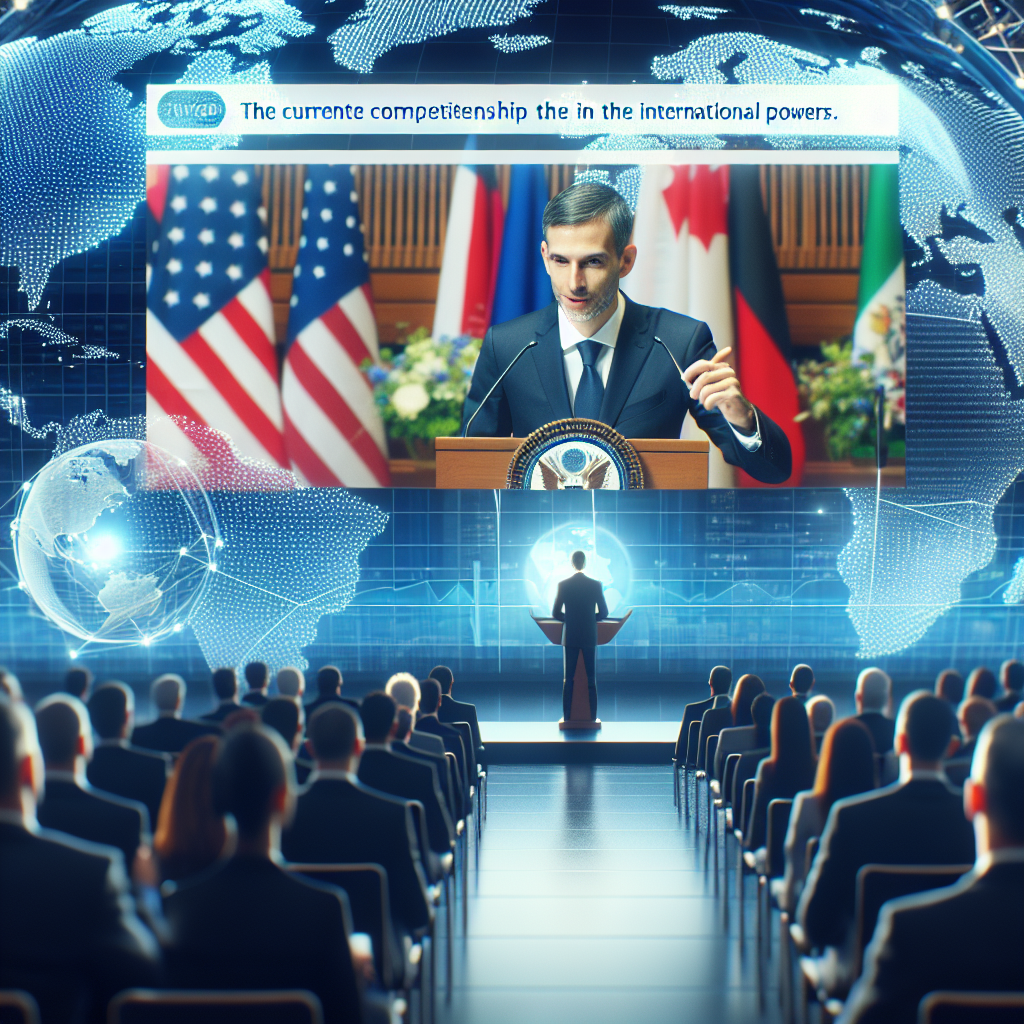
On Tuesday, February 10, US Treasury Secretary Scott Bessent delivered a keynote speech via video at the CEO Conference hosted by BTG Pactual Bank in Brazil, setting the tone for the current US-China relations. He emphasized that the US and China will maintain a competitive relationship, with the US focusing on strategic industries such as critical minerals, semiconductors, and pharmaceuticals to “regain sovereignty” from China.
Bessent stressed that the US is not seeking decoupling but must implement “de-risking” measures. Additionally, he expressed optimism about the US economic outlook, stating that through regulatory relaxation and supply-side reforms, the US GDP growth rate is expected to reach 6% this year.
During the conference, Bessent stated, “The current US-China relationship is in a very comfortable place. We are competitors, but we want competition to be fair. The US is not seeking decoupling from China but must implement de-risking.”
He reiterated that the US is working to “regain sovereignty” in strategic industries such as critical minerals, semiconductors, and pharmaceuticals to reduce reliance on external supply chains. He pointed out that healthy competition can prevent economic stagnation.
“We will always be competitors. And I believe competition makes people better, not stagnant,” he said.
Furthermore, Bessent revealed plans to meet with Chinese Vice Premier He Lifeng in the coming weeks to pave the way for President Trump’s visit to China in April.
Bessent confirmed that China is actively fulfilling its trade commitments and is expected to complete the purchase of 12 million metric tons of US soybeans by the end of February.
However, Bessent issued a stern warning that the world cannot sustain China’s ongoing trade surplus of approximately $1 trillion, stating that it is not feasible.
He emphasized that Beijing must adjust its economic model to achieve global trade balance.
In addition to US-China relations, Bessent also outlined the ambitious economic goals of the Trump administration. He predicted that with policies aimed at deregulation and supply-side stimulus, the US nominal GDP growth rate in 2026 is expected to reach 6%.
“The US should focus on economic growth to reduce the government deficit rather than through taxation,” Bessent said. “By restraining spending, easing regulations, and implementing supply-side stimulus measures to boost economic indicators, the US nominal growth rate could exceed 6% this year, which will address many issues.”
He also reiterated the Trump administration’s “3-3-3” plan, which includes achieving 3% real GDP growth, reducing the fiscal deficit as a percentage of GDP to 3% before Trump leaves office (currently at 5.4%), and increasing daily oil production by 3 million barrels to achieve energy independence and cost reduction.
Addressing market concerns about the Federal Reserve (Fed) personnel, Bessent explained the considerations behind Trump’s nomination of Kevin Warsh as chairman. He pointed out that the government hopes the new generation of central bank leaders will evaluate the profound impact of technological changes such as artificial intelligence (AI) on productivity and inflation with an open mind to ensure policies do not lag behind.
Bessent is optimistic about the economic prospects driven by technology, likening it to past technological revolutions.
“We will not eliminate jobs but will reallocate labor to higher-value positions such as customer service, tourism, etc.,” he mentioned.
In his speech, Bessent positioned Latin America as the core of current US geopolitical and economic strategies. He noted that there is now a “generational opportunity,” and the US will strengthen and support countries undertaking market-oriented reforms and willing to integrate more closely with Washington.
He particularly praised Argentine President Javier Milei’s reform agenda and pledged US support for economic stability in the region.
Regarding the host country Brazil, Bessent acknowledged that while there were initial challenges in relations with the Trump administration, a solid foundation for interaction has now been established.
He revealed that a Brazilian delegation is expected to visit Washington in early March for in-depth discussions on tariff policies, critical minerals, and semiconductor supply chain cooperation.