
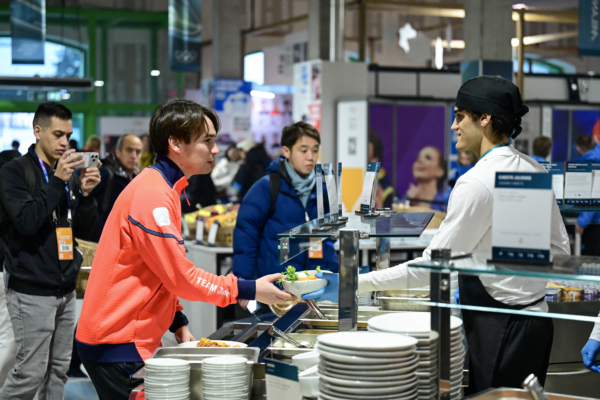
Ensuring that diet becomes the “fuel” to enhance athletes’ performance has become a core mission of the organizing committee of the 2026 Milan-Cortina d’Ampezzo Winter Olympics.
According to Reuters, the criticism of the “egg rationing” and “protein deficiency” at the 2024 Paris Olympics has prompted this Winter Olympics to learn from the lesson. Leveraging Italy’s rich culinary culture, the event has received widespread praise from athletes from various countries during the early stages of the competition.
Elisabetta Salvadori, the head of catering for this Winter Olympics, said that designing the menu to meet the nutritional needs of around 2,900 athletes from 92 countries took about a year.
In addition to providing about 4,500 meals per day at the Milan Olympic Village, Predazzo in Trentino, which serves as the base for ski jumping and Nordic combined events, also provides 2,300 meals per day to athletes, all based on the core principle that “food must serve to enhance athletes’ performance.”
Despite offering a variety of choices from lasagna to desserts in the restaurants, the two most popular Italian national dishes among athletes are still:
Pasta:
To ensure taste and quality, the Olympic Village restaurant adopts an “espresso style” where pasta is cooked in front of the athletes. Elisabetta Salvadori revealed that pasta is usually served with a simple meat sauce or tomato sauce. American figure skater Ilia Malinin also expressed approval, stating that the diverse food options make him feel “very comfortable.”
Latvian short track speed skater Reinis Berzins bluntly stated that there is an abundance of carbohydrates and proteins available all day here, and “food will not be a problem for this Olympics.”
Pizza:
In the mountain venue of Livigno, pizza becomes the top choice for athletes after training. American snowboarder Lili Dhawornvej shared that she ate 7 slices of pizza in one go. While some athletes accustomed to American taste find Italian-style pizza “a bit hard,” most athletes still praise the high-quality Italian fast food.
Dutch speed skating champion Jenning de Boo commented, “Although it’s not a Michelin-starred restaurant, everything the athletes need is there.” For athletes, aside from high-quality meals, snacks available throughout the day and a variety of protein choices are crucial for them to maintain their competitive state in the harsh environment.
Although some athletes initially requested additional “oatmeal for breakfast,” the organizing committee responded promptly, showing a high level of efficiency in safeguarding. Salvadori jokingly said that as an Italian, she remains “superstitiously cautious” about the current positive feedback, but so far, the catering performance of the Milan Winter Olympics can be considered perfect.