
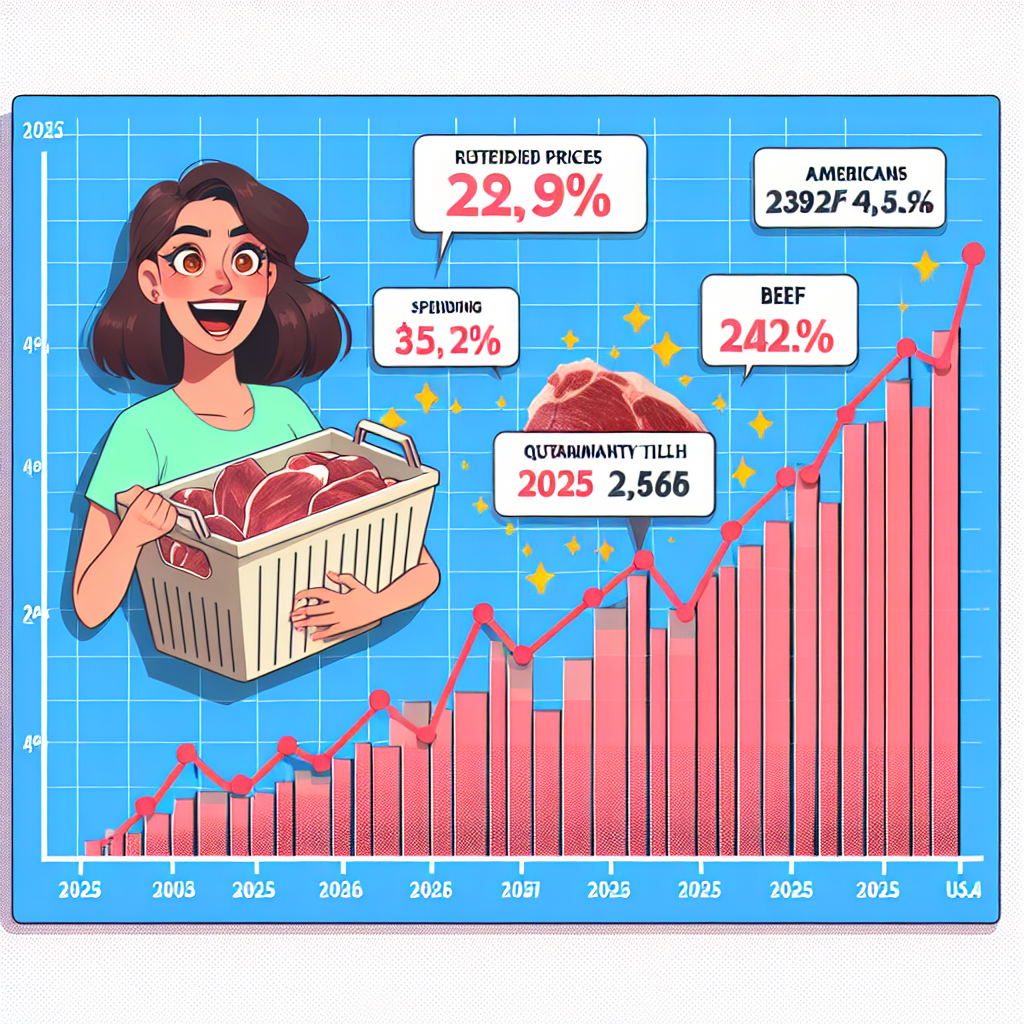
The price of beef in the United States is currently at a historic high, but consumer enthusiasm for purchasing it shows no signs of waning. The latest data indicates that in 2025, Americans set new records in both spending on beef and the total quantity purchased.
According to data provided by the Beef Research contractor of the National Cattlemen’s Beef Association, beef at fresh meat counters has shown a monopolistic trend. In 2025, total beef sales in the United States reached a staggering $45 billion, accounting for over half of fresh meat sales, with the actual purchase quantity surpassing 6.2 billion pounds. This indicates that beef’s popularity has far surpassed other protein options such as chicken, pork, and seafood.
Despite the average price of beef in supermarkets skyrocketing from $8.40 per pound in March 2025 to $10.10 in December, a 20% increase, Americans are seemingly unwilling to compromise at the dining table.
Economists are surprised by the phenomenon of “the more expensive, the more purchased.” Analysis by CNBC points out that beef has become the “last holdout” for the quality of life of the American middle class. Despite significant overall inflation pressure, consumers are showing a trend of “consumption transfer”: reducing dining out at expensive steakhouses and opting to purchase high-quality beef from supermarkets to cook at home.
However, some economists suggest that the surge in beef consumption is actually a strong signal of the robust American economy. With a strong labor market and wage growth, consumers have enough purchasing power to support their dietary habits.
Professor Glynn Tonsor from Kansas State University told Fox News, “No one is forcing consumers to pay high prices; they are choosing to do so voluntarily. This strong demand itself is a major driver of price increases.”
In contrast to the bustling consumer end is the depleted supply chain. Due to years of extreme drought, high feed costs, and an aging population in the livestock industry leading to many family ranches closing without successors, the inventory of beef cattle in the United States has plummeted to the lowest point since 1951.
Bloomberg reports that Professor Derrell Peel from Oklahoma State University warns that ranchers are being forced to slaughter a large number of cows for survival, leading to a need for several years to restore capacity, making high-priced beef potentially the “new normal” for the next two years.
To alleviate the pressure on the public, the Trump administration is considering temporarily increasing beef imports from Argentina to reduce retail prices by boosting supply. Meanwhile, the White House has also devised long-term plans to boost the domestic cattle industry through subsidies and technological support to address the long-standing issue of decreased capacity.