
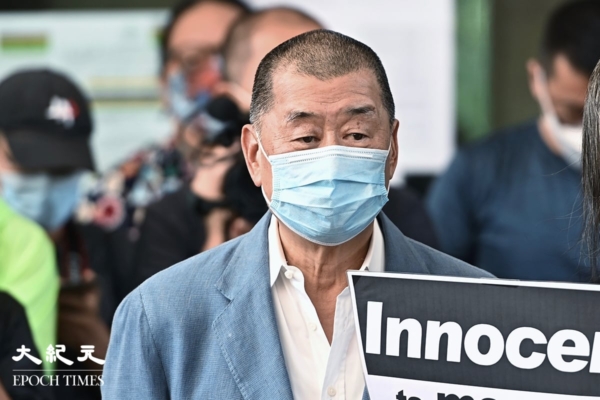
Hong Kong media tycoon Jimmy Lai, who is 78 years old, was sentenced to 20 years in prison on the morning of February 9 for violating the “national security” law. Lai, the founder of the now-defunct pro-democracy newspaper Apple Daily, was convicted of three charges last December, including two counts of “colluding with foreign forces” under the controversial National Security Law imposed by Beijing, and one count of “incitement” under a colonial-era law.
The case against Lai has drawn significant attention as the erosion of freedom in Hong Kong continues. Prior to the sentencing on Monday, Lai had already been held in custody for over 1,800 days. His family and lawyers have reported a significant deterioration in his health during this period, with conditions such as diabetes and palpitations.
The harsh sentencing of Lai is seen as a further crackdown on dissent and free speech in Hong Kong, where the implementation of the National Security Law has raised concerns about the shrinking space for political opposition and independent media. Many see Lai’s case as emblematic of the challenges facing those who speak out against the government in Hong Kong.
Amidst the ongoing crackdown on dissent in Hong Kong, activists, journalists, and pro-democracy figures are facing increasing pressure and legal challenges. The sentencing of Lai is likely to have a chilling effect on freedom of expression in the city, with many fearing further reprisals against those perceived as critical of the authorities.
International human rights organizations have condemned the treatment of Lai and other activists in Hong Kong, calling for their immediate release and urging the authorities to respect freedom of expression and the right to peaceful assembly. The deteriorating situation in Hong Kong has raised alarms globally, with concerns about the erosion of democratic freedoms and civil liberties in the city.
As the world watches the developments in Hong Kong, the sentencing of Jimmy Lai serves as a stark reminder of the challenges facing those who dare to challenge the authorities in an increasingly authoritarian environment. The case has become a symbol of the struggle for democracy and freedom in Hong Kong, with Lai emerging as a prominent figure in the fight against repression and censorship.