
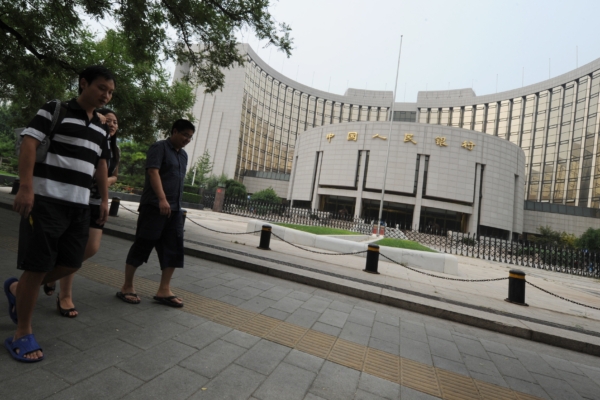
In recent news from Epoch Times on February 9, 2026, several small and medium-sized banks in China have raised deposit interest rates, with increases ranging from 5 to 20 basis points. Analysts suggest that this move aims to attract depositors, with small and medium-sized banks going against the trend, sparking a “deposit war”. This news became a hot topic on February 9.
According to a report from “Time Finance” on February 8, since 2026, various small and medium-sized banks have intensively announced rate hikes. Rural commercial banks, village banks, and other small institutions have been the main force behind the increase in deposit rates, with hikes concentrated between 5 and 20 basis points, and terms mainly in the 1 to 3-year range, with some banks setting the minimum deposit threshold as low as 50 Chinese yuan.
An employee of a village bank stated to the media on February 4, “The interest rate has been raised, with a 3-year fixed deposit rate of 1.95%, which is 0.2 percentage points higher than the end of last year, and the promotion will end by the end of March.” Since January 1, the bank has increased rates on certain fixed deposit products, attracting inquiries from many nearby businesses, with the group aged 50 and above showing higher interest as they prioritize capital security and are sensitive to slight interest rate fluctuations.
A staff member at Inner Mongolia Rural Commercial Bank mentioned that the rate hike promotion for their special deposit products will end on February 28.
Following these rate hikes at banks, rates for one-year deposits are around 1.5%, 3-year deposits are around 1.95%, and 5-year deposits generally exceed 2.0%. These rates are relatively high compared to similar products in the market. Customers with substantial deposits starting from 200,000 yuan have become a key target for banks to compete for. However, most banks have focused the rate hikes on products with terms between 1 to 3 years, with fewer offerings for a 5-year term.
Recent deposit rate hikes have mainly focused on city commercial banks, rural commercial banks, village banks, while major state-owned and nationwide joint-stock banks have not participated.
Citing a report from “Hunan Daily” on February 8, a personal finance department head from a city commercial bank in East China analyzed that this is a phased strategy to attract customers. “Most customers of small and medium-sized banks have weak client bases, high reliance on deposits, and as the early year is a crucial period for bank loan disbursements, stable liability funds are needed. Some banks are attracting customers by temporarily raising deposit rates.”
Researcher Lou Feipeng from China Postal Savings Bank analyzed for “Time Finance” that due to the high reliance on deposits and a large scale of regular deposits maturing in 2026, a certain rate advantage is needed to stabilize the deposit size. However, if small and medium-sized banks continue to raise rates, it will intensify net interest margin pressure.
Dong Ximiao, Chief Economist at Zhongjun Finance, also believes that currently, commercial bank net interest margins are still at historically low levels, with the vast majority of banks lacking the space and possibility to continuously increase debt costs.
The recent increase in deposit interest rates by many small and medium-sized banks in China is a counter-trend move. Since the beginning of last year, many Chinese banks have gradually lowered deposit interest rates, with rates on most banks’ fixed-term deposits falling below 2%. In November 2025, the five-year fixed-term deposit, once considered a savings cornerstone, was removed from the product lists of many banks, including the six major state-owned banks in China, and even the three-year term products began to disappear, leaving only one-year term large-denomination certificates of deposit.
American economist David Huang told Epoch Times that the removal of long-term high-interest deposits by banks is not a single operation but a sign that the “structural profit model is in trouble”. This signals that the Chinese banking system is being forced to take self-rescue measures.