
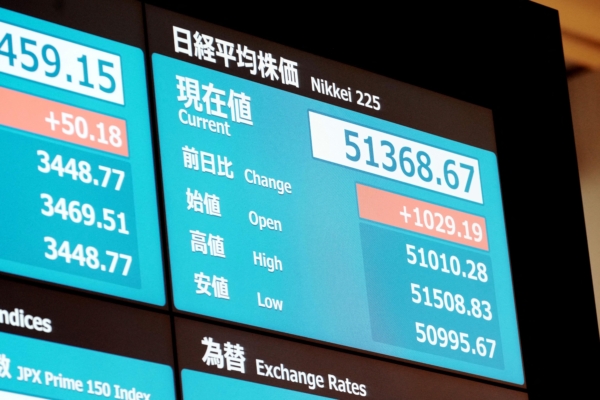
Japan’s House of Representatives election held on Sunday (February 8) brought a landslide victory to Prime Minister Sanae Takaichi. This outcome has been welcomed by business groups and the market.
As of now, the ruling coalition led by Takaichi has secured more than two-thirds of the seats in the House of Representatives, known as a “supermajority”.
Chairman of Japan’s largest business lobby, Keidanren, Yoshinobu Tsutsui, commented on the House of Representatives election results. He said, “We welcome the Liberal Democratic Party regaining a majority of seats, and the ruling coalition maintaining a stable number of seats.” Tsutsui urged the Takaichi government to “promptly and steadily implement important policies”.
Chris Scicluna, Research Director at Daiwa Capital Markets Europe, stated that the stock market has high confidence in Takaichi. The significant victory will be good news for the stock market when it opens on Monday.
“In comparison to a very fragile government, having a clear majority advantage is more favorable for fiscal sustainability. This is because if the government is too weak, it will have to constantly negotiate with the opposition parties to pass budget bills. Therefore, the election results put Takaichi in a more advantageous position to make some tough fiscal policy decisions.”
“We are likely to see the yen weaken. If the downward pressure on the yen becomes very apparent, I certainly wouldn’t rule out the possibility of official intervention by the Japanese Ministry of Finance,” Scicluna said.
Jesper Koll, an expert at Tokyo’s Monex Group, commented on Takaichi’s overwhelming victory, stating that she has received a clear mandate from the crucial groups she needed to appeal to, allowing her to firmly control the LDP. She is the indisputable top leader, now simultaneously controlling both the parliament and the ruling party.
“How will she use this supermajority? In terms of economic policy, the core focus will be promoting Japan’s national champion firms. In order to enhance global competitiveness and strengthen national economic security, Japan needs to achieve greater economies of scale,” Koll said. “I expect she will introduce new measures to promote corporate mergers and industry consolidation.”
Kota Suzuki, strategist at Nomura Asset Management, said, “The overwhelming victory is expected to have a positive impact on the stock market. The foundation of this government will be more solid, thereby strengthening market expectations for the authorities’ economic policy. Moreover, as there is no longer a need to actively seek cooperation from the opposition parties, the pressure to implement ‘helicopter money’ fiscal expansion will also be alleviated.”
Shoki Omori, strategist at Mizuho Securities, mentioned that if the Japanese government, after the election results are announced, emphasizes tax cuts or increased public expenditure without fully explaining the funding sources or medium to long-term fiscal discipline, concerns about an increase in government bond issuance could intensify. In such a scenario, the existing cautious market sentiment may further strengthen, leading to upward pressure on yields and once again putting downward pressure on the yen.
Conversely, if stable political authorization allows the government to implement fiscal policy in a prudent and flexible manner, while considering market conditions and engaging in clear communication regarding sustainability, concerns about excessive fiscal expansion may ease, the strategist added.
David Boling, head of Asia Group that provides geopolitical risk information for businesses, stated that Takaichi’s overwhelming victory and the LDP’s majority in the House of Representatives may stabilize the financial markets. This will restore predictability in policy-making and empower Takaichi to address the opposition party’s agenda.
(This text is based on reports from Reuters)