
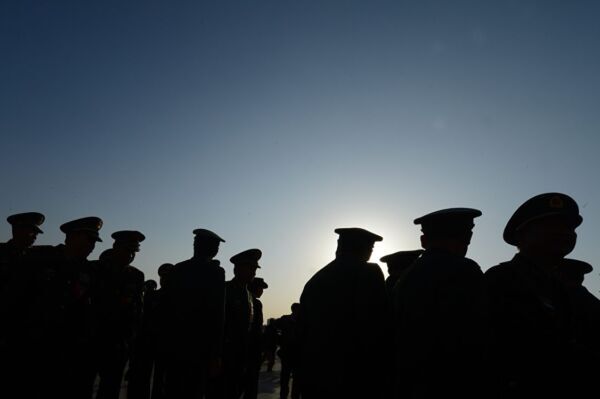
On January 24, the Chinese Ministry of National Defense announced that Vice Chairman of the Central Military Commission Zhang Youxia and Chief of the Joint Staff Department Liu Zhenli are suspected of serious violations of discipline and law, and are currently under investigation, attracting attention from the international community. Due to the opaque nature of personnel changes within the Chinese Communist Party, Western China experts continue to closely monitor, analyze, and discuss this seismic event within the Chinese military.
Since coming to power as the leader of the Chinese Communist Party in 2012, Xi Jinping first cleaned up the top echelons of the Party, targeting both “flies” and “tigers”, and then began to reform the military. In recent years, the Chinese military has experienced a series of sudden personnel changes. As of today, out of the six Central Military Commission members appointed by Xi in 2022, only one remains.
In the first wave of internal military cleansing in 2023, the leadership of the Rocket Force (the equipment force of the Chinese Communist Party’s nuclear missile unit) was purged, and then the Defense Minister at the time, Li Shangfu, was suddenly dismissed. Subsequently, many high-ranking military officials fell from grace one after another due to suspected corruption. In the second wave of cleansing last year, the second-highest ranking official in the Chinese military, Vice Chairman of the Central Military Commission, He Weidong, was removed from his position.
The military cleansing carried out by the Chinese Communist Party leader this time is different from the earlier military reorganization between 2013 and 2015. The purges back then were carried out under the guise of combating military corruption to eliminate political opponents among the top generals and tighten control over the military. While most high-ranking military officials were implicated in serious corruption, the foundation remained unchanged. Although Xi Jinping has the final decision-making power on major military matters, the military still retained a significant degree of autonomy in daily affairs.
Throughout this process, Zhang Youxia, a close childhood friend of Xi, has always been one of Xi’s most important allies in the military. He was entrusted with significant responsibilities by Xi, overseeing military modernization reforms and anti-corruption efforts, playing a critical role in Xi’s path to solidifying power. In 2017, Xi promoted Zhang Youxia to Vice Chairman of the Central Military Commission, and in 2022, even though Zhang had reached retirement age, he was reappointed to continue serving.
Zhang Youxia, who is now in his seventies, had rumors circulating that he and Xi had differences on specific issues.
Due to the opaque nature of the Chinese Communist Party, aside from the core leadership circle, no one knows the true reasons and motives behind the current round of purges. Jon Czin, a foreign policy expert at the Brookings Institution, believes that the investigation of Zhang sends a clear message that there is no safe zone for Xi in the anti-corruption campaign.
Some China observers suspect that the true motive behind the purging of Zhang Youxia is not anti-corruption, but rather Xi’s attempt to further consolidate power. Ja Ian Chong, Assistant Professor of Political Science at the National University of Singapore, believes that this move solidifies Xi’s position, and all future developments will depend on his inclinations.
Phillip C. Saunders of the Lowy Institute’s international affairs analysis platform “The Interpreter” believes that there are speculations that Zhang and Xi may have had differences on priorities, or Zhang’s excessive power posed a threat to Xi. Another explanation is that Zhang’s anti-corruption efforts in the military were not effective in building a force capable of winning wars (including against Taiwan), which displeased Xi.
Drew Thompson, a China expert who accompanied Zhang Youxia on a week-long visit to the Pentagon, recently published an article pointing out that Zhang was the only general in the Chinese military who could provide Xi with the most objective advice on Chinese strength and weaknesses, as well as casualties in major military conflicts. Removing Zhang would eliminate this consideration.
The People’s Liberation Army Daily published an editorial stating that the success of the anti-corruption campaign is crucial for achieving the modernization goals of the Chinese Communist Party’s military, urging for “thought, politics, and action” to all comply with the central authority.
While China has invested heavily in military modernization, rampant corruption within the military has affected the performance of advanced weapon systems, including nuclear weapons, with scandals of high-ranking Chinese military officers buying promotions making frequent headlines.
Saunders states in his article that the frequent exposure of military scandals further increased suspicions of internal military corruption within the Chinese Communist Party. Confidence in Zhang Youxia and other top military officials has waned, leading to the decision to purge them.
Experts unanimously agree that regardless of the motives, this round of purges will disrupt the command structure within the Chinese military, causing a chain reaction within the military, affecting morale, and introducing various uncertainties that may hinder Xi’s ambitions regarding Taiwan.
Steve Tsang, Director of the China Institute at the School of Oriental and African Studies, University of London, believes that the downfall of Zhang will increase the risk of miscalculation by the Chinese Communist Party on Taiwan-related issues. In the future, there may be no one within the Chinese military willing to advise Xi Jinping against precipitously launching military actions.
Saunders’ article points out that while Xi Jinping’s comprehensive purges of senior military officials showcase his political acumen, they bring about serious political and operational consequences. The repeated removal of senior experienced leaders, investigations within military regions and branches, all contribute to the challenge of the military focusing on combat training.
The execution of plans for operations against Taiwan requires close cooperation between the Eastern Theater Command (responsible for invasion operations) and the Joint Staff Department (responsible for controlling key national resources and coordinating support operations from other theaters). With senior leaders being purged and their inexperienced successors needing time to understand their responsibilities and establish contacts, there will be a period of turbulence, hampering military readiness.
The article concludes by stating that the purges will exacerbate the existing tension in the party-military relationship. The new military leadership lacks experience, and Xi Jinping likely has insufficient confidence in them. They may hesitate to honestly assess the state of readiness for operations against Taiwan. Xi Jinping may now be less inclined to take risks on Taiwan-related military actions.
The Wall Street Journal notes that with Zhang Youxia out of the picture, Xi is now the sole decision-maker regarding the direction of the Chinese Communist Party’s policy towards Taiwan. However, given the current situation, the likelihood of a Chinese invasion of Taiwan remains low. While there may be turmoil within the Chinese military leadership, Xi Jinping is unlikely to give up on the issue of unifying Taiwan by force.
The Economist points out that Xi Jinping’s recent purges should raise concerns globally. Both the Chinese and American military have activities in the Taiwan Strait, and in the event of an accidental confrontation, it will require leadership to exercise restraint and remain calm. With Zhang and Liu out of the picture, there may be a leadership vacuum within the Chinese military, with potential replacements for Zhang Youxia being seen as mere yes-men, leaving few willing to advise Xi Jinping on the significant risks of launching military actions against Taiwan.
Bloomberg suggests that Zhang Youxia’s downfall intensifies the uncertainties ahead of the 2027 reshuffling of the Chinese Communist Party leadership, as Xi is likely seeking a fourth term. Zhang was the person capable of mobilizing opposition forces within the military, and the opaque nature of the Chinese Communist Party makes it difficult for outsiders to know whether Xi’s power is facing serious challenges.
Chinese observers generally believe that the Chinese Communist Party may attack Taiwan in 2027, but in recent decades, the Chinese military lacks actual combat experience. Even the Chinese themselves have no certainty about the combat capabilities of the People’s Liberation Army. The more experienced Russian military performed poorly in the Russo-Ukrainian War, exacerbating these concerns for China. Taiwan is a more challenging amphibious operation than the Russo-Ukrainian War.