
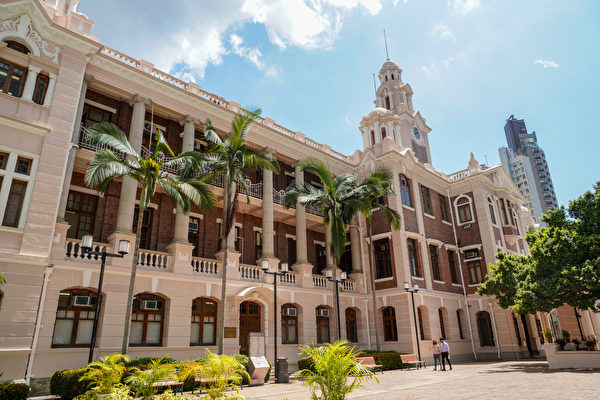
Hong Kong University’s Faculty of Business and Economics recently experienced a scandal involving up to 200 current master’s students suspected of submitting fake diplomas forged by illegal intermediary agencies from mainland China. This incident sheds light on the issue of fraudulent academic credentials in Hong Kong, especially as the government has expanded funding for non-local students in higher education institutions, aiming to attract international and mainland Chinese students to study in the city. According to the Hong Kong Qualifications Assessment, cases of fake academic credentials have surged by 70% annually.
Reports circulated on the Chinese social platform “Xiaohongshu” in May revealed that a significant number of master’s students from Hong Kong University’s Faculty of Business and Economics, who enrolled in September 2023, were requested by the university to provide additional proof of their bachelor’s degree qualifications. Failure to provide the required documentation may lead to expulsion from the university, as indicated by screenshots of emails allegedly sent by the university to students.
In another incident, a master’s student faced allegations of plagiarism and other violations, prompting the university to demand proof of their bachelor’s degree coursework. Failure to comply led to further investigations by the university, which may extend to other departments in the future. The university’s management required students to submit official transcripts or graduation certificates by May 5, 2024, as part of their annual final checks to uphold academic integrity.
The Faculty of Business and Economics at Hong Kong University released a statement titled “Upholding Academic Integrity,” addressing the situation and emphasizing that some students had submitted falsified documents through illegal intermediaries who claimed to offer “ensured admissions” services by providing false information to gain unfair advantages during the application process.
The university vowed to take appropriate disciplinary and legal actions against those involved once the evidence is confirmed. This includes revoking admission qualifications, canceling student registrations, and reporting illegal intermediary agencies to law enforcement authorities to fulfill their legal responsibilities.
Similar incidents involving mainland Chinese individuals entering Hong Kong universities with fake credentials are not isolated cases. Earlier this year, the fiancée of Hong Kong actor Austin Li, Wang Qingxia from Foshan, was under investigation for using fake academic qualifications. These cases raise concerns about the integrity of talent recruitment programs initiated by the Hong Kong government in recent years, with approximately 110,000 individuals admitted through various talent schemes as of March 2024.
The Hong Kong Qualifications Assessment Bureau’s role in evaluating non-local qualifications has become crucial in detecting fraudulent practices, as indicated in its recent annual report. While the proportion of fraudulent cases remains minimal, the increase by 70% compared to the previous year highlights the importance of vigilance, particularly in scrutinizing qualifications from mainland China for potential misrepresentation.
The proliferation of advertisements for “ensured admissions” services on Chinese platforms like Zhihu and Sina targeting overseas study agencies highlights the lucrative industry that has emerged, especially following the relaxation of admission quotas for non-local students in Hong Kong universities from 20% to 40% last year. These services entice individuals with promises of guaranteed admissions and successful application processes, often circumventing language proficiency exams.
The exorbitant fees charged by intermediaries assisting in admissions are another concerning aspect. Institutions like the Hong Kong University of Science and Technology and the Chinese University of Hong Kong demand fees ranging from 100,000 to 200,000 RMB for securing admissions through such channels, with the highest fees observed for assisting entry into Hong Kong University.
In terms of ensuring admission to these prestigious universities, intermediaries employ various tactics such as leveraging personal connections for internal recommendations and fabricating educational backgrounds by falsifying qualifications. These malpractices involve enrolling students in international schools to obtain fake results in exams like A-Levels or AP Exams before seeking admissions in Hong Kong universities.
While the exposure of fake credentials in Hong Kong universities is recent, such practices have long been common in mainland China, forming a robust industry chain. The prevalence of fake diploma production was documented as far back as the 1990s, with instances of individuals selling falsified certificates for significant profits across various regions of China.
In conclusion, the pervasive culture of deception and fraudulent practices within mainland China has infiltrated academic institutions in Hong Kong, raising concerns about the credibility of international qualifications and the integrity of the admissions process. Amidst these revelations, it is imperative for educational institutions and regulatory bodies to strengthen mechanisms for verifying credentials and maintaining academic standards to safeguard the integrity of higher education in Hong Kong.