
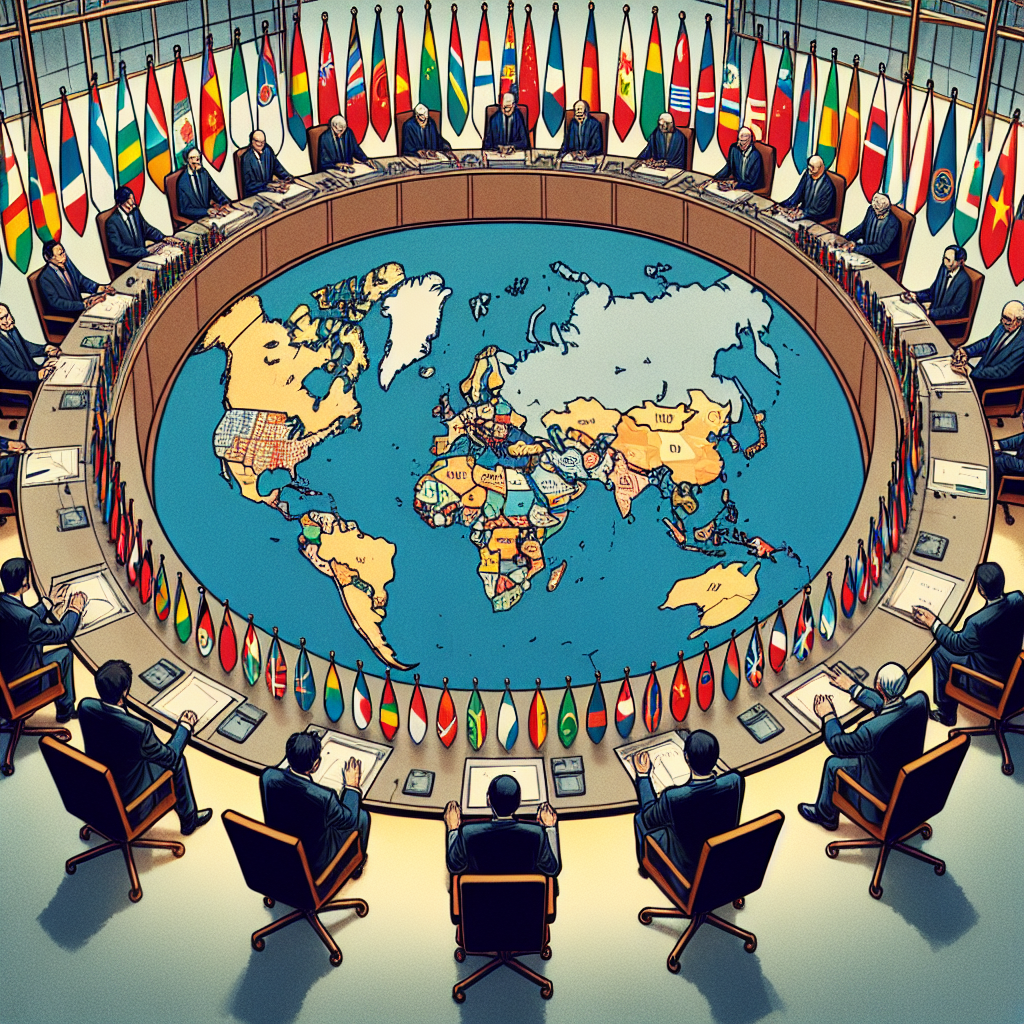
The United States is set to lead a meeting on Wednesday (February 4) involving over 50 countries, aimed at enhancing countries’ access to critical minerals and further reducing Beijing’s control over these resources, breaking free from its monopoly on the global supply chain.
The backdrop of this gathering is the launch on Monday by U.S. President Donald Trump’s “Project Vault,” a strategic reserve project for critical minerals. The project is backed by $10 billion seed funding from the U.S. Export-Import Bank and supported by $20 billion in private funding.
Beijing has long viewed its monopoly in various mineral processing sectors as a geopolitical economic leverage, sometimes restricting exports and other times lowering prices to weaken other countries’ ability to diversify sources for semiconductors, electric vehicles, and advanced weapons materials.
Although the complete list has not been disclosed by the U.S., reports indicate that representatives from South Korea, India, Thailand, Japan, Germany, Australia, and the Democratic Republic of the Congo attended the meeting in Washington.
The inaugural Ministerial Meeting on Critical Minerals held on Wednesday took place in the Loy Henderson Conference Room at the U.S. Department of State’s Harry S. Truman Building.
U.S. Secretary of State Marco Rubio and Vice President JD Vance delivered speeches at the meeting. The State Department stated that the purpose of the meeting is to “advance collective efforts to strengthen the diversification and resilience of critical mineral supply chains.”
Last year, Beijing expanded export controls on rare earths, leading to production delays and shutdowns in Europe and the U.S.; while an oversupply of lithium caused by China challenged the U.S.’s plans for capacity expansion. In October last year, Trump agreed to a temporary truce in the U.S.-China trade war in exchange for Beijing delaying stricter rare earth export restrictions.
The measures being weighed by the U.S. and its partners include unified trade and investment incentives, encouraging the establishment of new mining and processing capacity outside of China, and exploring market intervention methods such as price floors, strategic reserves, and export restrictions to reduce Beijing’s impact on defense and advanced manufacturing supply chains.
“This marks the U.S.’s recognition of the need to collaborate with others to reduce its vulnerability in areas where China holds a supply advantage,” said Scott Kennedy, director of the China Business and Economics Program at the Center for Strategic and International Studies (CSIS), to Reuters.
U.S. Interior Secretary Doug Burgum stated on Tuesday that an additional 11 countries will be added to the “Critical Minerals Trade Club” this week, joining the ranks of the U.S., Australia, Japan, South Korea, Saudi Arabia, and Thailand. He revealed that another 20 countries have shown “strong interest” in joining the alliance.
Industry experts emphasize that countries must find a balance in incentive measures to promote investment in critical mineral production. This may include coordinating the use of newly established Section 232 tariffs and setting industry-wide price floors for specific materials.
Australia has positioned itself as a provider of alternative critical minerals outside of China and has announced plans to establish a strategic reserve expected to be operational in the latter half of 2026. Australia is also considering implementing price floors to support local projects.