
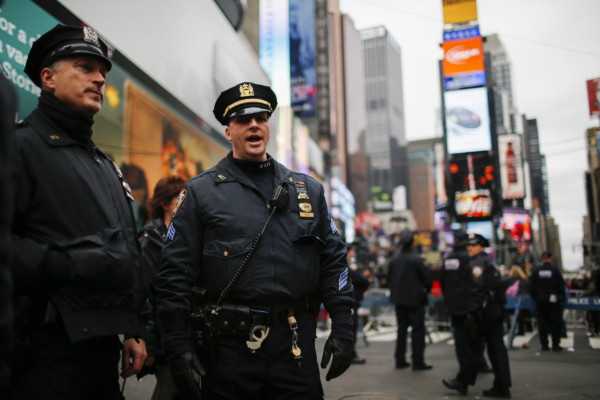
New York Police Commissioner Jessica Tisch announced on Monday (February 2) that New York City has just experienced the “safest January in history,” with significant decreases in major violent crime indicators, including a notable drop in the number of homicides and shooting incidents.
According to the latest data released by the New York City Police Department (NYPD), the number of homicides in the city in January this year decreased by a significant 60% compared to the same period last year, while shooting incidents decreased by approximately 20%.
In an interview on Fox 5’s “Good Day New York,” Tisch stated, “Compared to all previous Januarys, what we see is the fewest shooting incidents, the fewest shooting victims, and the fewest homicides, all hitting historic lows.”
The data shows that there were a total of 40 shooting incidents citywide in January, lower than the record-low of 50 set in 2025; the number of shooting victims was 47, also below the historical record of 56 in 2019.
In terms of homicides, all five boroughs of the city saw decreases, with Manhattan and Staten Island not having any homicides throughout the entire month of January. The city recorded a total of 12 homicides that month, significantly lower than the 30 in January 2025.
Tisch expressed that the crime data reflects a sense of increased safety among the residents: “I think people do feel that the city is safer, and these numbers clearly show how amazing the work done by the NYPD officers is.”
Overall, major crimes have decreased by an average of nearly 7% across multiple categories. Among them, residential burglaries saw a decrease of nearly 30%; retail theft (shoplifting) dropped by 16%; and robberies also decreased by nearly 10%.
Tisch particularly noted that winter is typically a peak period for retail theft, but this year, the data saw a contrary decrease, indicating that the police’s adjusted strategies have been effective. She mentioned that retail theft is now being treated as “pattern crime” for investigation, rather than individual incidents.
“We don’t want to see toothpaste locked in glass cabinets, nor do we want 24-hour pharmacies closed,” Tisch said. “The 16% decrease in retail theft is remarkable, proving that our change in investigative approach is correct, with related arrest numbers also on the rise.”
However, not all crime types decreased in sync. Police data shows that subway-related crimes increased by 6% in January this year, with a total of 174 reported cases, higher than the 164 cases in the same period last year; the number of citywide rape cases also saw a 6% increase.
The police stated that they will continue to strengthen deployments and enforcement for public transportation systems and sexual assault cases to prevent further escalation in related crimes.