
As the United States and Europe have taken measures to reduce their dependence on China in critical mineral supplies, India is also gradually joining the trend. India announced on Sunday (February 1) the establishment of rare earth mineral corridors in at least four states to address the constraints in India’s critical mineral supply chain.
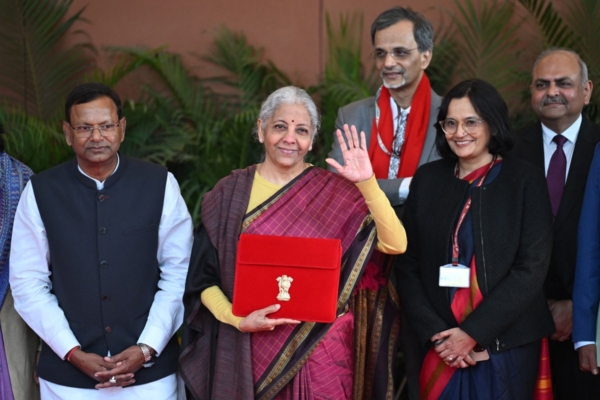
Indian Finance Minister Nirmala Sitharaman unveiled the budget for the fiscal year 2026-2027 on Sunday, with a major focus on building the critical mineral supply chain. She stated that the federal government will establish dedicated rare earth mineral corridors in resource-rich states such as Odisha, Kerala, Andhra Pradesh, and Tamil Nadu to promote mining, processing, research, and manufacturing.
Sitharaman underscored the challenges India currently faces in the environment. “We are facing external circumstances where trade and multilateralism are threatened, and resource access and supply chains are disrupted,” she said. “New technologies are changing production systems and significantly increasing the demand for water resources, energy, and critical minerals.”
According to Bloomberg, the budget documents show that India has proposed to completely exempt the tariff on monazite sand, which contains rare earth elements, from the previous rate of 2.5%.
Rare earth minerals are essential for manufacturing precision-guided weapons, advanced military aircraft, as well as key materials in high-tech industries and the automotive sector. China controls 70% of global rare earth extraction and 90% of rare earth processing. In recent years, China has increasingly used rare earth supply as a tool for retaliation or economic coercion against other countries.
In April last year, China began restricting rare earth exports to India, leading to disruptions in the Indian automotive industry’s supply chain. In November last year, the Indian government launched a rare earth permanent magnet program worth 73 billion rupees (approximately $803 million) aimed at increasing domestic production to enhance the country’s ability to resist supply restrictions imposed by China for political reasons.
According to the Hindustan Times, Rishabh Jain, a researcher at the Council on Energy, Environment and Water in India, stated that the announcement of the “Rare Earth Corridors” plan marks a crucial transition from national policy and regulatory reforms to implementation at the state level and value addition at the local level.
“By anchoring the supply chain in states rich in mineral resources, we have finally bridged the critical gap between upstream mining and downstream manufacturing,” Jain added. He also mentioned that CEEW’s analysis indicates that mineral processing remains a significant missing link in the critical mineral supply chain.
Against the backdrop of escalating geopolitical tensions, India’s Finance Minister Sitharaman announced a budget that includes a 20% increase in defense spending. Border conflicts between India and China, as well as disputes with Pakistan in the contested region of Kashmir, have emphasized India’s commitment to strengthening defense investments.