
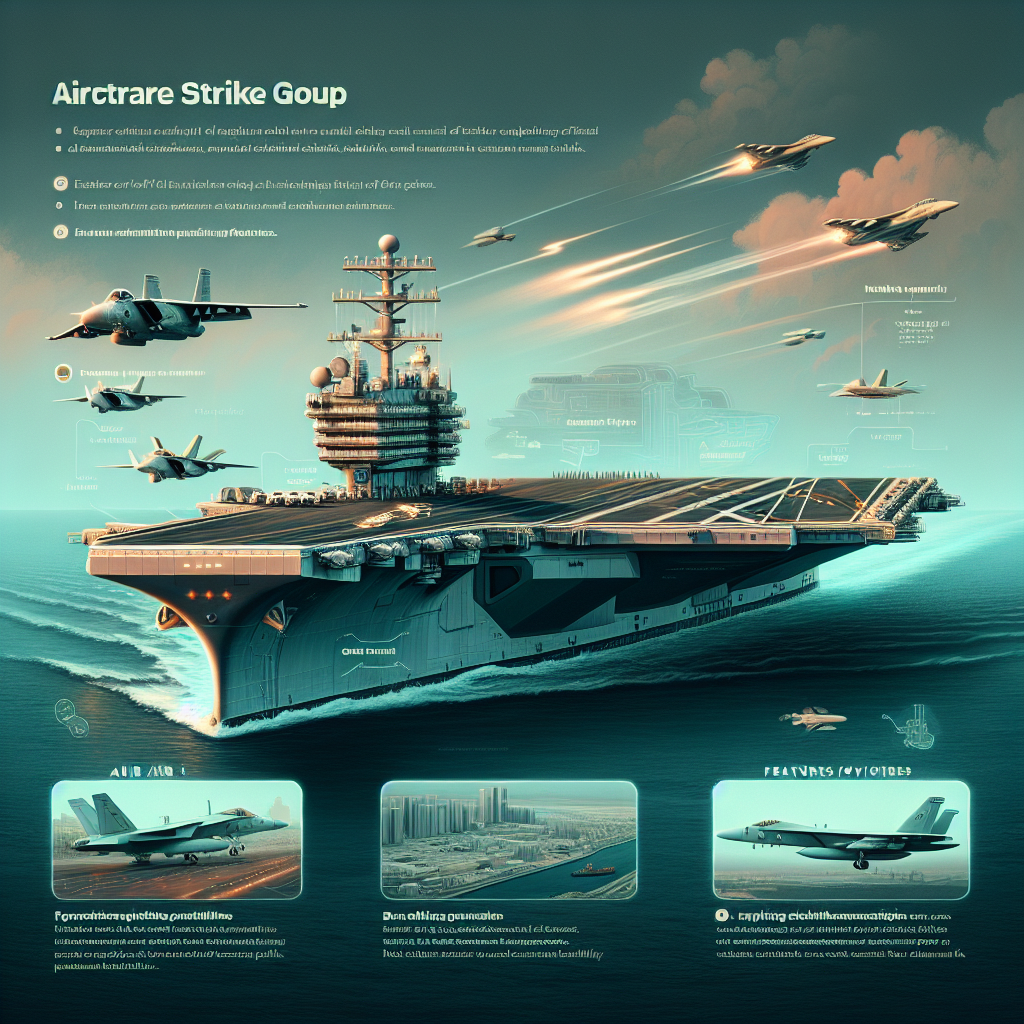
The United States Navy’s aircraft carrier strike group, the USS Abraham Lincoln, has arrived in the Middle East region on standby. The US Central Command’s Air Force is also conducting preparedness exercises. Some of the tactics possessed by the USS Abraham Lincoln, from “ghost” signals to stealth fighter jets, can conceal the fleet’s location, confusing Iran’s surveillance systems and making it unable to determine the aircraft carrier strike group’s location.
On the morning of January 28th, President Trump posted on Truth Social that a massive US naval fleet is sailing towards Iran. This fleet is swift, mighty, and has a clear target. Led by the formidable USS Abraham Lincoln aircraft carrier, the fleet’s scale even exceeds the fleet dispatched to Venezuela.
The composition of the massive fleet mentioned by Trump is currently unclear. A US Navy spokesperson confirmed on Wednesday morning to The War Zone that the USS Abraham Lincoln aircraft carrier and three Arleigh Burke-class guided-missile destroyers are now deployed in the Central Command’s area of responsibility. The number of deployed ships to the Caribbean is at least the same as the Gerald R. Ford aircraft carrier strike group before Maduro’s arrest.
The USS Abraham Lincoln aircraft carrier carries the Carrier Air Wing Nine, including F-35C stealth carrier-based fighter jets, F/A-18E/F Super Hornets, EA-18G Growler electronic warfare aircraft, E-2D Hawkeye early warning aircraft, CMV-22B Osprey tiltrotor aircraft, and MH-60R/S Seahawk helicopters.
Overall, the Navy currently has deployed 10 warships within the Central Command’s area of responsibility.
While the USS Abraham Lincoln aircraft carrier has entered the Middle East region, it is challenging for adversaries to determine the exact coordinates of this aircraft carrier. The USS Abraham Lincoln will use electronic warfare equipment, interference, and deception signals to disrupt Iran’s radars. The aircraft carrier strike group typically operates under strict electromagnetic radiation control (EMCON), shielding electronic signals to blend into the ocean background noise, making it difficult for long-range sensors to lock onto targets.
Modern warships can manipulate the Automatic Identification System (AIS) commonly used by commercial ships. Through these deceptive signals, US warships can appear on digital maps as a commercial vessel, or display their position kilometers away from their actual location, causing Iranian observers to be constantly on the move.
A critical asset of the USS Abraham Lincoln aircraft carrier is the EA-18G Growler electronic warfare aircraft, a specialized electronic warfare aircraft. These aircraft carry powerful jamming pods that emit electronic noise towards enemy frequencies. This “noise” disrupts the enemy’s ground radar screens, making it difficult for them to identify valid targets.
The War Zone reported that six US Navy EA-18G Growler electronic warfare aircraft have taken off from the Caribbean region, flying across the Atlantic eastward, potentially being deployed to the Middle East. The specific reasons for this flight are currently unconfirmed.
The deployment of the EA-18G in the Middle East will play a crucial role in enhancing combat capabilities. Such deployments may signal an imminent military operation focused on targeting inland objectives, such as potential actions that the US (and Israel) may carry out within Iran. The Growlers can provide electronic warfare support for aircraft operating outside the defended area and/or bypassing enemy air defense systems, as well as generate other battlefield effects.
Iran relies on coastal radar networks to track potential threats in the Persian Gulf. The US Navy employs high-power electronic attack capabilities to disrupt or temporarily blind these sensors.
This technology creates blind spots in surveillance networks, allowing aircraft or ships to maneuver within effective ranges undetected.
Electronic warfare systems can also generate multiple false radar returns, known as “decoys.” To Iranian operators, a US ship may appear as several ships moving in different directions, forcing them to guess which blip is the actual threat.
The USS Abraham Lincoln aircraft carrier carries F-35C Lightning II fighter jets, designed to be almost undetectable by radar.
These aircraft can penetrate enemy airspace, collect intelligence or engage targets without alerting warning systems, acting as the “silent eye” of the fleet while the carrier conducts long-range operations.
In a potential conflict, the aircraft carrier strike group can disrupt Iranian commanders, their drone operators, or missile unit communications frequencies. By severing these digital links, the US Navy can isolate Iranian frontline forces, preventing them from receiving commands or target data.
Guided missiles rely on GPS satellites to pinpoint targets.
The USS Abraham Lincoln aircraft carrier’s defense system can locally jam or disrupt GPS signals, causing incoming threats to veer off course, significantly reducing the accuracy of enemy drones and long-range missiles.
Escorting the carrier are destroyers equipped with the Aegis Combat System. This advanced computer radar combination can track hundreds of targets simultaneously and coordinate electronic attacks, forming a digital barrier protecting the entire fleet from surveillance.
While deceiving the enemy, the USS Abraham Lincoln aircraft carrier employs passive sensors for vigilant monitoring.
These systems can detect Iran’s radar and radio electromagnetic radiation without emitting any signals, allowing the US Navy to plot the enemy’s positions while maintaining electronic silence.
The US Navy’s deployment has garnered attention. However, according to reports from online flight tracking websites, a US Air Force RC-135V reconnaissance aircraft has flown to the Udeid Air Base in Qatar. FlightRadar24 data shows that this aircraft, with the call sign Olive48, arrived in Udeid on Wednesday morning Eastern time.
The RC-135, nicknamed “Rivet Joint,” is one of the most potent intelligence-gathering tools in the US arsenal. Each jet-sized jet aircraft is equipped with a vast array of Signals Intelligence (SIGINT) systems used to detect and intercept communications and other electronic signals. The aircraft can also geolocate and classify the sources emitting these signals, including radios and radars.
RC-135 reconnaissance aircraft are typically used to build electronic warfare profiles of hostile nations, locate their air defense systems and command control nodes, and intercept their communications regarding various stimuli or daily activities. This information is crucial for developing effective operational plans and requires updates before operations commence.
Furthermore, it plays a pivotal role in defensive monitoring and understanding enemy intentions and military posture.