
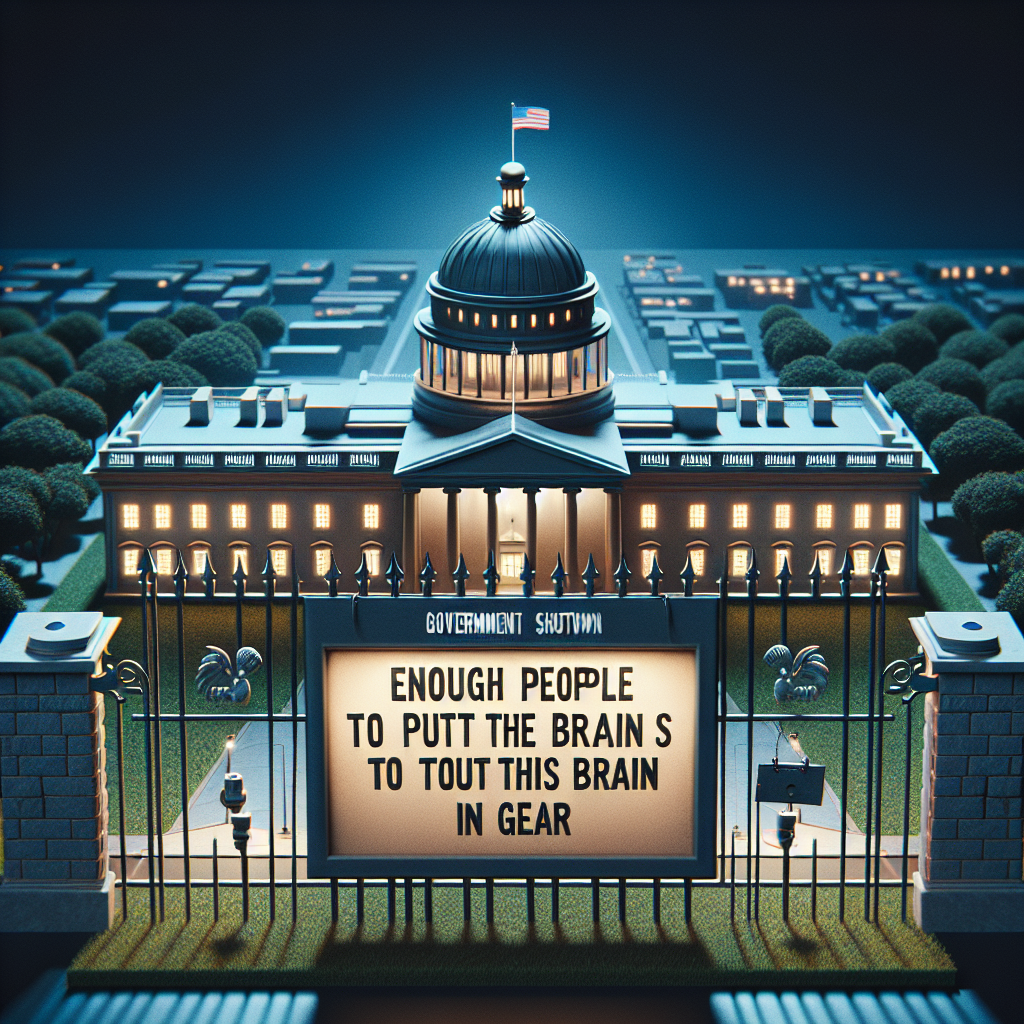
The United States federal government has once again entered a partial shutdown as of Saturday (January 31). President Donald Trump expressed his hope for “enough people to put their brains into gear” to push for a quick resolution to the deadlock and avoid further impacts on the country.
President Trump, in an interview with Fox News reporter Jacqui Heinrich, stated that the current situation is “progressing well”, but also acknowledged that past shutdowns have had a negative effect on the economy, emphasizing that a government shutdown “is not good for the country”.
This shutdown began early on Saturday, with several federal departments including the Department of Defense, Department of State, Department of the Treasury, and the Department of Homeland Security forced to suspend some operations due to the expiration of funding authorization.
The Senate had previously passed a roughly $1.2 trillion appropriations package covering five regular funding bills and providing a two-week temporary funding for the Department of Homeland Security to allow more time to negotiate immigration and law enforcement disputes. However, the plan still needs approval from the House of Representatives, which is not expected to reconvene until Monday.
The Democratic Party has explicitly opposed certain provisions in the bill related to the Department of Homeland Security, particularly the allocation of approximately $10 billion for Immigration and Customs Enforcement (ICE). Ultimately, the Senate agreed, under White House coordination, to separate the DHS funding for further bipartisan negotiations, allowing for a two-week buffer period.
Senate Minority Leader Chuck Schumer has put forward a series of reform demands, including restricting patrols, expanding search and arrest warrant requirements, mandatory body camera implementation, and prohibiting DHS law enforcement personnel from wearing masks.
President Trump did not directly respond to the specific demand of “prohibiting wearing masks”, only reiterating that his stance is clear to the public and emphasizing that the U.S. crime rate is at a historically low level.
Although the Senate has passed the relevant legislation, the appropriations package still needs approval from the House of Representatives to take effect. Speaker Mike Johnson announced plans to expedite the vote in the House after its reconvening on Monday to avoid prolonging the shutdown, but this action requires cooperation from the Democratic Party.
However, House Minority Leader Hakeem Jeffries has indicated that the Democrats will not cooperate for a quick passage. He stated that the Democrats will assess the bill based on its specific content and demand the White House to outline a binding and clear reform path to impose substantive constraints on DHS and its subordinate enforcement agencies.
Due to the procedural “rule vote” that needs to be passed in the House first, and with all Democratic members expected to vote against it, Johnson may face challenges from within the Republican Party as well. It is anticipated that without major concessions, the partial government shutdown will likely continue at least until Tuesday, and possibly extend further.
Unlike the 43-day full shutdown last fall, this current one only affects certain departments. Institutions that have already received annual funding will continue to operate as usual, including the Department of Agriculture, Department of Veterans Affairs, Department of the Interior, Department of Energy, Department of Justice, and Department of Commerce.
In the short term, there is no significant risk of major disruptions to food aid programs. However, if the funding deadlock persists, the salary payments of some federal employees, as well as the progress of housing and small business loan approvals, could be affected.