
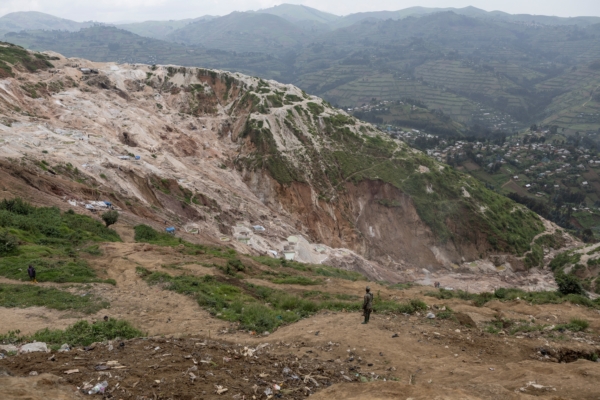
The Democratic Republic of Congo’s (DRC) eastern region experienced a devastating collapse in a coltan-rich mining area this week. Rebel authorities controlling the area confirmed on Saturday (January 31) that this tragedy has claimed the lives of at least 200 people, with some anonymous officials suggesting that the death toll could be as high as 227.
This catastrophe unfolded in the Rubaya mining area in North-Kivu province. Lumumba Kambere Muyisa, a spokesperson for the rebel-appointed provincial governor in North-Kivu, stated that continuous heavy rainfall had weakened the geological structure, leading to massive landslides and the subsequent collapse of multiple mining pits.
“We are in the rainy season, and the surface is fragile. The soil and rocks collapsed while the victims were still inside the pits,” Muyisa said. “Currently, over 200 people have died, with some victims still trapped in the mud awaiting discovery.”
Muyisa further explained that the victims included not only miners working in the pits but also children and female vendors conducting business at the site. Some of the injured have been rescued and taken to local medical facilities in Rubaya for observation, while critically wounded individuals are scheduled to be transferred by ambulance to the city of Goma, approximately 50 kilometers away, on Saturday.
In response to the incident, the rebel-appointed provincial governor has declared a temporary halt to artisanal mining operations in the area and has urged residents living near the mines to evacuate to prevent further disasters.
The Rubaya region where the accident occurred is crucial to the global tech industry, producing about 15% of the world’s coltan. Tantalum, extracted through processing the ore, is a key heat-resistant metal used in manufacturing smartphones, computers, aircraft engines, and gas turbines.
In the local context, many residents engage in high-risk manual mining work for a few dollars a day. The mining area is currently controlled by the M23 rebel group, which has been generating approximately $800,000 in profit per month since seizing the area in May 2024 through taxing mineral trade and transportation to fund its armed activities.
Eastern Congo has faced continuous crises for decades, leading to one of the world’s largest humanitarian crises, with over 7 million people displaced and 100,000 people fleeing their homes this year alone.
Recently, under U.S. mediation, agreements have been signed between the Congolese and Rwandan governments; however, negotiations between the rebel groups and the Congolese government are ongoing, with multiple conflicts still unresolved in the eastern region.
These agreements aim not only to stabilize the regional situation but also to provide avenues for American companies to access crucial mineral resources. All parties are closely monitoring when this prolonged chaos and conflict can finally come to an end.