
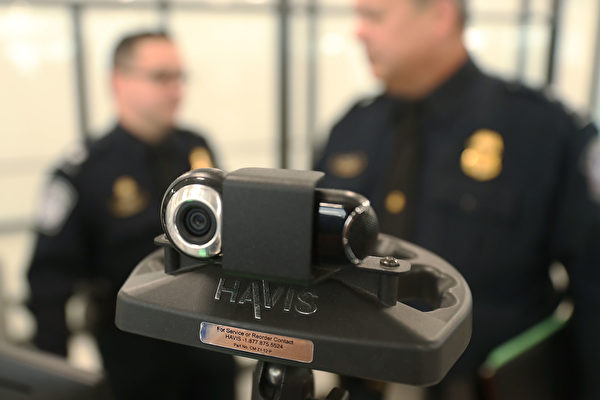
The U.S. Customs and Border Protection (CBP) announced on Wednesday (January 28th) the launch of the Enhanced Passenger Processing (EPP) system at Philadelphia International Airport, aiming to streamline the clearance process for travelers returning to the United States from overseas. The EPP system utilizes advanced facial comparison technology and biometric identification software to provide American citizens with a seamless, contactless, and secure international arrival experience. This system not only ensures high-level security for citizens but also expedites the customs process.
Upon arrival at the inspection area, automated cameras operated by CBP agents capture travelers’ photos, which are then compared in seconds using biometric technology with existing photos (such as passport pictures) to verify identity, citizenship, conduct enforcement checks, and generate entry records.
The technology automates routine tasks for eligible and law-abiding American citizens, allowing CBP officers to focus on interacting with travelers and handling high-risk passengers. Passengers who prefer not to use the EPP process can notify staff and follow standard international entry procedures.
EPP services are currently available at 15 airports in the United States, 6 CBP preclearance airports in Aruba, Canada, and Ireland, 5 seaports of entry, and 1 land border port of entry. CBP officials have noted a 25% reduction in wait times for American citizens nationwide since the full rollout of EPP in August 2025.
Despite the efficiency and touchless nature of the process, CBP officers are present on-site to guide passengers through the procedures and provide assistance during the security screening process. Cleatus P. Hunt, Director of CBP Philadelphia Area Port, described EPP as an innovative and secure biometric identification solution designed to simplify international entry for American citizens, enhance CBP’s enforcement capabilities, and fulfill its mission of safeguarding national security.
He emphasized that Philadelphia International Airport, as a crucial transatlantic hub, will offer arriving passengers various benefits of the new technology, including shorter wait times, faster immigration processing, and more convenient connecting services. The airport’s IT department collaborated with CBP to implement the EPP system, with ongoing Wi-Fi and network infrastructure upgrades to support new technologies like EPP.
CBP has developed a range of mobile applications to assist travelers in streamlining their entry into the United States. These CBP mobile apps are free and can be downloaded from the Google Play Store and Apple App Store or accessed via the CBP mobile app catalog. The “Global Entry” mobile app is available at 78 locations, allowing pre-approved members to complete immigration procedures on their phones before disembarking.
Furthermore, the “Passport Control” mobile app can be used at 53 ports of entry, including 14 preclearance locations and 4 seaports. It enables travelers to submit passport and travel information quickly, securely, and free of charge before arriving at a CBP inspection station. U.S. citizens, lawful permanent residents, certain Canadian citizens, and Visa Waiver Program travelers can use this app.
Additionally, the Electronic System for Travel Authorization (ESTA) mobile app allows travelers who may qualify for visa waiver entry into the U.S. to easily and quickly submit ESTA applications online or through the app via smartphones, mobile devices, or tablets.
The notice emphasizes that travelers must comply with entry laws, possess valid documents, undergo entry inspections, and adhere to visa terms; otherwise, they may face detention and deportation. “A visa is a privilege, not a right, and only travelers who respect the law and follow due process can obtain a visa.”