
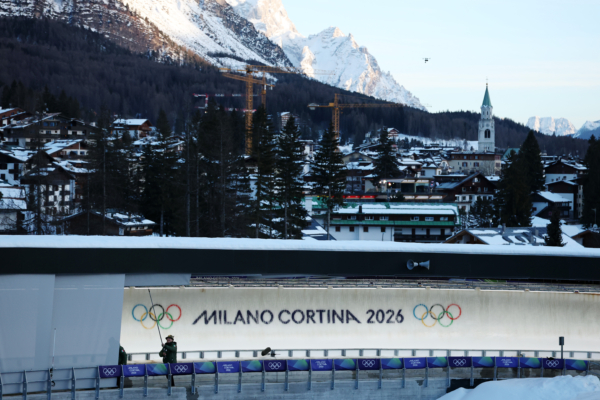
The 2026 Milan-Cortina Winter Olympics will come to a close on February 22nd (Sunday) at the Verona Arena in Italy, with the official ceremony starting at 20:30 local time. At that moment, the Olympic flame will simultaneously go out in both Milan and Cortina – a first in Winter Olympics history.
After 16 days of competition, Norway claimed the top spot with a total of 40 medals including 18 gold, 11 silver, and 11 bronze, setting a new record for the most gold medals in a single Winter Olympics. The United States also made history with 11 gold medals, breaking the record set at the Salt Lake City Winter Olympics.
According to the official Winter Olympics website, the closing ceremony of the 2026 Milan-Cortina Winter Olympics is scheduled to take place at the Verona Arena on February 22nd at 20:30 local time (3:30 in Taiwan and Beijing on the 23rd), lasting approximately 2 hours and 30 minutes.
The Verona Arena, built in the 1st century, predates even the Roman Colosseum and is one of Italy’s most iconic cultural landmarks, listed as a UNESCO World Heritage site. This two-thousand-year-old ancient Roman theater is renowned for its opera festival during the summer and will now witness the grand moment of the Winter Olympics closing under global attention. Verona, the city that inspired Shakespeare’s Romeo and Juliet, will host a closing ceremony themed “Beauty in Action,” integrating culture, music, sports, and humanities to celebrate the 17 days of ice and snow passion.
Another historic feature of this Winter Olympics worth noting is the simultaneous extinguishing of the Olympic flame in Milan and Cortina-D’Ampezzo during the closing ceremony, marking the first time in Winter Olympics history that the “synchronized dual torch extinguishing” format has been used, perfectly echoing the dual-host model of this event.
Following this, the Olympic flag will be officially lowered and handed over to the next Winter Olympics host – the 2030 Winter Olympics in the French Alps. Audiences will also get a glimpse of the magnificence and highlights of the 2030 Winter Olympics in France, signaling a new beginning for the Winter Olympics relay.
In accordance with Olympic tradition, athletes will break the boundaries of national teams when entering the closing ceremony, symbolizing friendship and unity beyond borders. As customary, the Greek flag will lead the entrance, with the host country Italy flag bringing up the rear.
Confirmed performers for the closing ceremony include Italian singer Achille Lauro, actress Benedetta Porcaroli, and DJ/producer Gabry Ponte. More guest information will be announced closer to the ceremony.
Before the closing ceremony, the final batch of headline events on the competition field will take place, including the four-man bobsleigh, women’s curling gold medal game, men’s ice hockey gold medal game, and the women’s 50km cross-country skiing mass start (traditional technique). The medal ceremony for the women’s 50km cross-country skiing race will be held at the closing ceremony venue.
Above the competition grounds, athletes have written numerous historic moments.
According to the final statistics from the Olympic website, the Norwegian delegation dominated this Winter Olympics with 41 medals in total, including 18 gold, 12 silver, and 11 bronze, setting a new record for the most gold medals in a single Winter Olympics. Norway excelled in traditional disciplines like cross-country skiing, biathlon, and ski jumping, showcasing unparalleled winter sports prowess.
Following closely is the United States team, with 32 medals including 11 gold, 12 silver, and 9 bronze, securing the second spot. The United States team stood out in alpine skiing, figure skating, speed skating, and freestyle skiing, solidifying its status as a Winter Olympics powerhouse.
Notably, the United States’ 11 gold medals broke the record set in the previous Olympics held on US soil (2002 Salt Lake City Winter Olympics).
Traditional speed skating powerhouse Netherlands also performed well, ranking third with 10 gold, 7 silver, and 3 bronze medals. The Dutch team continued its dominance in speed skating, with 5 gold, 6 silver, and 2 bronze in long-distance events, almost entirely sweeping the mid-to-long-distance titles; they also clinched 5 gold, 1 silver, and 1 bronze in short track events, showcasing comprehensive dominance from long track to short track.
Host country Italy made a strong push leveraging home advantage, finishing fourth with 30 medals, including 10 gold, 6 silver, and 14 bronze. Italian athletes repeatedly stood on the podium in speed skating, alpine skiing, and bobsleigh events, receiving enthusiastic applause from the home crowd.
Other Winter Olympics powerhouses like Germany, France, Sweden, Switzerland, Austria, and Japan also had their share of successes in their respective strongholds, creating a diverse competitive landscape in the medal standings.
For those unable to attend the Verona event in person, the closing ceremony of this Winter Olympics will be broadcast globally through authorized broadcasters. According to the information released by the Olympic website, major broadcast platforms include:
United States: NBC Olympics, Peacock streaming platform
United Kingdom: BBC Sport, Warner Bros. Discovery (Discovery+, TNT Sports)
Australia: Channel Nine
Japan: NHK and other Japan Consortium channels
South Korea: JTBC, Naver
Canada: CBC, Bell Media, Rogers Media
Europe: Warner Bros. Discovery (HBO Max, Eurosport) and various national public broadcasters
Viewers in some regions can also watch the live broadcast or highlights through the official Olympics channel (Olympics.com).
As the lights slowly illuminate the Verona ancient arena, the 2026 Milan-Cortina Winter Olympics will soon draw to a close. The 16 days of ice and snow legends, the sweat and glory of hundreds of athletes, will forever be engraved in the history of the Olympics. As the torch extinguishes, the spirit lives on – the world will reunite at the French Alps in 2030, marking a new chapter in Winter Olympics history.