
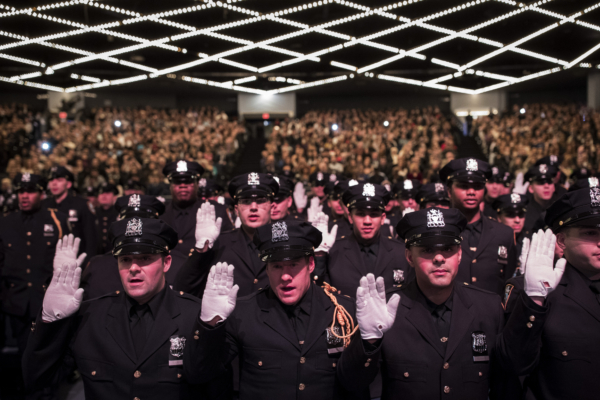
Facing a massive fiscal deficit and budget crisis, Mayor Mamdani of New York announced in the latest fiscal year budget proposal this week the cancellation of the plan by former Mayor Adams to hire an additional 5,000 New York Police Department (NYPD) officers, keeping the police department’s manpower at around the current level of 35,000 officers. This move marks a significant policy shift by the city government between public safety and financial priorities.
Former Mayor Adams had stated before leaving office that more police officers were necessary to ensure the safety of the city’s residents, and had planned to significantly increase the total number of officers to 40,000 in his fiscal plans.
Mayor Mamdani stated that canceling the hiring of additional officers was in response to the “historic budget deficit” facing New York City. He emphasized that despite efforts by the city government to reduce the deficit from several billion dollars to a lower level, the financial challenges remain monumental. He referred to this as a “time of crisis, requiring extraordinary measures”.
In the budget proposal, the overall budget for the police department remains at around $6.4 billion, but the cancellation of future recruitment plans has been seen as a part of cost-cutting measures.
Mamdani and his supporters believe that in the current economic pressure, the city government must readjust its financial expenditures, directing limited resources towards education, housing, social services, and other urban priority areas.
However, police unions and some civil society groups criticize that city safety cannot be maintained solely through budget figures, especially when faced with a wave of officer retirements and crime challenges, merely maintaining the current police force levels could lead to a significant increase in law enforcement pressures. The New York City Police Union points out that even with a stable budget, issues of understaffing and recruitment in the police force remain unresolved.
During his campaign, Mamdani proposed transferring some non-violent and social crisis handling responsibilities from the police department to a new Department of Community Safety, staffed by professional social workers and crisis intervention teams to address issues like mental health crises and homelessness, aiming to reduce police intervention at the source.
As negotiations on the new budget enter a crucial phase between the City Council and the state government, the tug-of-war between public safety, fiscal balance, and the city’s future development strategies is expected to remain a core topic of discussion in the latter half of the year in New York City.