
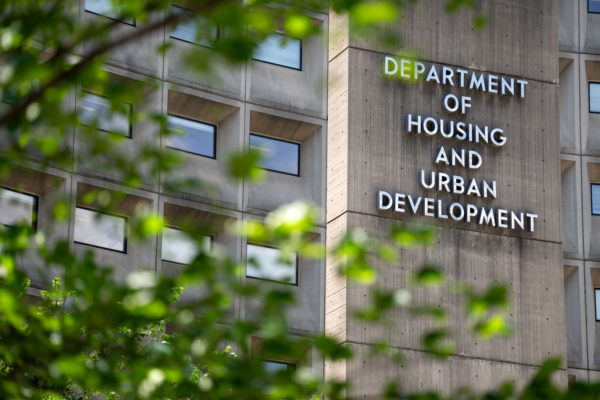
On Thursday, February 19, the U.S. Department of Housing and Urban Development (HUD) announced a new rule that will completely ban illegal immigrants, including those in mixed-status households, from residing in HUD-subsidized housing and properties. The HUD stated that this measure aims to reduce fraud and abuse of welfare benefits.
HUD Secretary Scott Turner stated in a press release, “The days of illegal immigrants, unqualified individuals, and fraudsters exploiting system loopholes and taking advantage of American taxpayers are over.”
He emphasized, “This new rule will ensure that all residents receiving federal housing assistance are eligible tenants. We have zero tolerance for actions that discriminate against hard-working American citizens and profit from exploiting decades-old regulatory loopholes.”
The new rule, which will be published in the Federal Register, explicitly states that resources such as public housing and other HUD-related housing will be restricted to U.S. citizens and qualified non-citizens only. In the future, all residents living in HUD-subsidized housing must provide proof of citizenship or eligibility, even elderly individuals who in the past only needed to provide proof of being over 62 years old will be required to comply with identity verification.
Following its official release on Friday, February 20, the proposal will kick off a 60-day public comment period. However, this policy has sparked backlash from some groups, with advocacy organization the National Housing Law Project expressing opposition, arguing that the proposal violates U.S. federal laws.
The organization emphasized, “HUD is deviating from its core mission of providing affordable housing in the national housing crisis, and is attempting to make local housing authorities and landlords act as ‘immigration enforcers’.”
Director Shamus Roller criticized in a statement that the government is shifting “the responsibility of the housing crisis onto immigrants, in order to continue dismantling HUD’s iconic housing programs that could help the vulnerable.”
He further claimed that this new rule would put over 100,000 people at risk of eviction, including 37,000 children, some of whom are U.S. citizens. However, the group did not provide specific estimates of the expected proportions of affected citizens, legal immigrants, or illegal immigrants.
In December last year, the left-leaning think tank Center on Budget and Policy Priorities (CBPP) estimated that as many as 20,000 households or 80,000 individuals could lose housing subsidies due to this eligibility change.
In response to these criticisms, HUD rebutted in its statement, emphasizing that the new rule aims to plug long-standing loopholes that have allowed illegal immigrants and unqualified individuals to benefit.
The statement also pointed out that currently only about a quarter of eligible families nationwide are receiving HUD housing assistance, with approximately 200,000 federal housing tenants having “incomplete or uncertain eligibility verifications.”
According to HUD press releases, it’s estimated that there are 20,000 mixed-status households with 24,000 illegal immigrants, unqualified individuals, and “fraudsters” receiving HUD benefits. HUD stressed that after the rule comes into effect, these “ineligible individuals will no longer be able to take advantage of benefits meant for U.S. citizens and legal residents provided by taxpayers.”
Data from the National Low Income Housing Coalition shows that federal public housing in the U.S. is primarily managed by local agencies. The HUD website indicates that around 970,000 households currently reside in public housing across the country, operated by approximately 3,300 local housing authorities.
HUD also mentioned that generally, public housing is reserved for low-income families and individuals, and eligibility reviews include assessments of total annual income, disabilities, elderly status, family qualifications, and citizenship or legal immigrant status.