
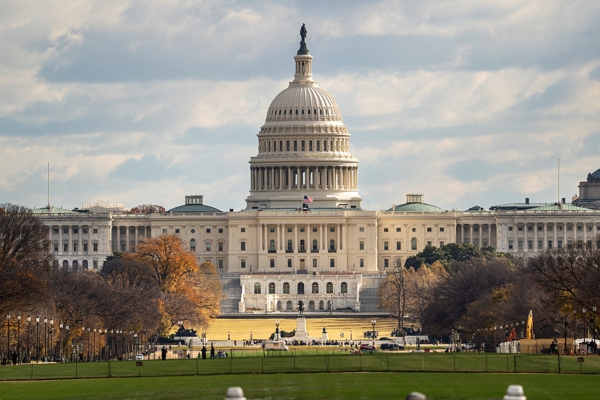
In a narrow 214-213 margin, the House of Representatives advanced the final four appropriations bills on January 22, including the funding bill for the Department of Homeland Security (DHS), clearing some hurdles for the House to complete the appropriations bills by January 30.
On Thursday, January 22, at 11 a.m., the House passed the procedural rule with a slim margin, setting up debates later in the afternoon and paving the way for two final votes. One of the votes involved funding for the Department of Defense, Department of Transportation, Department of Housing and Urban Development, Department of Health and Human Services, Department of Labor, Department of Education, and other related agencies. The House will separately vote on the DHS funding bill.
With the Republican party holding a razor-thin majority, the procedural rule vote was briefly stalled during the meeting. Republican leadership actively lobbied undecided members and convinced two Republican members who initially voted “no” to switch to a “yes” vote.
According to reports from The Hill, House Majority Whip Tom Emmer and Texas Congressman Chip Roy held discussions with House Freedom Caucus Chairman Andy Harris, who had not yet voted at the time in the speaker’s lobby. Meanwhile, House Speaker Mike Johnson talked to undecided members Andy Ogles and Zach Nunn on the House floor.
The two members who switched from “no” to “yes” votes were Republican Congresswoman Lauren Boebert from Colorado and Republican Congresswoman Victoria Spartz from Indiana.
Harris ultimately did not vote. Four members abstained from voting, including Harris, and the other three were Republican Congressman Tom McClintock from California, Republican Congressman Wesley Bell Hunt from Texas, and House Republican Conference Chair Elise Stefanik.
The title “Final Results of the 41st Roll Call Vote” displayed on the vote board indicated that the vote was to consider deliberating on the 2026 Consolidated Appropriations Act (H.R. 7148), considering the 2026 Department of Homeland Security Appropriations Act (H.R. 7147), as well as appropriations bills for other related purposes.
The DHS funding bill will allow billions of dollars to flow into Immigration and Customs Enforcement (ICE) and will also provide funding for the Federal Emergency Management Agency (FEMA), the Transportation Security Administration (TSA), the Secret Service, the Disaster Relief Fund, and other programs and agencies.