
【Epoch Times News January 15, 2026】The fifth plenary session of the Chinese Communist Party Central Commission for Discipline Inspection ended yesterday (January 14), officially declaring a grim signal for crackdown. CCP leader Xi Jinping emphasized the anti-corruption campaign by saying, “Cannot afford to lose, and must not lose,” and so on. Several overseas observers interviewed by Epoch Times expressed that Xi’s words reveal ruling anxiety, and the so-called “anti-corruption” drive under the CCP is unlikely to succeed but will only escalate as the regime’s crisis worsens until it collapses.
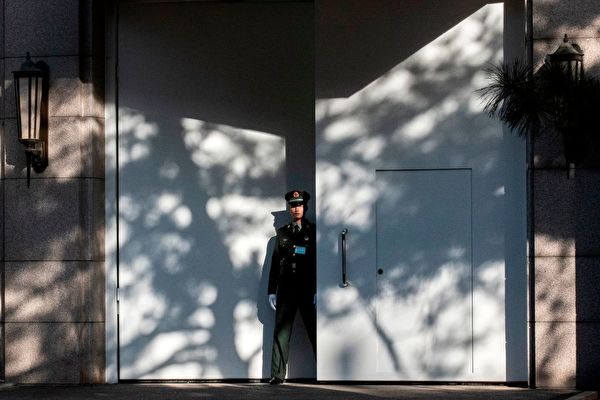
The fifth plenary session of the CCP Central Commission for Discipline Inspection opened on January 12, 2026, and the meeting was shrouded in mystery. Officially, the location was only disclosed as Beijing without specific details on the exact venue, but such meetings have traditionally been held at the Jingxi Guesthouse.
Central Politburo member Ma Xingrui was absent from the meeting. He has skipped several high-level CCP meetings in a row amid ongoing rumors of trouble. A total of 10 military commission members were absent from this session, with the military absentee rate reaching 45.5%, setting a new historical record. Major General Chen Guoqiang, a member of the Commission for Discipline Inspection, also disappeared from the main podium.
Last year, 65 central-level cadres (usually deputy ministerial level or above) within the CCP were reported to have fallen from grace, marking a record high number, not including a large number of investigated military generals. Xi Jinping claimed that in 2025, the CCP’s anti-corruption campaign had “achieved significant results.”
Chinese-Canadian writer and commentator Sheng Xue told Epoch Times that under the CCP system, anti-corruption has never been about rectifying errors or correcting mistakes but rather about a reallocation of power. Xi Jinping himself is not the purifier of this system; he and his family are typical representatives of the corrupt system.
US-based current affairs commentator Tang Jingyuan stated that in the context of the CCP, so-called anti-corruption efforts have always been synonymous with political struggles to eliminate dissent. Xi Jinping came to power by leveraging the anti-corruption campaign to consolidate power, temporarily achieving a supreme position.
Independent commentator Cai Shengkun told Epoch Times that Xi Jinping’s high-profile anti-corruption campaign is not about eradicating corruption at its systemic roots but rather a response to the risks he perceives, especially the anxiety of losing power and his own personal insecurities.
Xi Jinping declared at the opening of the fifth plenary session, “The fight against corruption is a significant battle that we cannot afford to lose and must not lose,” emphasizing that “we must fight corruption whenever it appears,” and so on. His continuous emphasis on “self-revolution” in recent years aims to prevent his party from falling into the historical cycle of rise and fall, showing his confidence.
Cai Shengkun believes that contradictions exist in Xi’s own statements; while he highly affirms the concept of “self-revolution,” he also asserts that “we cannot afford to lose.” “‘Self-revolution to break free from historical cycles’ is a blind sense of confidence, while ‘the fight against corruption that we cannot afford to lose’ is a typical self-deprecating tone,” he believes Xi Jinping’s cry of “cannot afford to lose” indicates his awareness of the looming collapse of the entire regime.
Sheng Xue stated that whether it is “self-revolution” or the indispensable fight against corruption, they are empty words. The so-called “self-revolution” is simply an attempt to morally justify the regime and suggest that the CCP can self-correct, with corruption being only a minor issue. Xi’s assertion that the fight against corruption is a battle he cannot afford to lose reveals not just his personal anxiety but also the existential threat facing the CCP regime, where corruption has jeopardized its survival.
Tang Jingyuan expressed that Xi stating the fight against corruption as one that he cannot afford to lose and mustn’t lose directly points to the essence of corruption as internal power struggles fraught with uncertainty, where the losing side risks losing everything. This showcases Xi’s underlying anxiety.
However, Tang Jingyuan believes that Xi’s anxiety doesn’t stem solely from the widespread downfall of his loyalists and disloyalty within his inner circle but also because he is losing ground in the factional struggles, with a significant number of Xi’s loyalists being purged, signaling a blow to Xi Jinping’s power against the anti-Xi faction. Consequently, he experiences extreme anxiety.
Tang Jingyuan also believes that Xi not only lost military power but is also gradually losing authority within the party and state system, as evidenced by the case of politburo member Ma Xingrui. It is widely known that Ma Xingrui is a prominent figure in Xi’s wife Peng Liyuan’s Shandong faction, and even such individuals are being targeted, indicating Xi’s weakening position in the power struggle.
Xi Jinping stated at the Central Commission for Discipline Inspection meeting that, “We must lock power inside the institutional cage,” and emphasized that “every individual must be equal before the law and comply with regulations without privilege, with no exceptions in enforcing legal procedures.”
Cai Shengkun pointed out that in a place governed by law, rules are definitive. However, in an authoritarian regime where one person makes all the decisions, the most effective way to subjugate is through instilling fear in all individuals.
Sheng Xue remarked that the CCP’s power structure revolves around the possession, division, and operation of power, interests, and wealth. Under CCP rule, there is no independent judiciary, no democratic checks and balances, no media scrutiny, and no public power in society, leaving everything at the mercy of the regime.
She stated that in the late 1970s, the CCP initiated a false reform and opening up, with the majority of society having high expectations of the Party. The 1989 student movement was a response to CCP corruption, as people hoped the CCP would curb corruption as much as possible during the reform process. However, instead of addressing these concerns, it resulted in gunfire, tanks, and a brutal crackdown. Since then, it has been evident that the CCP has never truly aimed to eradicate corruption.
“The CCP itself has been advancing along the path of corruption, anti-corruption, corruption, and anti-corruption. Now it has merely reached a higher level of corruption,” she declared.
Tang Jingyuan expressed that the CCP’s anti-corruption campaign lacks the principle of equality before the law; it is essentially a purge of factions, with only the notion of allegiance mattering. He believes that in 2026, there is a high possibility of witnessing a peak in anti-corruption efforts, with many key figures in the Xi faction being investigated under the guise of corruption.
The communique from yesterday’s Central Commission for Discipline Inspection meeting stated that they would “resolutely eliminate ‘two-faced’ individuals who hold conflicting loyalties and speak and act inconsistently,” and “strictly rectify liberal thinking and political opportunism.”
Since 2023, many proteges promoted by Xi Jinping have fallen from grace, particularly figures like He Weidong and Miao Hua, who were handled at the Fourth Plenary Session last year and were crucial in Xi’s military support.
Cai Shengkun believes that in the early stages of Xi Jinping’s anti-corruption campaign, he mainly targeted individuals left by Jiang Zemin and Hu Jintao. After the 19th Party Congress, Xi’s supporters came to power entirely, and it was thought that the anti-corruption campaign was concluded since further anti-corruption drives would implicate those close to him. This isn’t a case of “the more you fight, the more corrupt you become” but rather a more fatal issue: the unraveling of loyalty and security — the collapse of the patronage relationships Xi depended on.
Cai Shengkun stated that as Xi Jinping’s original inner circle collapses one after another, he has no choice but to select individuals from a wider bureaucratic pool. These individuals are not vetted through long-term personal trust relationships but rather exhibit performative and short-lived loyalty, subject to changing winds. For a regime reliant on personal rule instead of institutional frameworks, this instability renders Xi’s power more fragile than it appears superficially.
Regarding the 2026 anti-corruption efforts, Xi stated that the “anti-corruption struggle remains severe and complex” and insisted on “maintaining an unwavering high-pressure stance” without specifying concrete goals and requirements for anti-corruption work.
Cai Shengkun affirmed that the CCP’s anti-corruption campaign is bound to fail and will never truly conclude but will perpetuate as a routine state of suppression. As corruption’s root lies in power, anyone with unchecked authority will inevitably feel the urge to indulge in corruption, a cycle that will never cease. The result will be increasingly fearful and evasive officials, opting to lie low.
He added, “When Xi Jinping must rely on the language of ‘cannot afford to lose’ to maintain his rule, it indicates that he is already teetering on the edge of a cliff. Xi Jinping’s anti-corruption campaign isn’t about solving corruption but addressing distrust. Distrust itself is a signal that the authoritarian regime is on the verge of comprehensive collapse!”
Sheng Xue suggested that the CCP is a regime that sustains itself through corruption while attempting to prove its legitimacy through anti-corruption measures. However, the sustainability of its authoritarian rule remains questionable. Currently, the CCP is facing internal and external crises, with the world increasingly disengaging from it and decommunizing. Xi is confronting escalating internal factional struggles, economic downturn, rising unemployment, and a rapid growth in social instability.
She predicted that while heightening the anti-corruption rhetoric may have a short-term intimidating effect and delay crises, in the medium to long term, it will hollow out the entire system, pushing the highly corrupt regime towards further high-pressure, low-capacity operations. Political turmoil and economic decline run parallel, eventually leading to the collapse of the CCP power structure. “This kind of anti-corruption is bound to fail, only worsening the crisis until the regime collapses.”
Sheng Xue emphasized, “Xi’s so-called anti-corruption, conducted under the pressure of ‘cannot afford to lose,’ is not aimed at addressing corruption but at addressing distrust. And distrust itself signals the imminent comprehensive collapse of the authoritarian system!”
This article has been comprehensively rewritten for clarity and readability.