
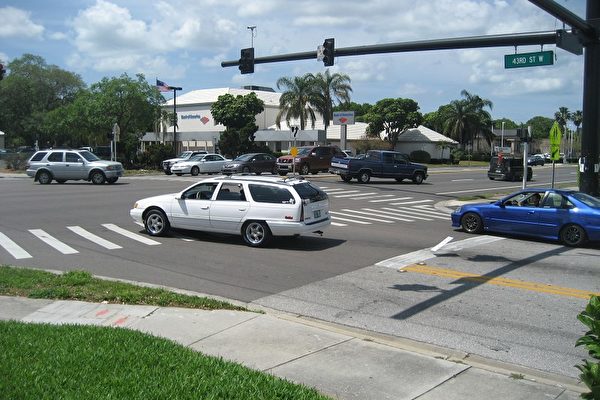
In California, a new traffic law, SB720, passed in 2025 authorizes local governments to use Automated Traffic Enforcement Systems (ATE) to monitor red light violations. Instead of penalizing drivers, the law imposes civil fines of $100-$500 on the vehicle owners.
SB720, also known as the Automated Traffic Enforcement System Programs, was introduced by Democratic State Senator Angelique Ashby of the 8th District along with Assembly members Gail Pellerin of the 28th District and Buffy Wicks of the 14th District. The bill passed in the state Senate and Assembly with votes of 33:3 and 68:8, respectively, with Governor Newsom signing it into law in October 2025.
Under the new law, local governments are authorized to enforce red light violations as civil fines rather than criminal penalties. Only vehicle owners are fined, not the drivers, and there is no suspension of driver’s licenses or point deductions. The fine revenue goes to the local governments.
The amount of the red light violation fine varies depending on the circumstances: for first-time offenders without any traffic violations in the past three years, the fine is $100; for those with one prior violation within three years, the fine is $200; for two prior violations within three years, the fine is $350; and for three or more prior violations, the fine increases to $500.
The law also stipulates that apart from the electronic payment fee, no other handling fees can be charged. Fines must be paid within 30 days of the notice being issued, with a $50 initial late fee and subsequent late fees not exceeding $100.
According to the state legislature records, since red light violations are considered civil penalties and do not affect driver’s license points, insurance rates will not increase due to these fines. Any legal challenges related to these violations require a $25 appeal fee. Individuals facing financial hardship can opt for community service or a reduction of 80% of the fine; those with an income exceeding 250% of the federal poverty line can also receive a 50% fine reduction.
With the new law holding vehicle owners accountable for violations, all vehicle owners should consider the potential liability before lending their vehicles to others.
The legislation analysis agency predicts a decrease in California’s revenue due to fines being allocated to local county and city governments. Previously, the state government received $286 from each red light violation, including various fixed fees such as government operating assessment fees, conviction assessment fees, and additional variable assessment fees.
Furthermore, the new law may lead to an increase in the workload for appeals, with an estimated cost of $1,000 per hour of court time. Prior to this law, red light violation fines required photos of both the vehicle and the driver, but the new law only requires a photo of the vehicle, reducing the cost of driver verification.
Prior to this law, many cities in California had shut down red light cameras for economic reasons, such as Sacramento closing 24 cameras in 2024; Los Angeles shut down red light cameras in 2011 due to high operating costs and issues with identification, such as masked or unidentifiable drivers. However, the new law may prompt local governments to reopen these cameras.
While SB720 has been passed, understanding the arguments for and against it in the state legislature records may provide insight into the potential impact after its implementation.
Advocates argue that around 4,000 people in California die each year due to unsafe driving on roads, and installing new cameras in accident-prone areas is a crucial step in reducing accidents and fatalities. Changing from criminal to civil fines can lower insurance costs for drivers and ensure cities invest in creating safe streets and facilities.
The organization “Streets are for Everyone” believes that the law helps establish a voluntary local “Safer Streets Program,” eliminating high fines, imposing civil fines on vehicle owners (similar to parking fines), without affecting driving records or leading to insurance rate hikes.
On the other hand, the National Motorist Association, in its opposition statement, argues that SB720 turns red light violations into a high-volume, low-regulation ticketing operation benefiting camera suppliers with reduced operating costs (no need to identify drivers or prepare evidence), and cities benefit from a stable revenue source. It suggests that financial feasibility rather than traffic safety is the motivating force behind the law.