
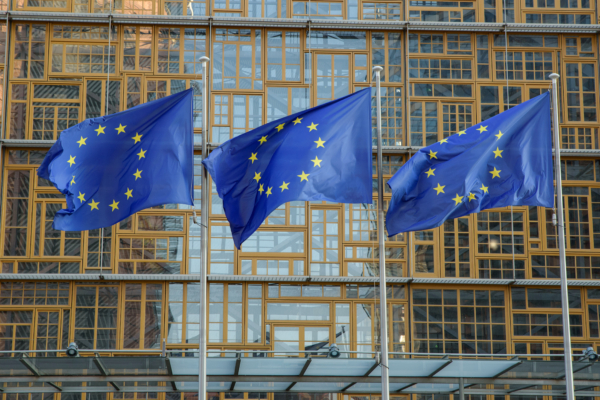
On Thursday, December 11th, the European Union reached a preliminary agreement to strengthen the scrutiny of foreign direct investment (FDI). This is the latest measure taken by the EU to protect its economy from foreign influences.
The new agreement will grant the EU greater powers to review and intervene in foreign investments that affect public order and security. It will also establish standards for reviewing such investments, which the EU currently lacks.
Denmark’s Minister for Industry, Business, and Financial Affairs, Morten Bodskov, who holds the rotating EU presidency, stated, “We have reached a balanced and moderate framework, focusing on the most sensitive technologies and infrastructure.”
The stricter guidelines on foreign direct investment are one of the measures the EU is taking to safeguard its economy, as Europe is facing challenges dealing with Beijing’s export restrictions on key industrial materials.
According to a statement issued by the EU after the meeting, the revised regulations build on the FDI screening framework passed in 2020 and are crucial for maintaining the EU’s public order and security. The agreement strengthens the existing system, requiring all member states to implement a unified minimum level of review mechanism and include foreign investments made through EU subsidiaries.
Earlier this month, the EU released its first economic security principles, emphasizing the need to ensure that inbound investments do not pose a risk of hostile takeovers in key industries. The principles also stress that such investments should add value to the EU rather than weaken its technological advantage.
The new FDI screening rules update the mechanism first implemented in 2020. The rules set a minimum scope of review, covering dual-use items, military equipment, and key technologies such as artificial intelligence, quantum technology, and semiconductors.
Additionally, the scope of review includes energy, transportation, digital infrastructure, election infrastructure, and certain financial entities like central securities depositories.
However, essential medicines are excluded from the scope.
The agreement stipulates that decisions on reviews will remain the sole responsibility of the member state where the investment is located. Member states have full autonomy in deciding whether to authorize, impose conditions, or prohibit investments. But within the EU, a new shared database will be created to prevent potential circumvention behavior.
The updated rules still need formal approval from the EU Council and the European Parliament and will come into effect 18 months after the regulation is enacted.