
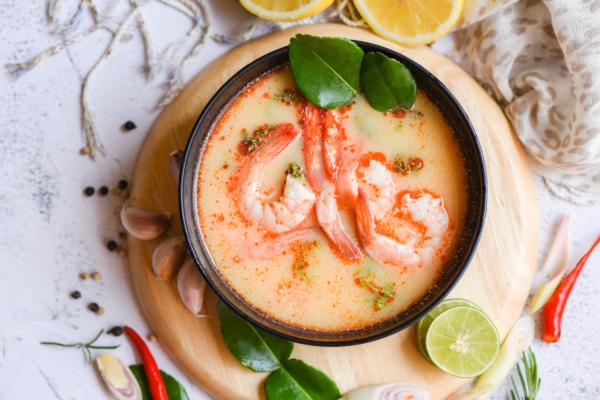
The United Nations Educational, Scientific and Cultural Organization (UNESCO) recently announced that the classic Thai cuisine “Tom Yum Kung” has been included in the list of Intangible Cultural Heritage of Humanity. This honor makes Tom Yum Kung the fifth cultural heritage of Thailand to receive such recognition, following the Khon masked dance, Nora dance, traditional Thai massage, and the Songkran Festival.
Tom Yum Kung, commonly known as Thai spicy shrimp soup, originated from a riverside community in central Thailand. It is not only a national dish of Thailand but also reflects the local way of life and represents the culinary culture of the agricultural regions in central Thailand. This soup is made with fresh shrimp, lemongrass, galangal, and kaffir lime leaves as main ingredients, seasoned with chili, fish sauce, and other spices, creating a complex flavor profile of sour, spicy, salty, and sweet, showcasing the essence of Thai cuisine.
Restaurants and households across Thailand consider this soup a staple, making it a shining star of Thai cuisine. Additionally, it is extremely popular in other Southeast Asian countries such as Malaysia, Singapore, and Indonesia. Interestingly, during the 18th century reign of the Thonburi Kingdom, King Taksin, who had Chinese ancestry also known as Zheng Xin, declared Tom Yum Kung as the country’s soup.
Sudawan Wangsuphakijkosol, the Minister of Culture of Thailand, emphasized that Tom Yum Kung originated from the plains of central Thailand, serving as a daily dish for riverside farmers. The locals skillfully combine fresh ingredients from the natural environment, reflecting the Thai people’s respect and wisdom towards nature. Not only does this dish embody rich Thai flavors, but it also symbolizes the locals’ commitment to healthy eating habits.
In the era of globalization, Tom Yum Kung transcends beyond restaurant menus and has expanded its influence globally, branching out into instant food products, seasoning packets, and more, becoming one of the representatives of Thai food culture worldwide.
Furthermore, Minister Sudawan Wangsuphakijkosol added that Tom Yum Kung has become a globally recognized dish and an essential aspect of Thailand’s cultural soft power. This certification not only acknowledges the cultural value of this dish but also solidifies Thailand’s position on the global culinary landscape.
These substantial acknowledgments highlight the cultural significance and culinary excellence of Tom Yum Kung, elevating it to a prestigious status among Thai culinary heritage and reflecting the country’s rich cultural diversity and culinary expertise.