
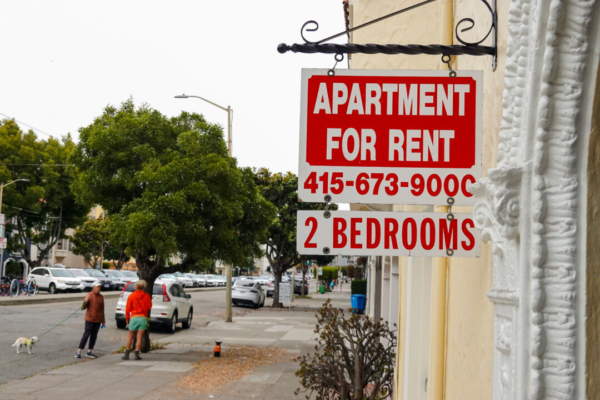
Unofficial election statistics show that California voters have rejected Proposition 33, which aimed to empower cities and counties to control residential rent standards.
Proposition 33, known as the “Justice for Renters Act,” sought to prohibit the state government from restricting cities and counties from enacting various rent control regulations.
The proposition also aimed to repeal an existing law, the Costa-Hawkins Rental Housing Act, which prohibits the implementation of rent control on single-family homes, apartments, and new construction housing (typically built after February 1, 1995). Costa-Hawkins also prohibits “vacancy control,” which restricts or denies landlords the right to raise rents for new tenants.
According to preliminary results released by the California Secretary of State as of November 17, Proposition 33 failed by nearly 3 million votes, with over 60% of California voters casting their ballots against it.
Similar propositions were brought to voters in 2018 and 2020, facing strong opposition and ultimately being rejected by a significant margin.
Michael Weinstein, President of the AIDS Healthcare Foundation, who advocated for the proposition, expressed disappointment in the outcome.
Weinstein stated in a statement sent to Epoch Times that housing is a human rights issue. The failure of Proposition 33 means that billionaire corporate landlords will accumulate more wealth while tenants may have to choose between paying rent and buying food, or even end up homeless.
This nonprofit leader and political activist suggested that the proposition’s failure was due to significant financial investments from opponents. According to data from the California Secretary of State, expenditures from the opposition to Proposition 33 exceeded $125 million, while funds raised in support of the proposition were only around $50 million.
Rent control measures often face challenges from landlords and receive support from tenants, with rules varying across different parts of California.
Data from the nonpartisan Legislative Analyst’s Office indicates that around 25% of rental properties in California are subject to some form of rent control, including rental properties in cities like Los Angeles, San Francisco, and San Jose.
Furthermore, state laws limit rent increases to not exceed 5%, plus a percentage tied to changes in the cost of living, up to a maximum of 10% per year.
If Proposition 33 had passed, analysts suggest that some landlords might sell properties, leading to a decrease in available housing and possible downward pressure on housing prices as interested investors decline.
Analysts also point out that a decrease in property values could result in “at least tens of millions of dollars” in reduced property tax revenue annually, which could impact budgets of cities, counties, schools, and special districts.
Critics argue that the latest rent control proposal is “riddled with loopholes and has an anti-housing deception,” as it could stifle new housing development and investment.
A group of opponents, including Ken Rosen, an honorary economics professor at the University of California, Berkeley, stated in the voter guide that Proposition 33 is misleading and will increase costs for renters and homebuyers.