
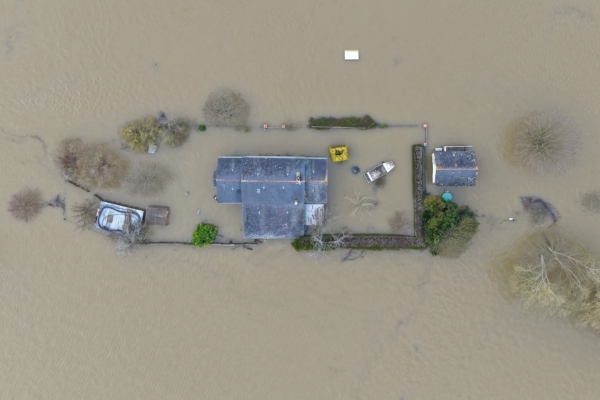
Severe floods have struck multiple areas in western France due to over 30 days of continuous rain and the impact of the storms “Nils” and “Pedro”. Thousands of households are without electricity, with many water supply systems affected, causing chaos in several parts of the country.
According to local reports, as of Friday (February 20th), western France has experienced 37 consecutive days of rain, marking the longest period since 1959. This has led to a rapid rise in water levels in several rivers, resulting in serious flooding. The Garonne River reached a peak of 9.86 meters, surpassing the historical record set in 2021.
Currently, three provinces in western France are under the highest level of red flood alerts, namely Loire-Atlantique, Maine-et-Loire, and Charente-Maritime. Over ten other provinces are under orange alerts. Evacuations have begun in some areas.
Local media has reported severe damage to transportation infrastructure during this disaster. Over 300 roads are blocked in western France, while several railway lines are either suspended or delayed. Some cities have implemented precautionary power outages, leading to cancellations or online shifts for public events.
Moreover, the agricultural sector has suffered significantly from this disaster. Greenhouses and vegetable cultivation areas have been washed away by floods, causing heavy losses for some farmers. The French government has deployed around 4000 firefighters for rescue operations, initiated the national natural disaster recognition process to expedite insurance claims, allocated 70 million euros to support affected local governments, and activated agricultural disaster compensation mechanisms.
On Friday, the official hydrological monitoring agency of France stated that although rainfall has temporarily eased, the effects of previous precipitation and saturated soil will likely lead to continued floods throughout the weekend, potentially extending into next week. The water receding process is expected to be slow.