
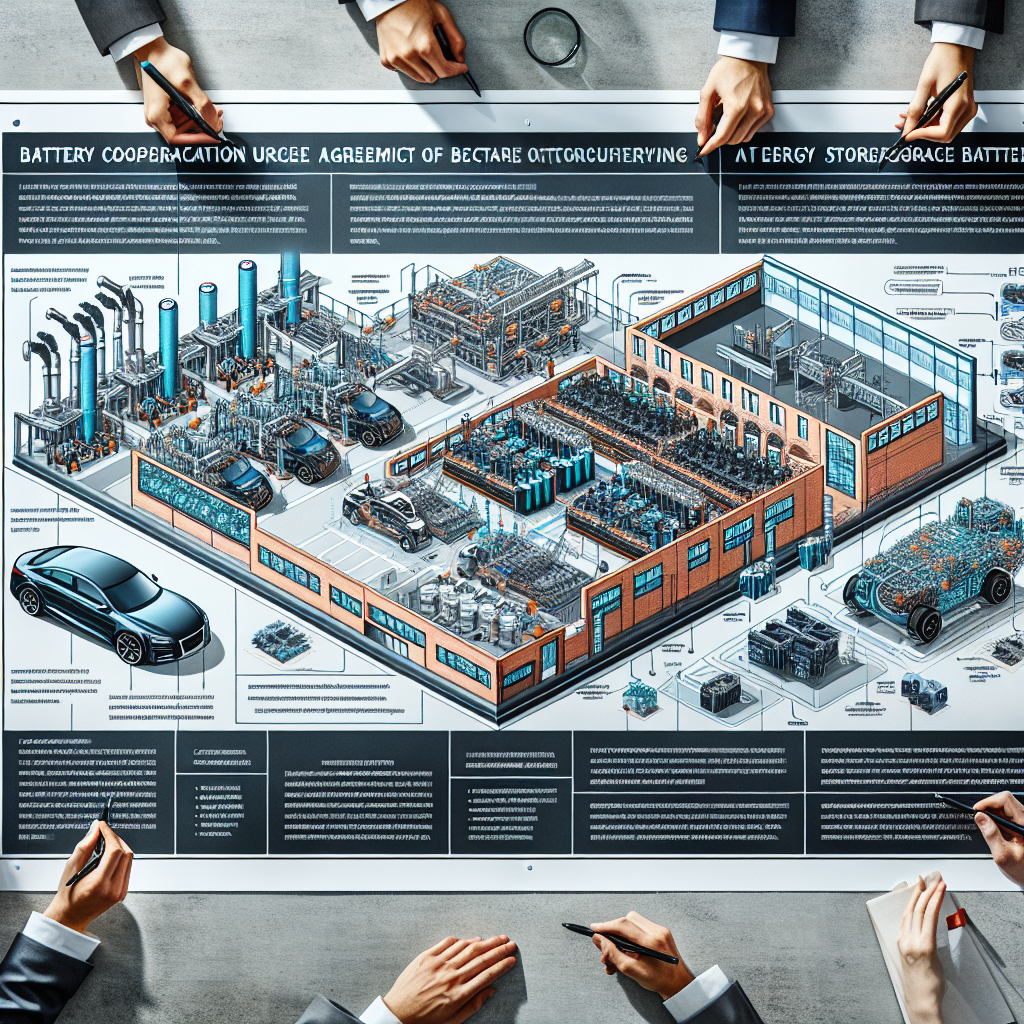
The United States “Select Committee on the CCP” is currently reviewing the battery cooperation agreement between Ford and CATL. The agreement involves Ford using CATL’s licensed technology to produce lithium iron phosphate batteries and energy storage system batteries at battery manufacturing facilities in the United States.
According to a report by Reuters, John Moolenaar, chairman of the “Select Committee on Strategic Competition between the United States and the Chinese Communist Party” in the House of Representatives, wrote to Ford’s CEO Jim Farley on Wednesday (January 28th) expressing concerns about Ford’s use of Chinese company CATL’s technology to build data center batteries and the cooperation agreement to enter the U.S. energy storage business.
The Michigan Republican lawmaker requested Ford to answer a series of questions in his letter about the cooperation agreement between Ford and CATL, including whether the technology license and cooperative production agreement between Ford and CATL have been updated, expanded, or otherwise modified since the implementation of a law restricting new qualifications last year.
In December, Ford announced a $19.5 billion write-down provision and canceled production of several electric vehicle models. The company stated that it would produce energy storage system batteries in battery plants located in Kentucky and Michigan, planning to ramp up initial production capacity within 18 months.
Ford emphasized at that time that “expanding lithium iron phosphate battery production in the U.S. is not only an investment in energy security but also an investment in American workers. Each new facility means thousands of high-skilled manufacturing jobs and a stronger local economy.”
Moolenaar also asked Ford to clarify whether it plans to establish a joint venture with Chinese automaker BYD.
He stated, “Recent months have shown that China (CCP) has weaponized the automotive supply chain. This cooperation agreement is a serious loophole, and if Ford establishes a new partnership with BYD, the situation will only worsen.”
Ford announced in 2023 that it would invest $3 billion in building a battery plant in Michigan, using CATL’s technology to produce battery cells. The plant, located in Marshall, Michigan, is expected to start production this year and will produce batteries for Ford’s $30,000 midsize electric pickup truck.
Previously, The Wall Street Journal reported that Ford was in discussions with Chinese company BYD regarding supplying batteries for hybrid cars produced at its overseas plants.
According to sources familiar with the negotiations, BYD is one of several battery suppliers being considered by Ford, and the two sides have not yet reached an agreement. Vehicles produced at Ford’s overseas plants may be sold globally, including in the United States, while most hybrid cars sold domestically in the U.S. will continue to be produced in North America.
These discussions have raised concerns in Washington. White House trade advisor Peter Navarro publicly warned that deepening reliance on China’s supply chain could pose risks.
Moolenaar urged Ford to cooperate with U.S. allies. Ford declined to comment on the discussions, only stating that it is in talks with many companies about it and will not respond to speculation.
This is not the first cooperation between Ford and a Chinese battery supplier. Since 2020, Ford has been sourcing batteries from BYD for its joint venture with Changan Automobile, and the battery cooperation agreement between Ford and CATL is still in effect.