
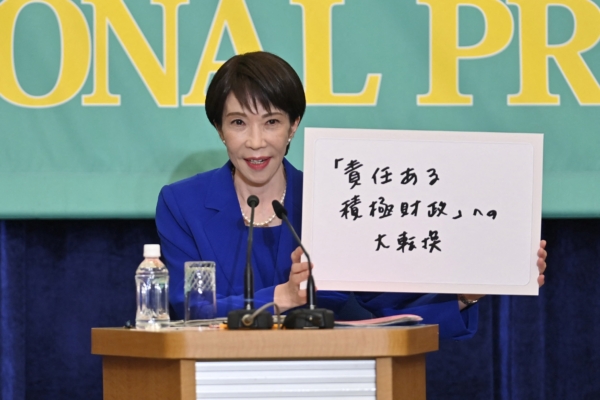
Japanese Prime Minister and leader of the Liberal Democratic Party, Sanae Takai, recently stated that if a conflict were to occur in the Taiwan Strait and Japan chose to remain uninvolved, the Japan-U.S. alliance could potentially deteriorate as a result. She emphasized that this does not indicate Japan will proactively engage in military actions abroad, and all responses will strictly adhere to existing legal frameworks.
Takai made these remarks during a nationally televised program on Monday, January 26th. In the program, an opposition party leader criticized her previous statements for exacerbating tensions between China and Japan, particularly in sending erroneous signals to the Chinese Communist Party regarding Taiwan.
She clarified that her statements in parliament last November did not imply that Japan would take military action unilaterally if a conflict between China and the U.S. arose due to the Taiwan issue. “I want to make it very clear that this is not a matter of Japan taking the initiative to deploy troops,” she said.
Takai explained that in the event of a serious situation in Taiwan, Japan’s primary consideration would be evacuating and protecting Japanese and American citizens in Taiwan. During this process, there might be situations where joint action with the U.S. military is necessary. She further stated that if the U.S. forces involved in joint operations with Japan were attacked and Japan chose to do nothing or retreat, the Japan-U.S. alliance would inevitably collapse.
“Therefore, Japan’s response will be strictly confined within the framework allowed by law and will be based on a comprehensive assessment of the situation on the ground,” Takai added without providing further details on specific actions.
Takai’s recent statement aims to further clarify her remarks made in parliament last November regarding the so-called “Taiwan contingency.” These comments had sparked strong backlash from the Chinese side at the time, with Beijing demanding a retraction from Japan and subsequently imposing retaliatory measures such as export restrictions and flight cancellations, accompanied by harsh criticism in official and state media.
In response, Takai emphasized that her position consistently aligns with Japan’s existing policy direction, and the Chinese interpretation of her remarks “does not correspond to the facts.” She did not retract her previous statements but reiterated that they should not be construed as Japan actively intervening in a military conflict in the Taiwan Strait.
Under Japan’s pacifist constitution, the country is prohibited from engaging in direct offensive military actions. However, it is allowed to exercise collective self-defense when there is a “threat to Japan’s survival,” providing defense support when allies, including the United States, come under attack. This interpretation has become a cornerstone of Japan’s security policy since the 2015 security legislation revision.
Since taking office as Prime Minister in October of last year, Takai has maintained a high public approval rating of around 70%. She has announced an early election scheduled for February 8th, aiming to consolidate her governing support based on the current high approval ratings.