
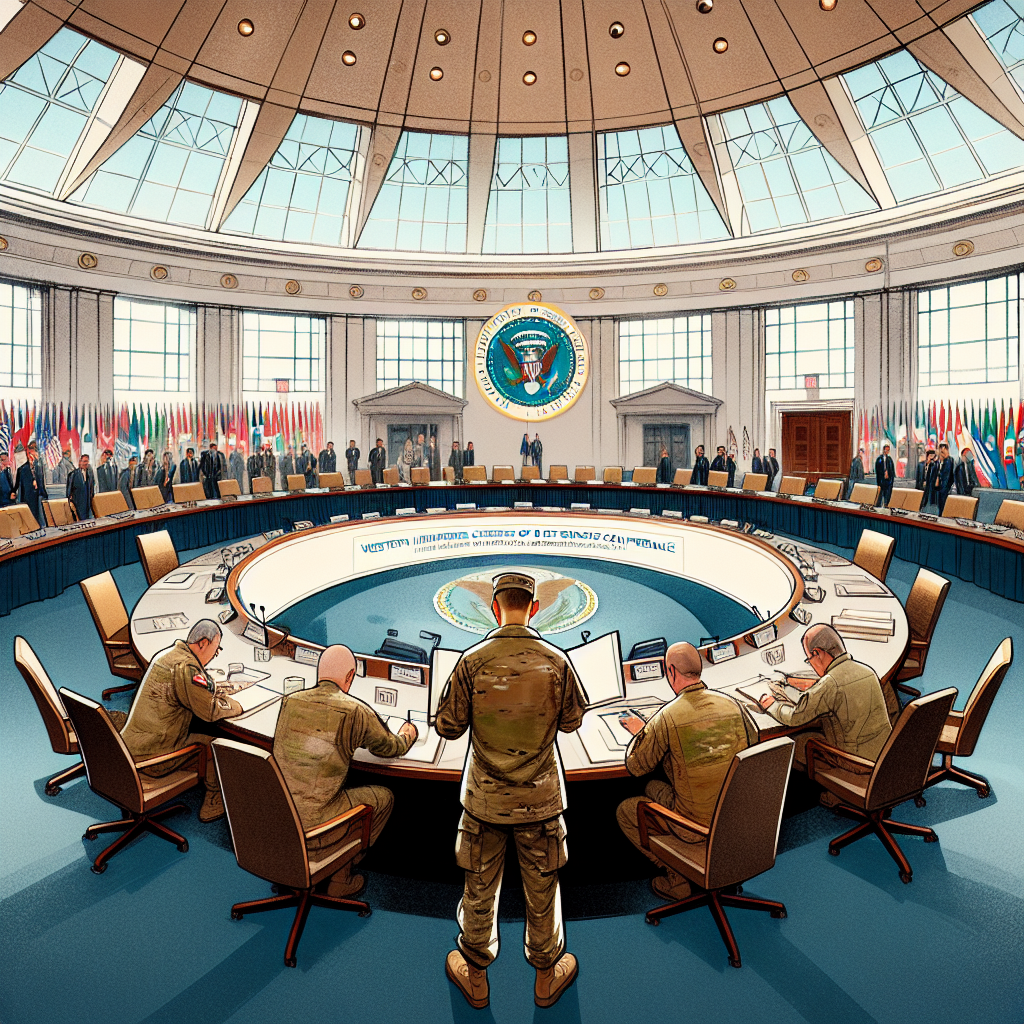
The Pentagon announced on Friday (January 23) that it will host the inaugural “Western Hemisphere Chiefs of Defense Conference” in Washington, D.C. on February 11.
This rare gathering, chaired by Dan Caine, the Chairman of the Joint Chiefs of Staff, will bring together military leaders from 34 countries with the aim of strengthening regional cooperation to collectively combat threats such as drug trafficking, organized crime, and terrorism.
In a statement, the Pentagon said, “Countries in the Western Hemisphere share deep historical connections, common values, and a shared interest in maintaining regional stability, which support the long-term security and prosperity of the United States and our neighboring regions.”
This defense ministerial conference is an important step in the United States’ efforts to promote regional security in recent years. The Pentagon stated, “Defense ministers and senior military representatives from 34 countries will convene to establish a common understanding of shared security priorities and enhance regional cooperation.”
The statement also mentioned that participants will discuss how to respond to threats posed by crime and terrorist organizations through closer partnerships and coordinated actions, as well as other external factors that undermine regional security and stability.
While the full list of attendees has not been released by the Pentagon yet, sources familiar with the matter indicated that it is expected to include the majority of countries in the Western Hemisphere, as well as some European countries with historical presence in the region.
Some media reports have pointed out that in addition to countries in the Americas, attendees will also include the UK, France, and Denmark, which possess territories in the Western Hemisphere.
Since President Trump took office, U.S. foreign policy has placed a high emphasis on affairs in the Americas. Earlier this January, U.S. military conducted a raid in Venezuela, leading to the arrest of President Nicolás Maduro, marking one of the most direct U.S. military actions in Latin America since the 1989 Panama incident.
In November last year, the Trump administration explicitly laid out the “Trump Corollary” to the Monroe Doctrine in the newly released “National Security Strategy.” The strategy emphasizes U.S. efforts to establish a hemisphere where governments can work together with the U.S. to combat drug crime and transnational criminal organizations, while preventing hostile foreign interference.
“We seek to ensure this hemisphere is not invaded or taken over by hostile foreign powers, that they do not possess key assets, and support crucial supply chains, and we also seek to ensure access to critical strategic locations,” the strategy stated.
While advancing military cooperation, the U.S. has also displayed a strong diplomatic stance recently. This week, President Trump addressed Canadian Prime Minister Mark Carney in his speech at the Davos World Economic Forum.
Trump emphasized that the U.S. provides security for Canada, hoping that Canada will “think about this when speaking out.”
The upcoming summit indicates the U.S.’s intention to integrate military access, drug enforcement, and diplomatic strategies to establish a Western Hemisphere system that is free from hostile foreign intervention and jointly maintains strategic security.
As the conference announcement was made, the U.S. military announced another round of strikes on a ship suspected of drug smuggling in the Eastern Pacific, resulting in two fatalities.
In a statement (link) on Friday, the Southern Command stated, “Intelligence confirmed that the vessel was navigating along known drug trafficking routes in the Eastern Pacific and engaged in drug smuggling activities.”
“Two drug traffickers died in the attack, with one survivor. Following the engagement, the U.S. Southern Command immediately informed the U.S. Coast Guard to initiate search and rescue operations for the survivor,” the Southern Command stated.
This operation continues the U.S. military’s policy of expanding its military presence in the Caribbean and the Eastern Pacific since September last year. According to statistics, the U.S. military has conducted over 35 strike operations against suspected drug transporting vessels, resulting in more than 120 fatalities.