
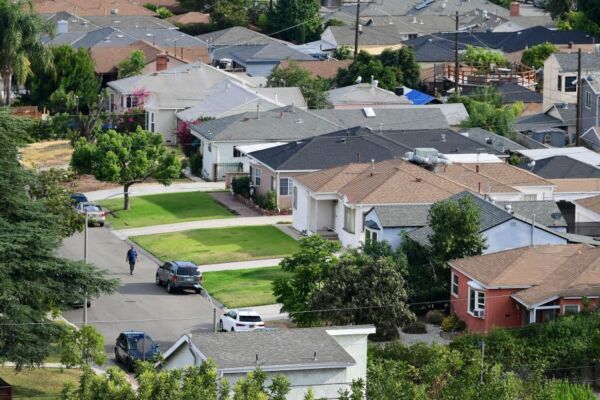
According to the latest report from the real estate analysis company Cotality, a record-breaking 340,000 homes in the United States were transferred from original homeowners to heirs within the past year ending in August 2025.
During this period, inherited homes accounted for 7.4% of all residential real estate transactions in the U.S., reaching historical highs. In California alone, inherited properties made up nearly 18% of the total in the U.S., with about 60,000 homes passed down to beneficiaries who can benefit from the property’s existing tax advantages.
California’s Proposition 13, passed in 1978, dictates that for houses continuously occupied by the owner, the annual property tax increase cannot exceed 2%. The law was later amended eight years later to include inherited residences.
Cotality noted that this regulation may be inhibiting housing supply; homes that might have been released onto the market for sale could be retained by beneficiaries incentivized by the tax law. Cotality analysts wrote, “It is clear that regulations provide significant financial incentives for beneficiaries to hold inherited homes as primary residences, effectively locking potential supply out of the open market.”
According to data from the Board of Governors of the Federal Reserve System, excluding high net-worth families, the majority of Baby Boomers’ (those born between 1946 and 1964) wealth is concentrated in real estate. For this generation, home equity makes up a significant portion of their assets, eventually passing down to beneficiaries.
Jessica Lautz, Vice President of Demographics and Behavioral Insights at the National Association of Realtors (NAR), stated, “Baby Boomers hold the key cards to the real estate market, having accumulated substantial home equity.”
Cotality added that younger Baby Boomers tend to hold onto their homes longer and prefer aging in place. Among homeowners born in 1938, nearly 25% relocated from their primary residence between the ages of 65 and 75; whereas for owners born after 1946, only 17% moved out within the same age range.
“Aging in place” means avoiding moving into retirement communities, care homes, or professional care facilities. This trend impacts housing dynamics, delaying the release of a significant number of homes into the market. Cotality stated, “Aging in place slows the natural downsizing cycle of living arrangements, delaying the anticipated wave of homes entering the market, and in many cases, these homes will skip the open market altogether.”
According to a report released by Clever Real Estate in 2025, nearly two-thirds of Baby Boomers stated that they have no plans to list their homes for sale. This implies that new construction may be relied upon to meet future demand.
Senior Market Economist Joe Seydl and Global Investment Strategist Audrey Weiss from JPMorgan Private Bank pointed out that there is currently a housing shortage of approximately 2.8 million homes in the U.S., which may take up to 10 years to address. ◇