
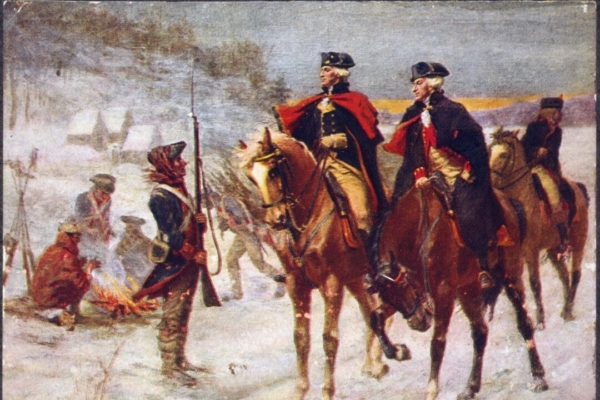
During the American Revolutionary War, the Patriots faced one of their lowest moments in history. The British army had just defeated George Washington once again in the Battle of Brandywine on September 11, 1777. The Continental Army’s commander endured a harsh winter at Valley Forge, where significant losses occurred due to hunger and disease.
General Horatio Gates did not sympathize with Washington’s plight. His recent victory at Saratoga dealt a heavy blow to the British forces, capturing the entire army of General John Burgoyne. Questions arose about who should lead the Continental Army – was it someone who seemed to be losing every battle? Perhaps it was time for a change in leadership, all in the interest of America.
Thomas Conway vocalized the thoughts on Gates’ mind. An Irishman who served in the French military and understood the ways to achieve victory, Conway sought a new position within the Continental Army: a major general. With Washington previously obstructing his promotion, Gates appeared to be the key figure to bring about this change. Conway began openly criticizing Washington for his lack of experience, echoing sentiments that gained some traction among members of the Continental Congress.
Today, Conway is mostly remembered for the “Conway Cabal,” an allegedly loose conspiracy that posed the biggest internal threat to Washington’s leadership career.
Despite facing opposition from various quarters, Washington still had loyal military leaders by his side. One such figure was General William Alexander, known as “Lord Stirling” due to a Scottish earldom claim that went unrecognized. When Gates’ aide James Wilkinson relayed news of the Saratoga victory to the Continental Congress, he shared a conversation with Lord Stirling’s aide during which a letter from Conway to Gates was revealed. The contents of the letter indicated a plot to overthrow Washington’s leadership.
Upon learning of the plot, Lord Stirling promptly informed Washington, stating, “It is my duty to reveal such treacherous actions.”
On November 5, 1777, Conway unexpectedly received a letter from Washington. In just three sentences, Washington conveyed his awareness of Conway’s messages to Gates: “Heaven has determined to save your country; or a weak general and bad counsellors would, ere this, have ruined it.”
Confounded by Washington’s minimal response, Conway and Gates denied involvement, alleging that the letter was a forgery. Gates even accused Alexander Hamilton of tampering with the document. However, when Washington revealed that the leak came from Gates’ own aide, the conspirator was thrown into disarray.
Another conspirator emerged at this time: Thomas Mifflin, a former aide to Washington who had risen to the rank of general. His career, largely bolstered by Washington, perhaps fueled his dissatisfaction with the commander-in-chief. Mifflin was appointed to the reorganized Board of War, which subsequently named Gates as its chairman. Gates then instituted a system of oversight to ensure the efficient functioning of the Continental Army, with Conway overseeing inspections.
Upon arriving at Valley Forge in December, Conway inspected the camp conditions. It was evident that he did not intend to provide a positive review. Seeking to leverage a failed inspection as grounds to claim Washington’s incompetence, Conway was met with Washington’s calm response. Politely and coolly, Washington declined the inspection citing lack of clear directives from the Continental Congress.
Infuriated by the perceived cold treatment, Conway penned a scathing letter to Washington on January 27, 1778. Echoing Gates’ claims, he denounced the previously exposed collusion as fabricated, asserting, “I am the victim of defamation,” and accusing Washington of harboring resentment and prejudice towards him.
In a seemingly positive note at the end, Conway remarked, “I foresee that as long as you guard against flatterers and calumniators, your virtue will shine again with punctual lustre.” Ironically, he appeared oblivious to his own manipulation tactics.
The Board of War never obtained oversight of Washington, and the Conway Cabal eventually dissipated. Over the following months, Conway’s treachery became the subject of discussion among Washington supporters. Learning of offensive remarks made by General John Cadwalader about him, Conway challenged the brigadier to a duel.
On the morning of July 4, 1778, the two met outside the Philadelphia Common for the duel. Cadwalader’s shot struck Conway’s cheek, leading to Conway’s removal from the scene.
Perceiving his imminent demise, Conway, trembling, penned an apology letter to Washington:
“I most heartily repent of any thing that I have ever said, done, or written to your displeasure… in my eyes, you are a great and noble man. May you long enjoy that affection, admiration, and respect from the states, which you have so justly merited by your virtues in defending their liberties.”
Readers cannot help but feel that this praise was genuinely heartfelt. Conway did not succumb to his injuries but eventually recovered and returned to France.
Despite facing adversaries, why did most people choose to remain loyal to Washington, even though he was not without flaws in military strategy? Unlike the covert complainers, Washington exemplified noble character. Everyone who met him was left with an impression of a patient, frank, and dignified man. Just as he weathered failures and harsh winters to emerge victorious, he also outlasted those who plotted in the shadows to seize his command.