
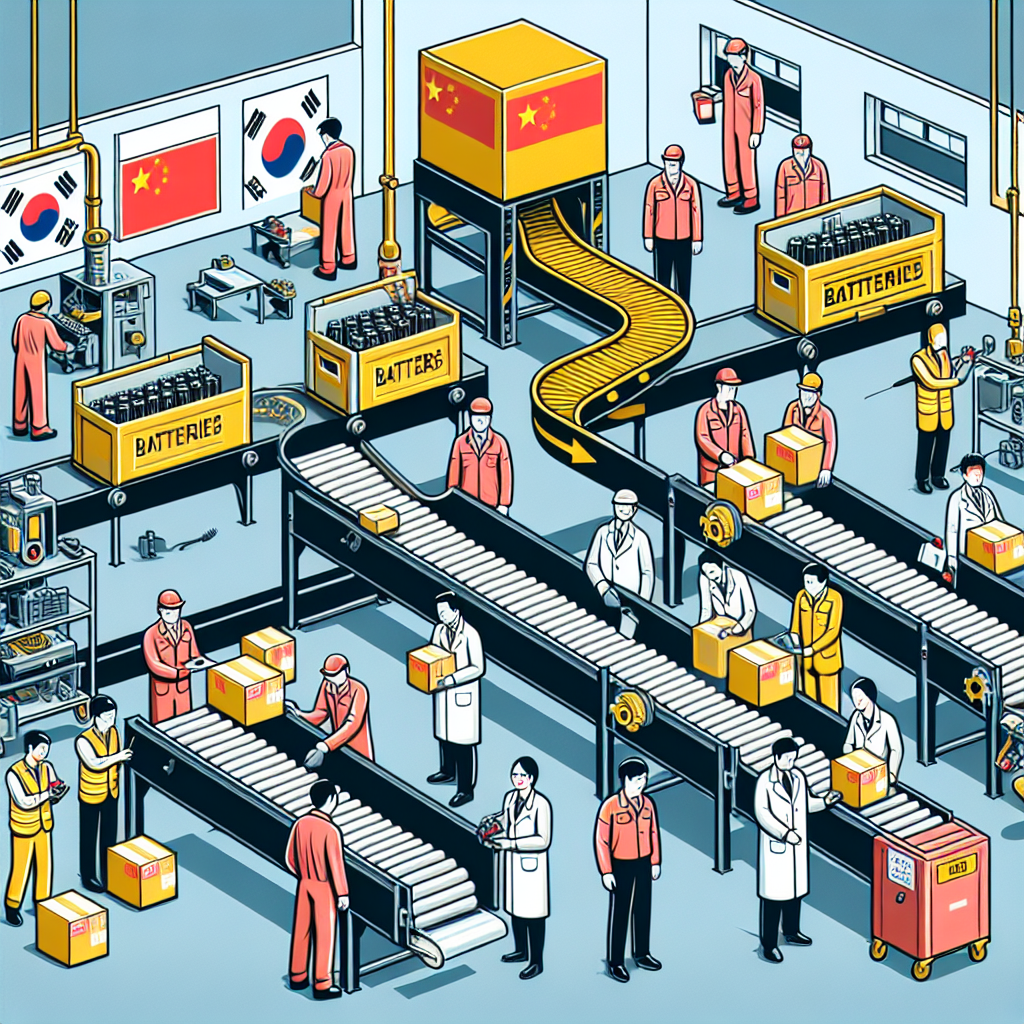
The U.S. battery companies are shifting their supply chain from China to South Korea in order to comply with the relevant restrictions imposed by the United States.
According to a report by Nikkei Asia, both SES AI and Amprius Technologies have announced plans to expand battery cell production capacity in South Korea following the enactment of the U.S. National Defense Authorization Act (NDAA) that will prohibit the Department of Defense from procuring batteries manufactured in China starting from October 2027.
In July of last year, U.S. President Trump signed an executive order requiring federal agencies to expedite the approval process for American drone manufacturers and protect the U.S. drone supply chain from “foreign influence.”
Headquartered in Boston, SES AI has transformed its factory in Chungju, South Korea, originally used for producing electric vehicle batteries, into a facility for manufacturing battery cells required for drones and eVTOL (electric vertical takeoff and landing) aircraft.
The factory, established in 2021 for electric vehicle battery production, will now primarily focus on producing components for drones, with an annual capacity of up to one million battery cells. Future capacity may increase to 1 gigawatt-hour (GWh), comparable to the company’s manufacturing scale in China.
Approximately one-tenth of the output from the Chungju factory will be dedicated to supplying eVTOL aircraft to SES AI customers, including Hyundai.
SES AI founder Qichao Hu stated that the company’s strategic shift to South Korea is in response to U.S. policies and investments aimed at developing the domestic unmanned aircraft industry.
“The U.S. Defense Secretary Pete Hegseth has driven rapid growth in this industry,” said Qichao Hu. “So, I believe this is an opportunity.”
The White House previously stressed the need for the U.S. to “accelerate the commercialization of domestic drone technology, integrate fully into the national airspace system, eliminate reliance on foreign sources, and ensure this critical technology is in the hands of the American people.”
Meanwhile, Amprius Technologies announced in December last year that due to an increase in U.S. sales in the third quarter, they are also expanding production capacity in South Korea.
The company has added three manufacturing plants in South Korea, bringing the total number of facilities in South Korea on par with those in China.
Amprius Technologies CEO Tom Stepien mentioned that while the Korean plants currently serve customers collaborating with the U.S. government, other clients are becoming increasingly interested in non-China manufactured batteries.
Many bipartisan members of the U.S. Congress have long been concerned about the potential security threats posed by Chinese batteries, fearing severe reliance on Chinese-made equipment. Additionally, these devices could potentially have vulnerabilities, posing risks to the energy grid.