
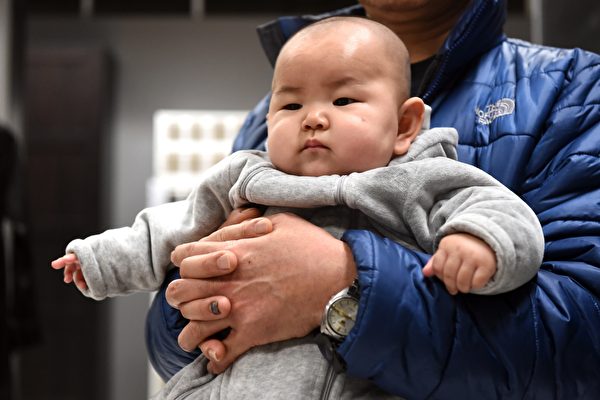
On Monday, January 19th, according to official data from the Chinese Communist Party (CCP), it was revealed that for the fourth consecutive year, the population of China has decreased by 3.4 million to 1.405 billion in 2025, surpassing the decline in 2024. This highlights the increasingly severe population challenge faced by Beijing.
Data from the National Bureau of Statistics of the CCP indicates that the total number of newborns in China in 2025 will decrease to 7.92 million, the lowest level in decades, below the 9.54 million in 2024. The number of deaths will increase from 10.93 million in 2024 to 11.31 million in 2025.
In 2024, the number of marriages in China plummeted by one-fifth, marking the largest historical decline, with only 6.1 million couples registering for marriage, lower than the 7.68 million in 2023. In China, the number of marriages is usually a leading indicator of birth rates.
The latest data release is undoubtedly a significant blow to CCP leader Xi Jinping’s push for a “child-friendly society” (including providing cash incentives to parents). The total population decrease of 3.4 million is the largest decline since the great famine during Mao Zedong’s leadership before the CCP in 1960.
Since 2022, China’s population has continued to decrease, and the aging rate has accelerated, making Beijing’s plans to boost domestic consumption and control debt more complicated.
Labor force shrinkage and population aging are the main threats facing the Chinese economy. With the growth of the elderly population, hundreds of millions of people are set to exit the labor market, while pension budgets are already stretched thin.
Economic downturn, high youth unemployment rates, and high childcare costs are key factors contributing to the decline in birth rates. According to a 2024 survey by the Yucun Population Research Institute, the average cost of raising a child in China until high school graduation is about 538,000 yuan, exceeding 885,000 yuan in first-tier cities such as Beijing and Shanghai.
Based on more affluent income estimates, the average monthly income of a typical family is around 7,000 to 8,000 yuan, with an annual income of about 84,000 to 96,000 yuan. The monthly cost of raising a child is approximately 2,490 yuan, comprising about one-third of the income.
According to a Nikkei analysis, the cost of raising a child to the age of 18 is equivalent to 6.3 times the per capita gross domestic product, trailing only South Korea and surpassing many countries including the United States, Japan, and various European nations.
Between 2020 and 2025, the number of childbearing women has decreased by 16 million.
Additionally, part of the reason for the shrinking pool of potential mothers is the one-child policy, which depleted the foundation for future population growth before it was abolished in 2015.
In recent years, the CCP government has implemented a series of pro-natal policies, including extending paternity and maternity leave and streamlining marriage registration procedures. One incentive is that for children born on or after January 1, 2025, couples can receive approximately $500 per year until the child turns three. Starting this year, the CCP has also imposed a 13% value-added tax on contraceptives (including emergency contraception and condoms).
However, independent demographer He Yafu stated that the government subsidies are “too low” and are insufficient to significantly increase the birth rate.