
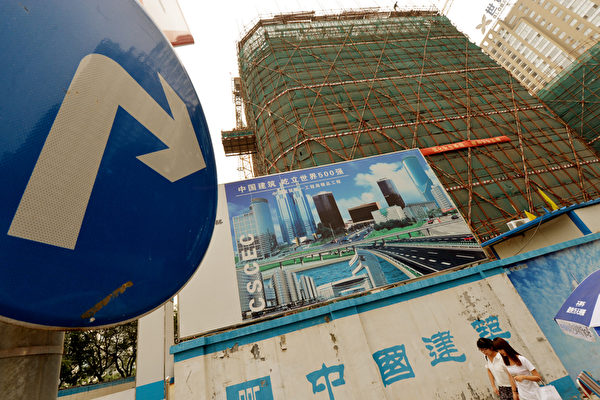
In the latest financial forecasts released by Chinese listed companies for the year 2025, 57 companies are expected to incur losses, accounting for 54.29% of the total number of disclosed performance forecasts that month. The loss-making enterprises are predominantly concentrated in cyclical traditional industries, with a 100% deficit rate among real estate companies that have disclosed performance forecasts.
According to data from the mainland internet financial information service provider Tonghuashun, as of the morning of January 13, 2026, 105 listed companies had issued performance forecasts for the year 2025, representing 70.9% of the total disclosures for that year. Among these 105 companies, 57 are projected to incur losses, accounting for 54.29% of the total forecasts disclosed that month, including 42 companies with continued losses and 15 companies experiencing their first losses.
As reported by “21st Century Business Herald” on January 13, among the 57 companies expecting losses, there are 2 companies with deficits exceeding 10 billion yuan, 1 company with losses between 2 to 5 billion yuan, 2 companies with losses between 1 to 2 billion yuan, and 3 companies with losses between 500 million to 1 billion yuan. In addition, 7 companies have losses of less than 500 million yuan, with some companies not disclosing specific deficit amounts.
In terms of industry distribution, loss-making companies are highly concentrated in cyclical traditional industries. Among the disclosed forecasts, all 6 real estate companies are expected to incur losses, with an expected deficit rate of 100%; 3 out of 4 utility companies have announced deficits, accounting for 75%; while the deficit rate in the power equipment and commercial retail industries is 58.33% and 66.67% respectively.
Furthermore, the leading A-share vaccine company, Chongqing Zhifei Biological Products Co., Ltd. (Zhifei Biologic), is projected to incur losses ranging from 10.698 billion to 13.726 billion yuan in 2025, with a net profit year-on-year decline of 630% to 780%. This marks the first annual loss in the 25 years since Zhifei Biologic went public.
Reports indicate that traditionally, companies with improving financial performance tend to announce forecasts first, while those with poor performance tend to delay disclosure. However, in the current wave of forecasts, there has been a phenomenon of concentrated announcements of projected and continued deficits.
In response to this, investment consultant Zhao Huan from Pacific Securities explained that companies expecting full-year losses or significant changes are required by the stock exchange to release forecasts by the end of January, allowing investors to evaluate their investments earlier.
Economist Pan Helin believes that there is a high level of enthusiasm in the A-share market at the beginning of the year, but there is a discrepancy between some companies’ stock prices and fundamentals. By preemptively disclosing anticipated losses, listed companies can prevent excessive speculation from leading to backlash.
Regarding the reasons behind these companies’ losses, Zhao Huan attributes it to the impact of macroeconomic and industry cycles, lower-than-expected market demand, downward industry cycles, expanded deficit faces, intensifying performance disparities, divergent consumer recoveries, and the underperformance of certain traditional consumer industries (such as the alcohol and home sectors), leading to performance pressure.